
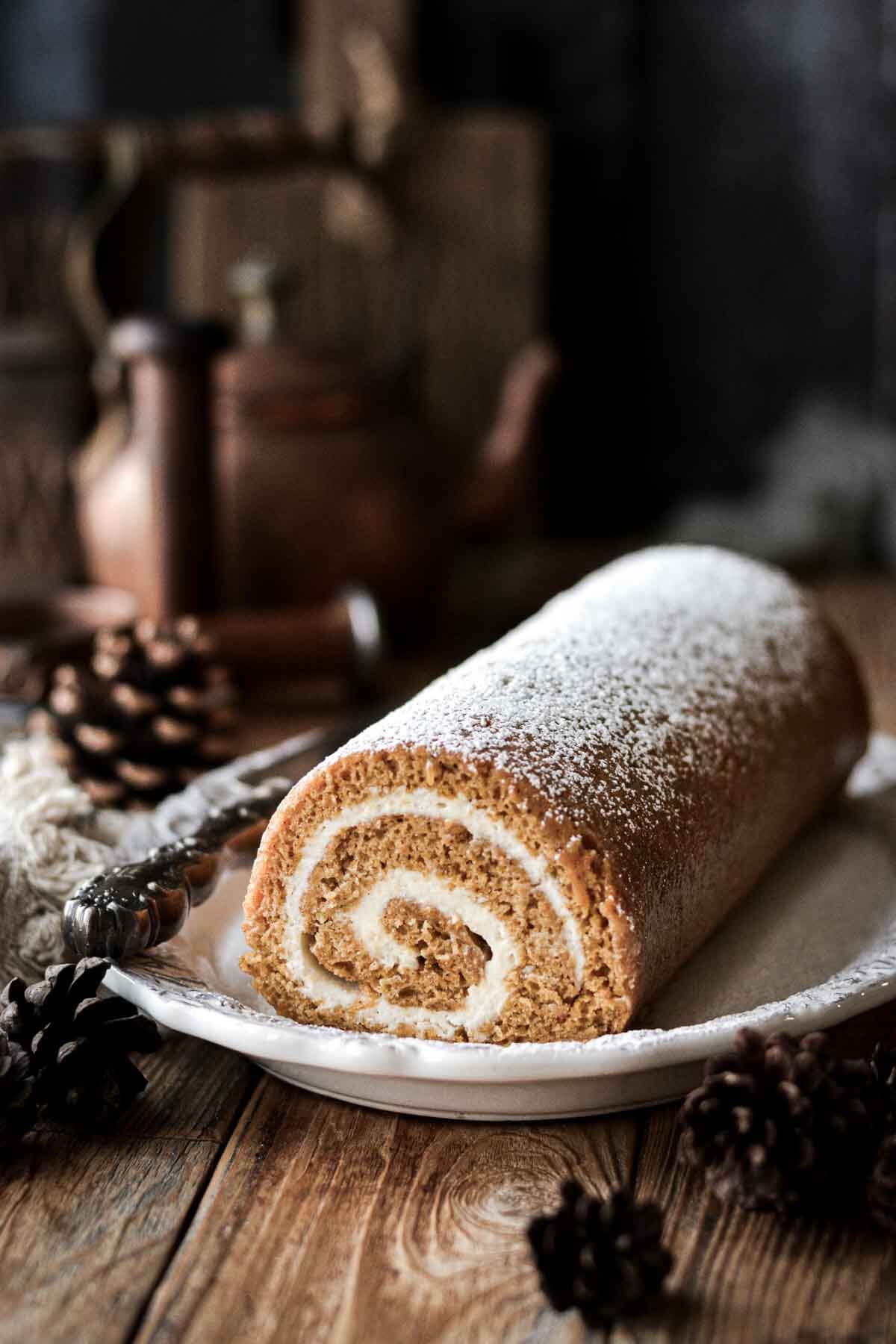
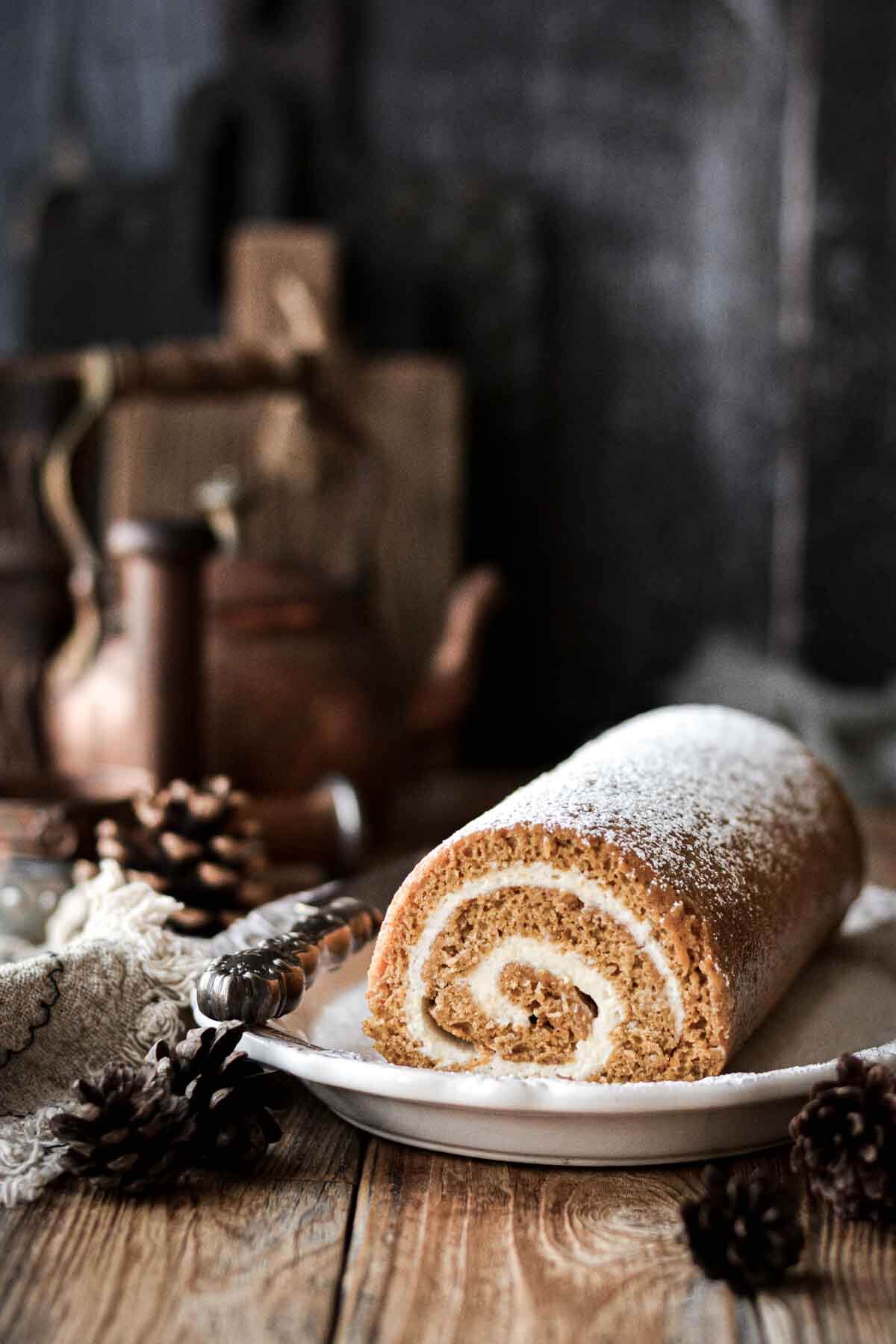
This traditional high altitude pumpkin roll starts with spiced pumpkin sponge cake, filled with whipped brown butter cream cheese frosting, rolled up into a spiral, and dusted with powdered sugar. A pumpkin roll makes such a beautiful dessert for the holidays! Included in today’s post are detailed step-by-step photos, and a video tutorial.
You might also love these recipes for pumpkin pie cookies, pumpkin crumble coffee cake, and frosted pumpkin blondies.
This site contains affiliate links. As an Amazon associate, I earn from qualifying purchases. This means that I may make a small commission if you purchase a product using those links. This in no way affects my opinion of those products and services. All opinions expressed on this site are my own.
Why You’ll Love This Recipe
Pumpkin Everything Season. We can never have too many pumpkin recipes for pumpkin season, and I love any form of pumpkin cake. This pumpkin roll is perfect for Thanksgiving, Christmas, or any time through the winter when you want to make something beautiful and delicious.
The Browned Butter. Browning the butter for the cream cheese filling is what really sets this recipe apart from others. It adds a rich, nutty flavor that’s just wonderful.
High Altitude Tested. I develop all the recipes on my site for Denver’s altitude of 5,280 feet. If you’re at a lower or higher elevation, please see my FAQs for guidance on adjusting recipes for your altitude.
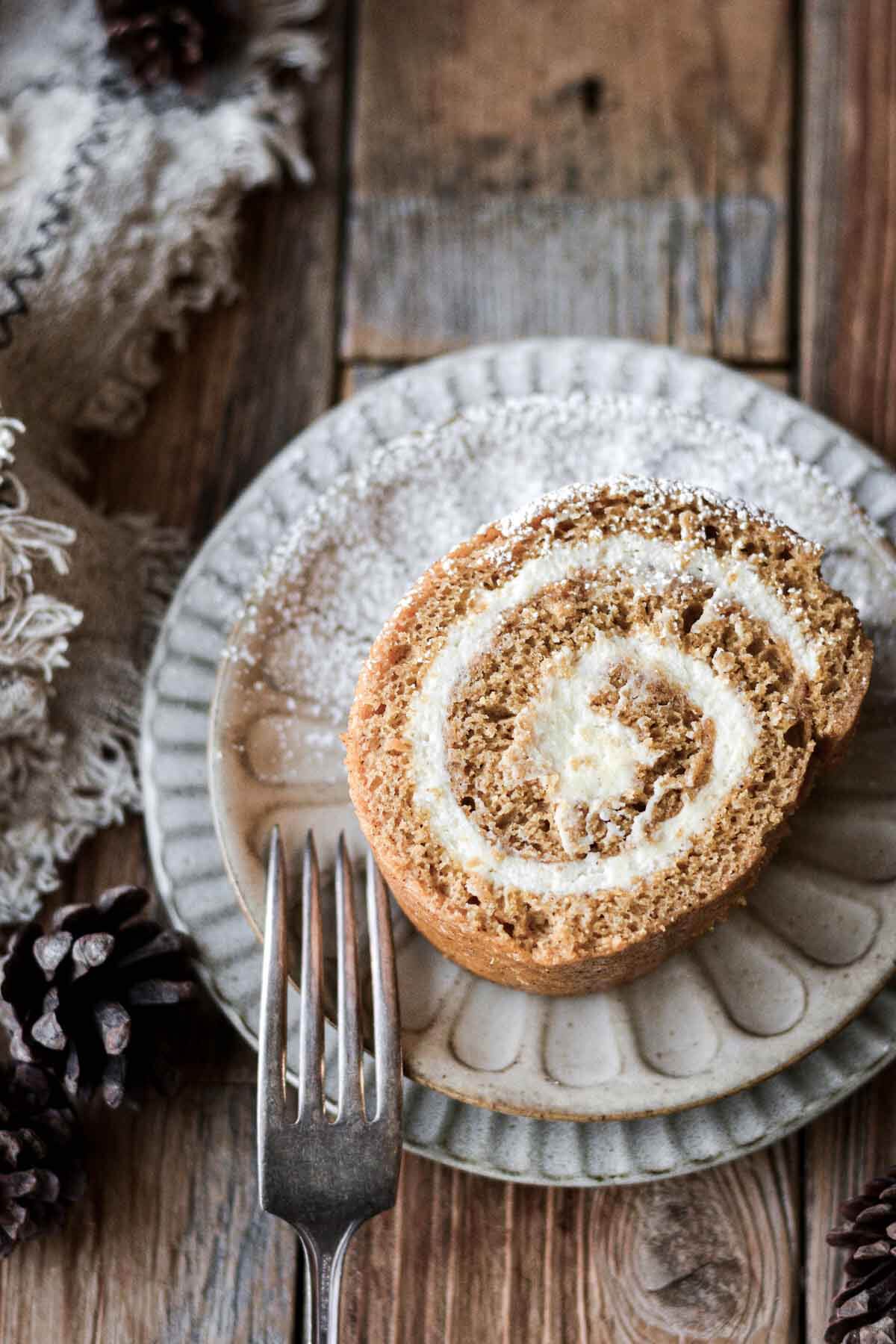
See the recipe card at the end of the post for the full ingredients list and instructions.
Ingredients
- Cake Flour.
- Baking Powder.
- Salt.
- Cinnamon, Ginger, Cloves, Nutmeg, Allspice.
- Eggs.
- Granulated Sugar + Powdered Sugar.
- Canned Pumpkin (not pumpkin pie filling).
- Vanilla Extract.
- Butter.
- Cream Cheese.
Instructions
Baking the Cake
- Preheat the oven to 350 F, and position a rack in the center of the oven.
- Line a rimmed half sheet pan (13×18 inches) with a sheet of parchment paper. I like to snip the corners of the paper so that it neatly covers the bottom of the pan and up the rimmed sides. Spray the paper with non-stick baking spray.
- In a bowl, sift together the flour, baking powder, salt, and spices.
- In a separate bowl, use an electric mixer (or whisk vigorously by hand) the eggs and sugar for about 2 minutes, until frothy, pale and increased in volume.
- Beat in the pumpkin and vanilla.
- Add the dry ingredients, and whisk in, just until combined. Do not over-mix.
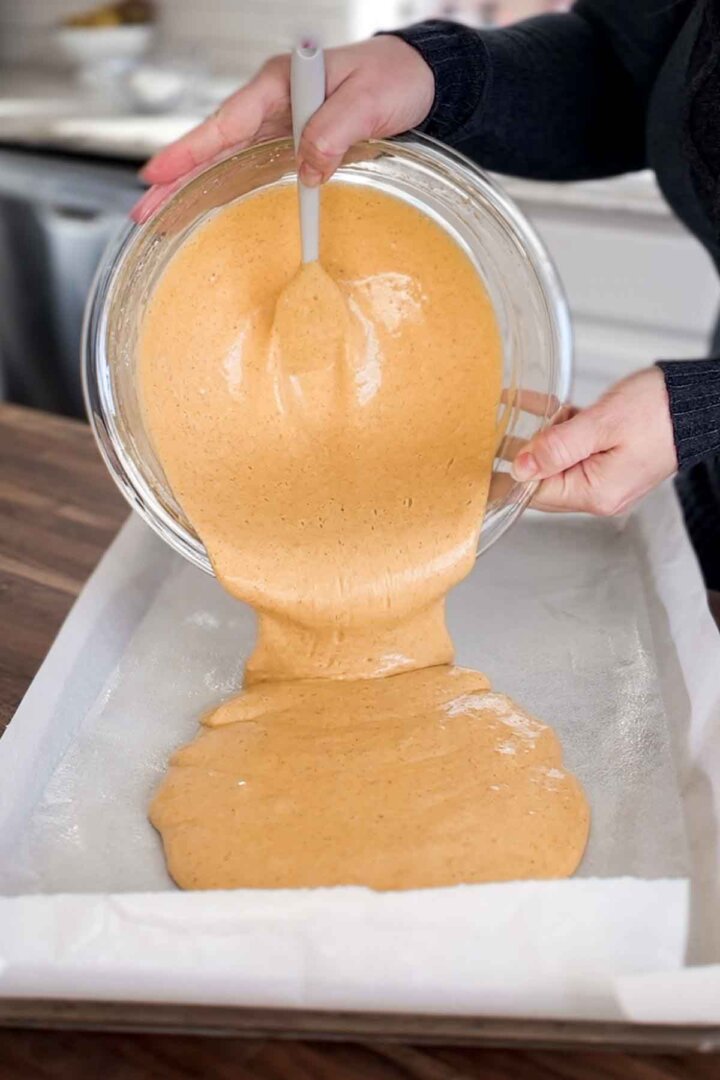
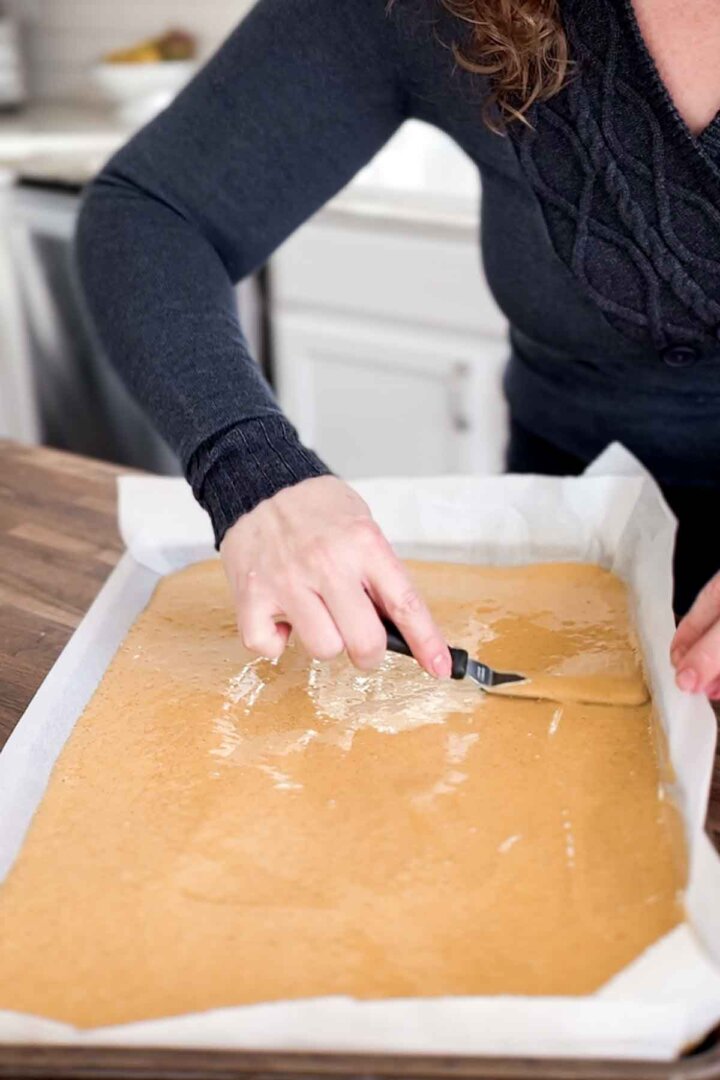
- Pour the batter into the prepared baking sheet, and use an offset spatula to spread the batter evenly into all the corners, so that the thickness of the cake is uniform across the pan.
- Bake the cake for about 15 minutes, until the center springs back when gently touched.
Cooling the Cake
- Let the cake cool for five minutes, to allow some of the steam to evaporate.
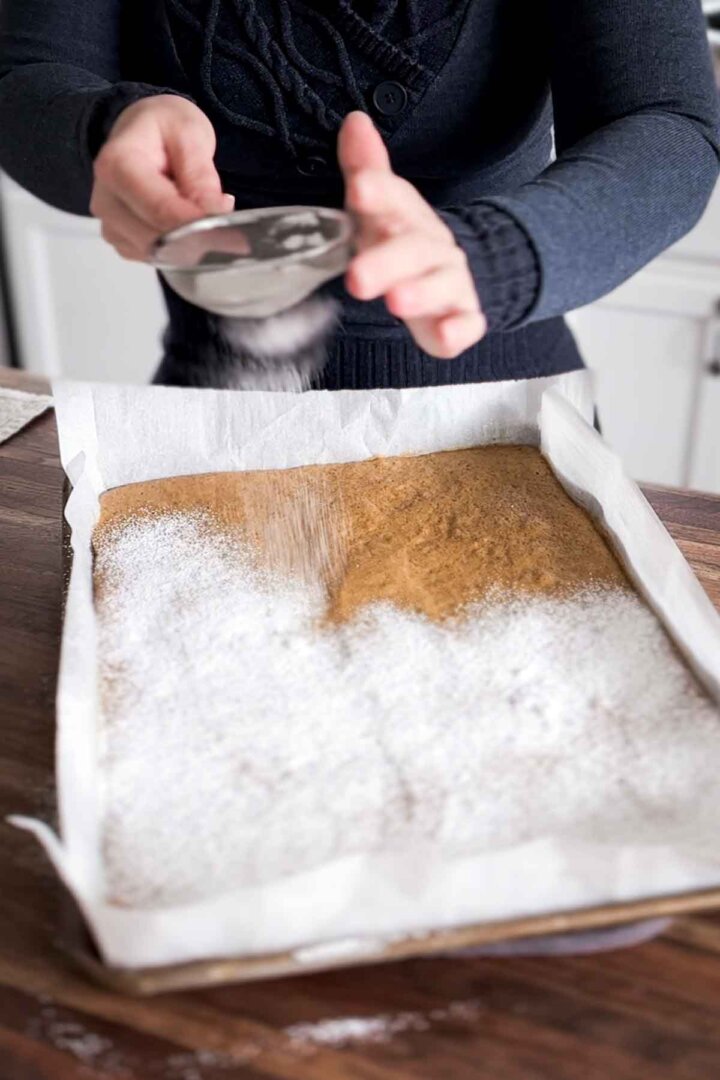
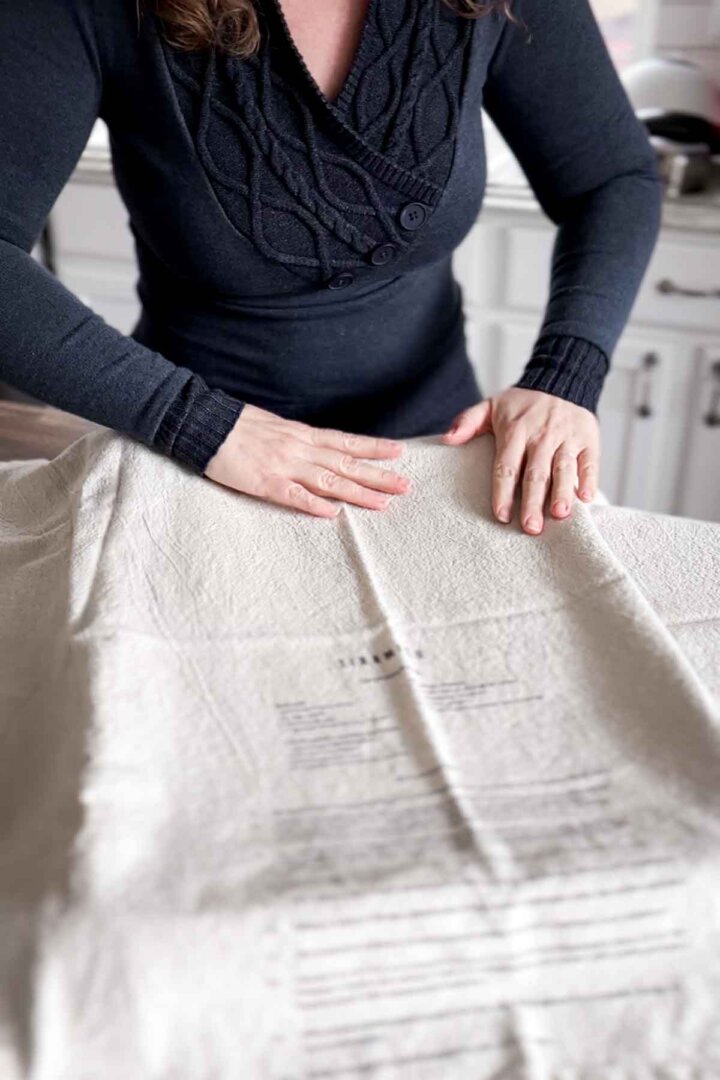
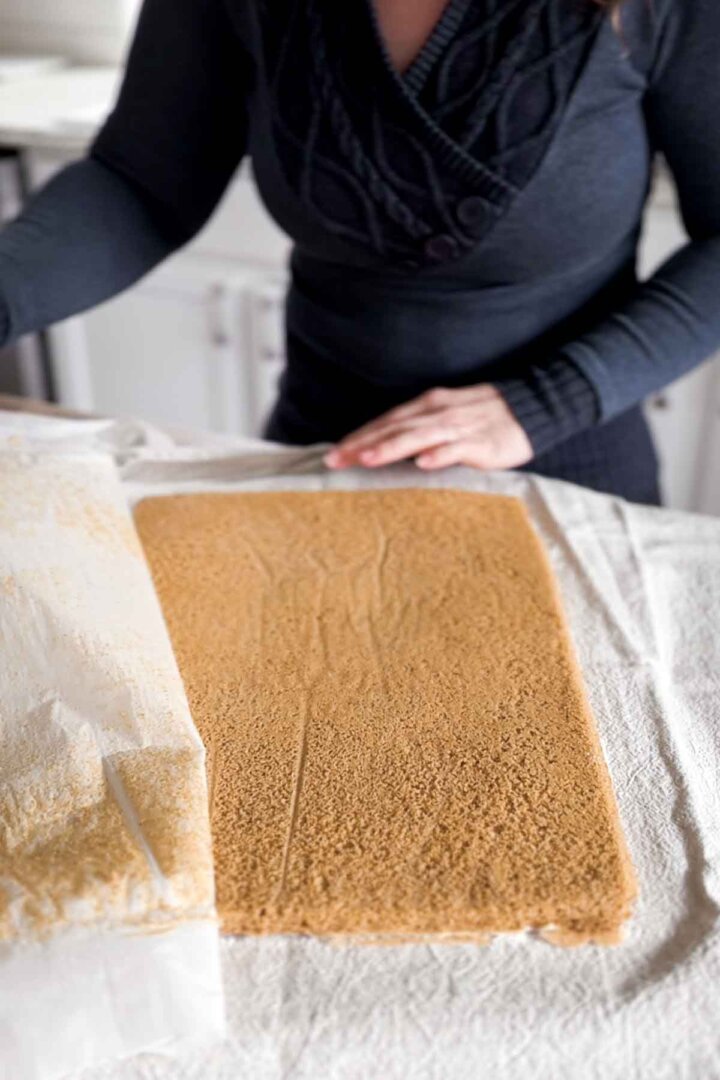
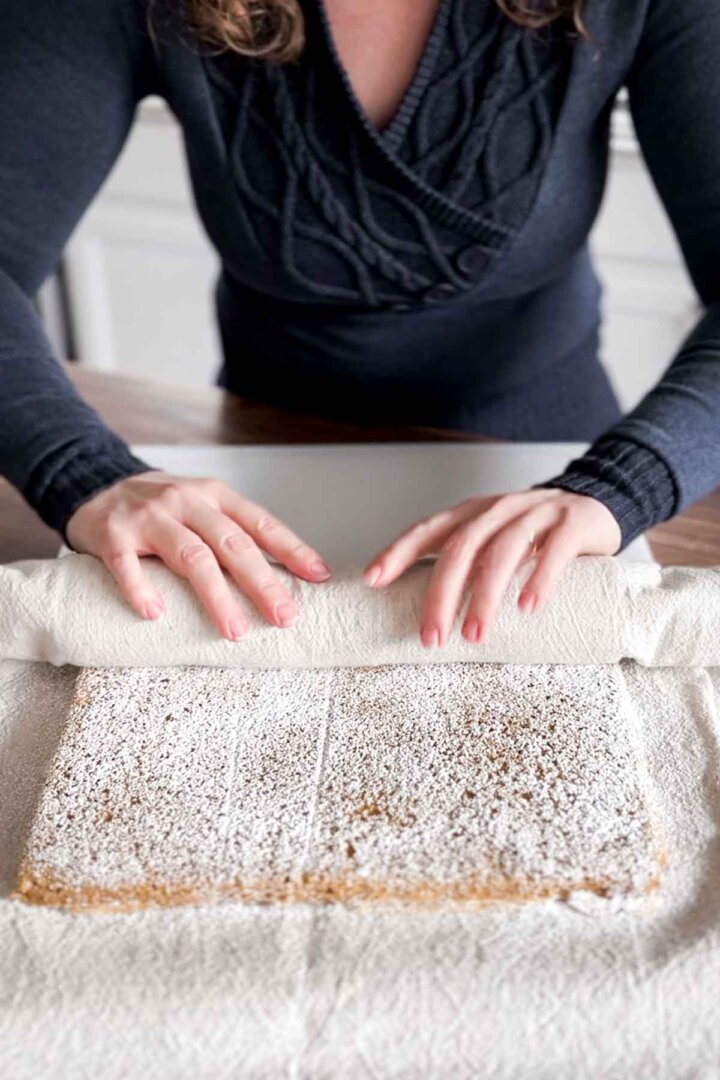
- Dust the top of the warm cake with powdered sugar, covering it with a thin, even layer. Lay a tea towel (one that isn’t highly textured) over the cake. Then place something flat on top, like a large cutting board, so that you can invert the cake onto the towel. Remove the baking sheet (which is now on top), and peel off the parchment paper.
- Dust this side of the cake with powdered sugar, too, and immediately roll the hot cake up into the towel.
- Let the cake cool completely in its rolled up position. To speed up the cooling, I let it cool for one hour at room temperature, and another 30-60 minutes in the fridge.
Making the Filling
- In a small saucepan, melt the butter over medium heat. Continue to cook the butter for about 5 minutes, until nutty brown solids start to form on the bottom of the pan and a layer of foam forms on top. Pour the browned butter into a mixing bowl to cool completely, until it returns to a solid texture at room temperature. You can make the brown butter and let it cool overnight, or just make it before you begin working on the cake, so that it has plenty of time to cool and solidify.
- Once the butter is solid again, add the softened cream cheese and beat with an electric mixer for several minutes, until smooth. Add the powdered sugar, meringue powder, vanilla and salt, and beat for several more minutes, until very smooth, light and fluffy.
Filling and Rolling the Cake
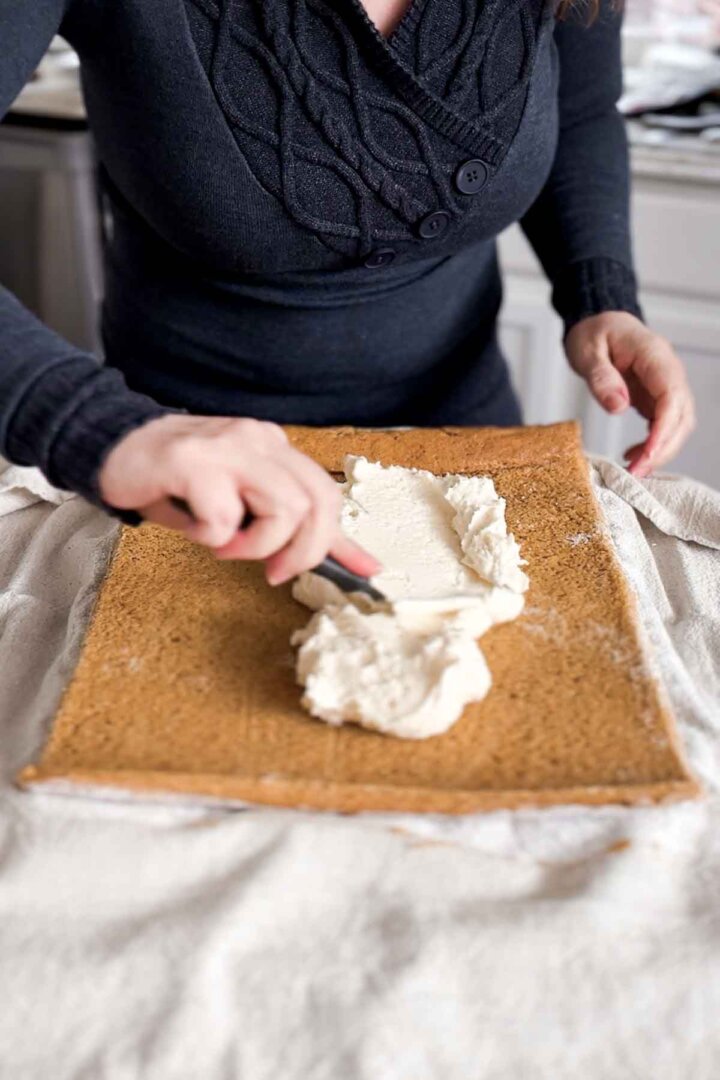
- Gently unroll the cooled cake. The tight end of the cake that’s at the center of the spiral will stay curled.
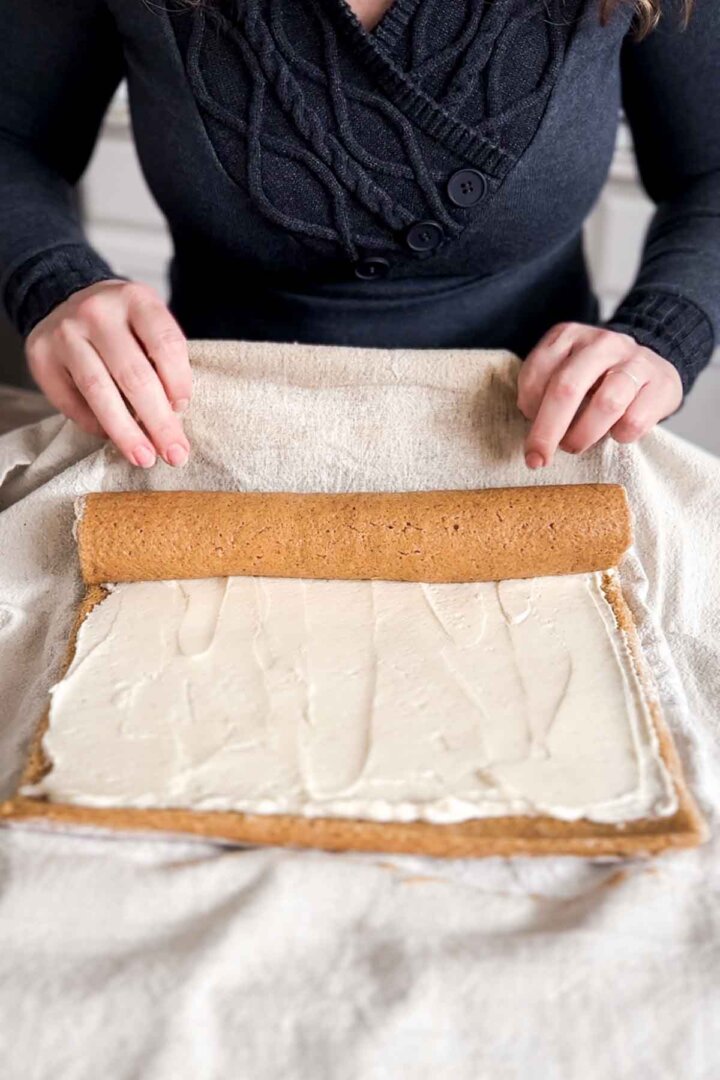
- Spread the filling evenly over the cake, stopping about 1/2 inch from the edges.
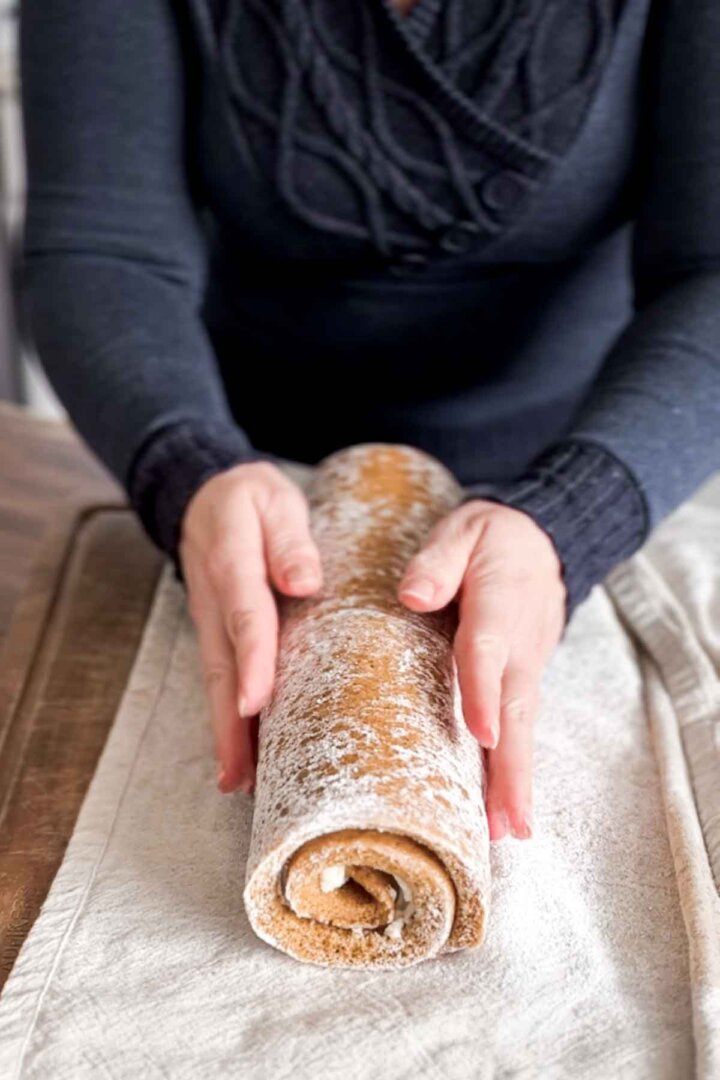
- Now gently roll the cake up again (without the towel this time); don’t try to roll it too tightly, or the cake could crack.
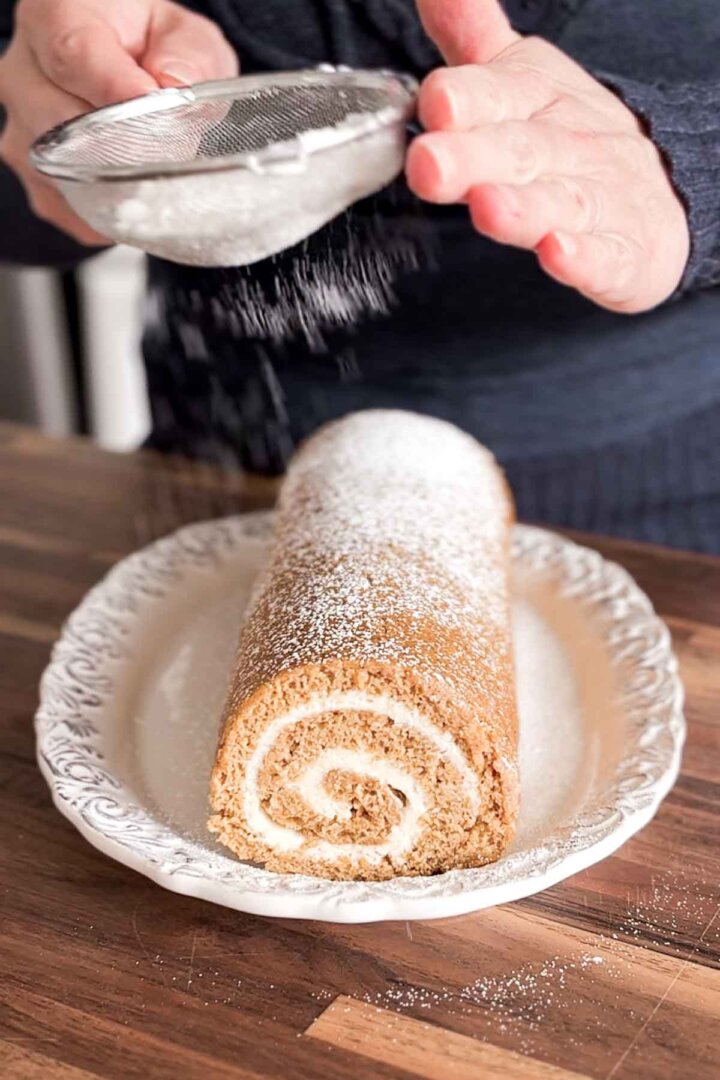
- Trim the ends of the cake, set it on a serving plate, and dust the top with powdered sugar. You may need to cover the cake and refrigerate it for 30-60 minutes to chill the filling so you can slice the cake more neatly.
Be sure to read all of my BAKING FAQs where I discuss ingredients, substitutions and common questions with cake making, so that you can be successful in your own baking! I also suggest reading these comprehensive posts on making Perfect American Buttercream, How to Stack, Fill, Crumb Coat and Frost Layer Cakes and How to Use Piping Bags.
Tips and Best Practices
- Use a Sponge Cake Recipe for Rolled Cakes. You actually can’t use just any cake to make a rolled cake. The soft, fluffy, crumbly, or dense texture of some cakes simply won’t work when attempting to roll the cake up into a spiral, resulting in a cracked or broken rolled cake. You need to use a sponge cake recipe, which is more flexible for rolling. With sponge cakes, typically the eggs are whipped with the sugar before incorporating the other ingredients. Sometimes, the egg yolks and egg whites are whipped and incorporated separately, such as in my chiffon cake recipe.
- Don’t Over-bake the Cake. If your cake is over-baked, the dry texture can cause cracking when you roll your cake up. Bake it until it’s just done; if you gently touch your finger to the cake and it springs back without sticking, then the cake is done.
- Roll the Cake while it’s Warm. The cake is more flexible while it’s warm, and since the cake will cool completely in this rolled up position, it will retain the curled shape (think of it like “muscle memory”), so that after spreading it with buttercream, you can easily roll it up again into a log without cracking the cake. However, it’s important to allow it to cool first for five minutes, before rolling it up. This allows some of the steam to evaporate. If the steam is trapped inside the cake as it’s cooling, it can create a dense, chewy, rubbery texture.
- Roll up in a Tea Towel, not Parchment. I have tried rolling my cake up in both parchment paper (baking paper) as well as a towel, and I prefer a towel for a simple reason. Since steam is trapped inside the rolled cake as it cools, the moisture will cause the parchment paper to wrinkle and ripple, leaving impressions on the surface of the cake. This didn’t bother me on my chocolate yule log cake, since the entire cake is covered in ganache. But a pumpkin roll is meant to be served naked, with just a dusting of powdered sugar on top, so I wanted the top of my cake to look smooth and pretty, not rippled by the paper. For best results, choose a smooth tea towel that doesn’t have a waffled or textured fabric.
- Don’t Use a Heavy Frosting. The cream cheese filling in today’s recipe is much lighter than my usual cream cheese buttercream, using far less powdered sugar. If your filling is too dense or heavy, it will weight down the cake as you roll it up, causing it to crack.
Frequently Asked Questions
A jelly roll pan usually measures 10×15 inches, with a 1-inch high rim, while the baking sheet I used measures 13×18 inches (a half sheet pan). If you bake the same volume of batter in a jelly roll pan, the cake will likely be too thick to roll without cracking, so you’ll need to scale the recipe down to 3/4 if you want to use a jelly roll pan.
Store leftover cake in an airtight container in the refrigerator for up to 2 days.
Yes, you can freeze the rolled cake, already assembled and filled with buttercream, in an airtight container for up to two weeks.
Browning the butter is optional. If you don’t want to brown the butter for the filling, you can simply use the same amount of butter, softened to room temperature.
You Might Also Like


Please check out my Amazon Shop for a curated collection of some of my favorite cake pans from trusted brands, baking tools, ingredients, pretty things and fashion finds. I recommend products that I buy and use every day!
Did you love today’s recipe? Please rate the recipe and let me know in the comments what you thought! Also, be sure to follow Curly Girl Kitchen on Instagram, and tag me when you try one of my recipes so I can see all your delicious creations!
High Altitude Pumpkin Roll
All recipes on Curly Girl Kitchen are developed for high altitude at 5,280 feet. See FAQs for adjusting to higher or lower elevations.

Equipment
- Electric Mixer (Stand or Hand-Held)
- Rimmed Half-Sheet Pan (13×18 inches)
Ingredients
Pumpkin Cake
- 1 ¼ cups cake flour, fluffed, spooned and leveled
- 1 tsp baking powder
- ½ tsp coarse Kosher salt (if using table salt, use half the amount)
- 1 tsp ground cinnamon
- ½ tsp ground ginger
- ¼ tsp ground cloves
- ¼ tsp ground nutmeg
- ¼ tsp ground allspice
- 4 large eggs, room temperature
- ½ cup granulated sugar
- ⅔ cup canned pumpkin puree
- 2 tsp vanilla extract
- powdered sugar, for dusting over the cake
Filling
- ½ cup unsalted butter
- 8 oz (1 block) cream cheese, softened to room temperature
- 1 cup powdered sugar
- 1 tbsp meringue powder, (optional, but provides stability)
- 1 tsp vanilla bean paste or vanilla etract
- ⅛ tsp coarse Kosher salt
Instructions
Baking the Cake
- Preheat the oven to 350 F, and position a rack in the center of the oven.
- Line a rimmed half sheet pan (13×18 inches) with a sheet of parchment paper. I like to snip the corners of the paper so that it neatly covers the bottom of the pan and up the rimmed sides. Spray the paper with non-stick baking spray.
- In a bowl, sift together the flour, baking powder, salt, and spices.
- In a separate bowl, use an electric mixer (or whisk vigorously by hand) the eggs and sugar for about 2 minutes, until frothy, pale and increased in volume.
- Beat in the pumpkin and vanilla.
- Add the dry ingredients, and whisk in, just until combined. Do not over-mix.
- Pour the batter into the prepared baking sheet, and use an offset spatula to spread the batter evenly into all the corners, so that the thickness of the cake is uniform across the pan.
- Bake the cake for about 15 minutes, until the center springs back when gently touched.
Cooling the Cake
- Let the cake cool for five minutes, to allow some of the steam to evaporate.
- Dust the top of the warm cake with powdered sugar, covering it with a thin, even layer. Lay a tea towel (one that isn't highly textured) over the cake. Then place something flat on top, like a large cutting board, so that you can invert the cake onto the towel. Remove the baking sheet (which is now on top), and peel off the parchment paper.
- Dust this side of the cake with powdered sugar, too, and immediately roll the hot cake up into the towel.
- Let the cake cool completely in its rolled up position. To speed up the cooling, I let it cool for one hour at room temperature, and another 30-60 minutes in the fridge.
Making the Filling
- In a small saucepan, melt the butter over medium heat. Continue to cook the butter for about 5 minutes, until nutty brown solids start to form on the bottom of the pan and a layer of foam forms on top. Pour the browned butter into a mixing bowl to cool completely, until it returns to a solid texture at room temperature. You can make the brown butter and let it cool overnight, or just make it before you begin working on the cake, so that it has plenty of time to cool and solidify.
- Once the butter is solid again, add the softened cream cheese and beat with an electric mixer for several minutes, until smooth. Add the powdered sugar, meringue powder, vanilla and salt, and beat for several more minutes, until very smooth, light and fluffy.
Filling and Rolling the Cake
- Gently unroll the cooled cake. The tight end of the cake that's at the center of the spiral will stay curled.
- Spread the filling evenly over the cake, stopping about 1/2 inch from the edges.
- Now gently roll the cake up again (without the towel this time); don't try to roll it too tightly, or the cake could crack.
- Trim the ends of the cake, set it on a serving plate, and dust the top with powdered sugar. You may need to cover the cake and refrigerate it for 30-60 minutes to chill the filling so you can slice the cake more neatly.
Video
Notes
 https://curlygirlkitchen.com/

Leave a Reply