
A high altitude recipe for a traditional yule log cake or Bûche de Noël, made with soft chocolate chiffon cake (sponge cake), filled with vanilla buttercream, and frosted with rich chocolate ganache. Included in today’s post are detailed step-by-step photos, and a video tutorial.
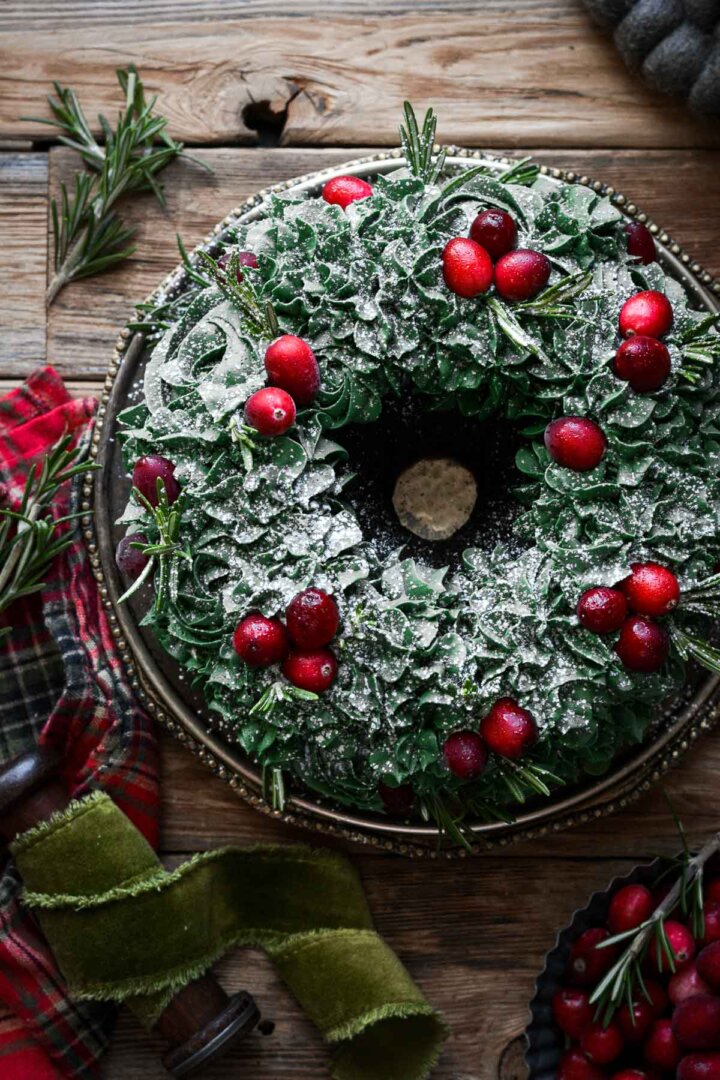
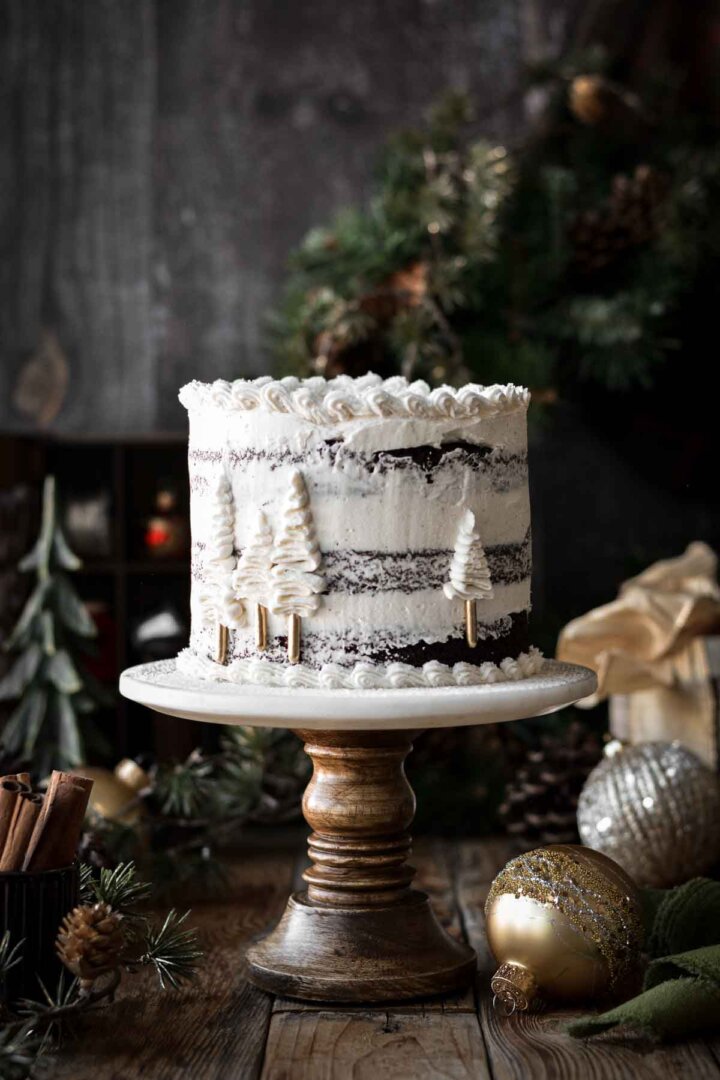
You might also love these recipes for a Christmas wreath bundt cake, chocolate gingerbread cake, and gingerbread snowflake sheet cake.
What is a Bûche de Noël?
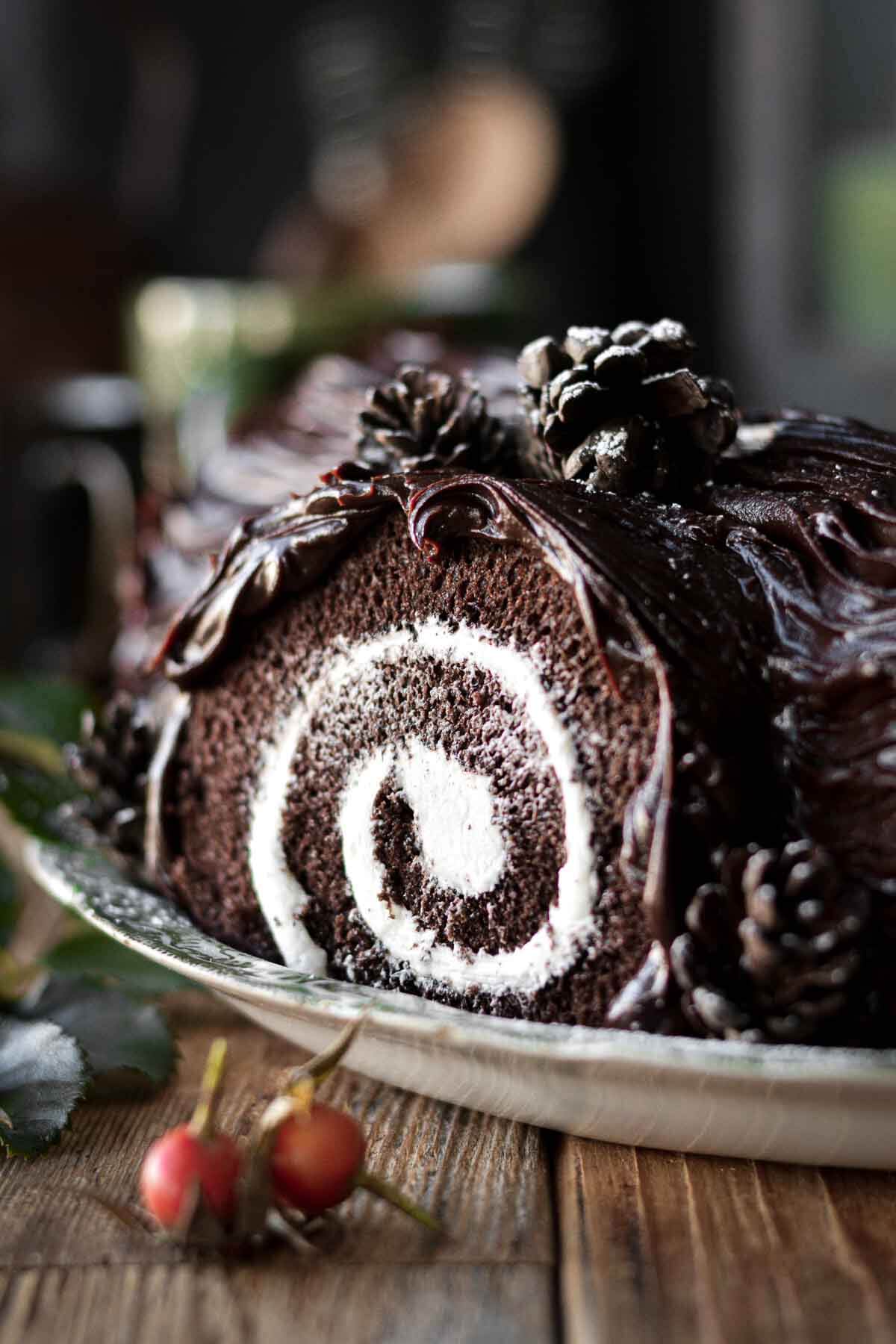
A Bûche de Noël or yule log cake is a classic cake made during the Christmas holidays. Its base is a sponge cake (I’ve used my chocolate chiffon cake recipe, which is a type of sponge cake). The texture of the sponge cake allows for more flexibility, so that it can be rolled up into a spiral without cracking or breaking.
You can fill the cake with whipped cream or buttercream, although I prefer American buttercream for its stability. The rolled cake is then frosted and decorated with chocolate ganache to look like a ceremonial wooden log, representing warmth, friendship, family, and holiday traditions during the cold winter months.
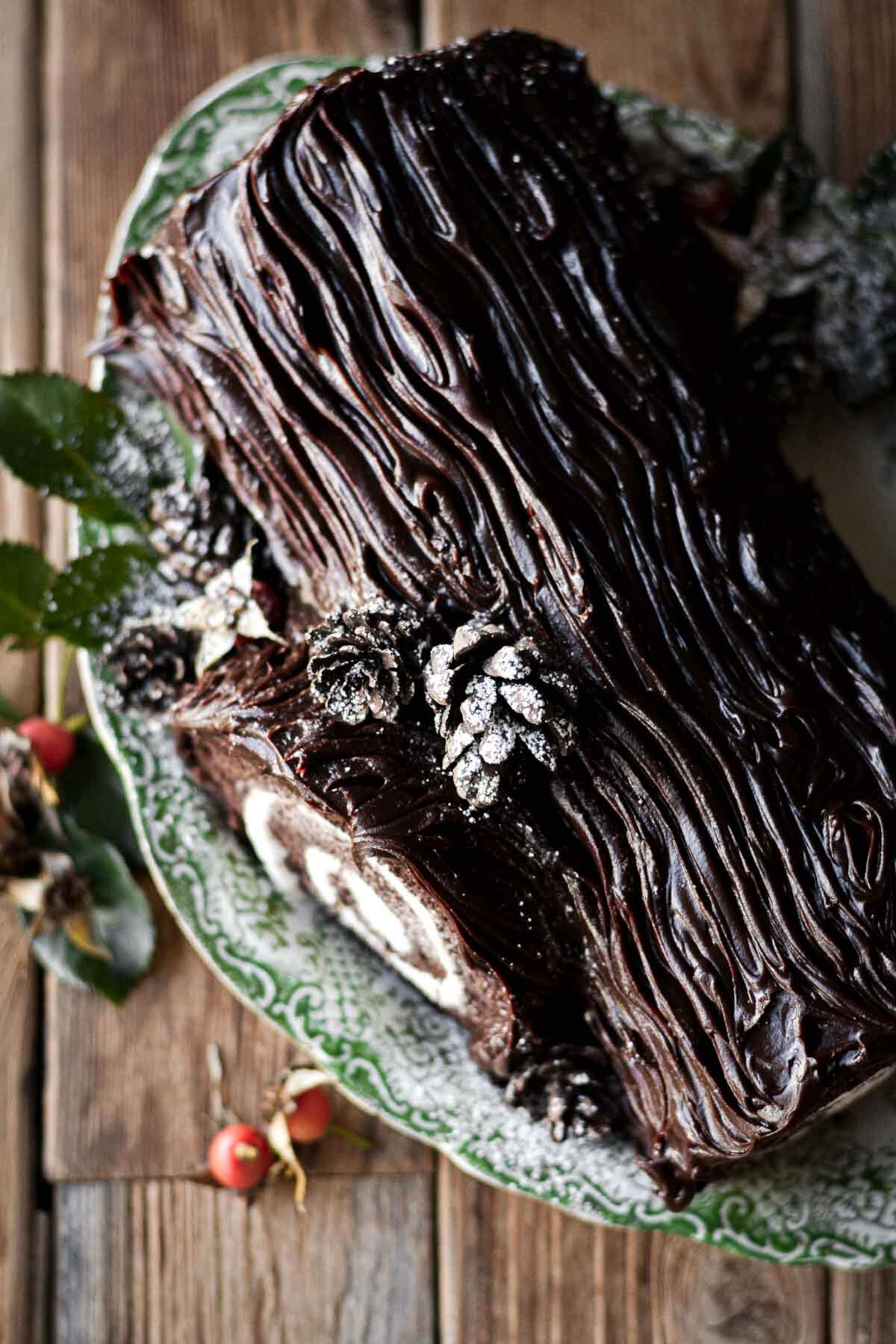
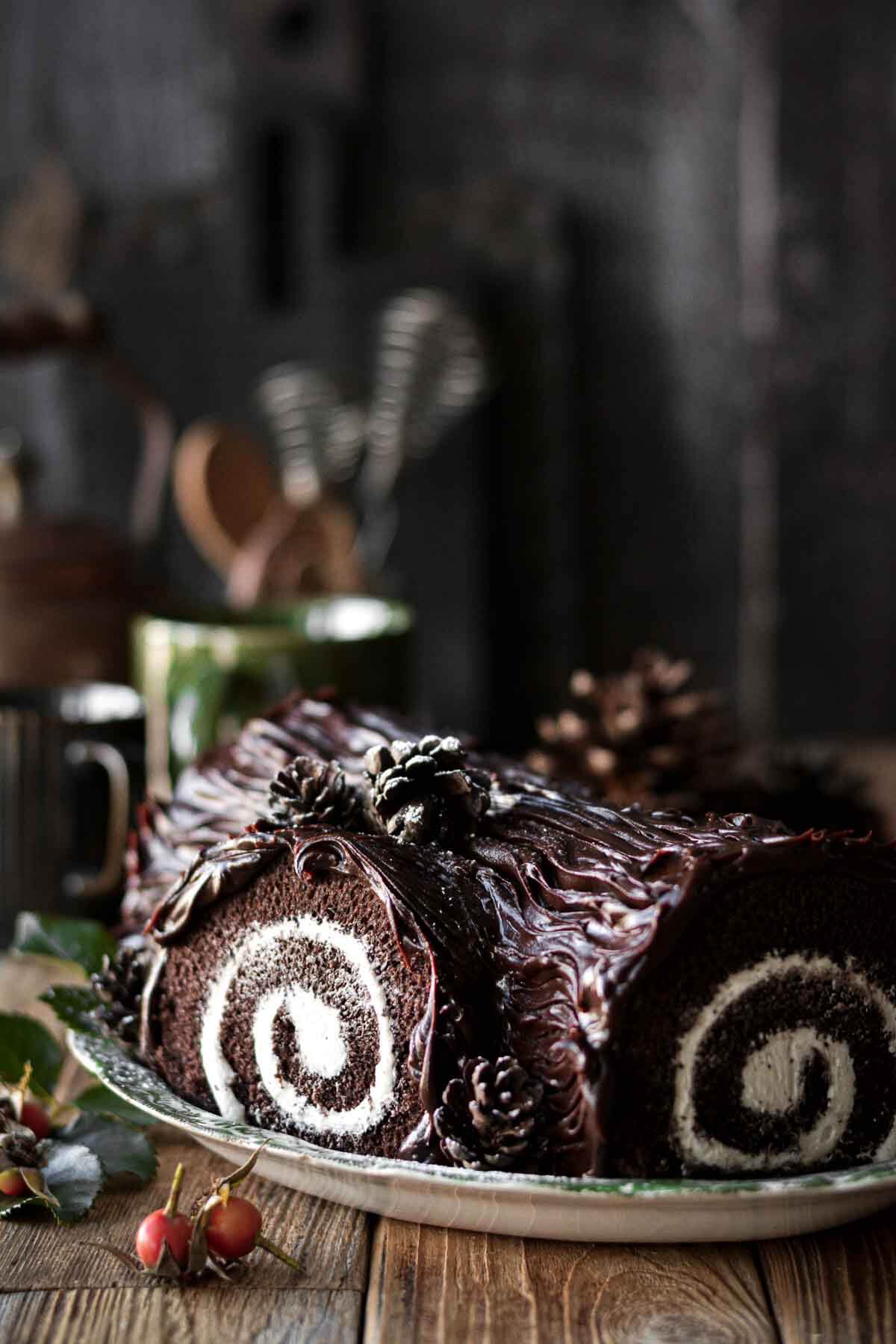
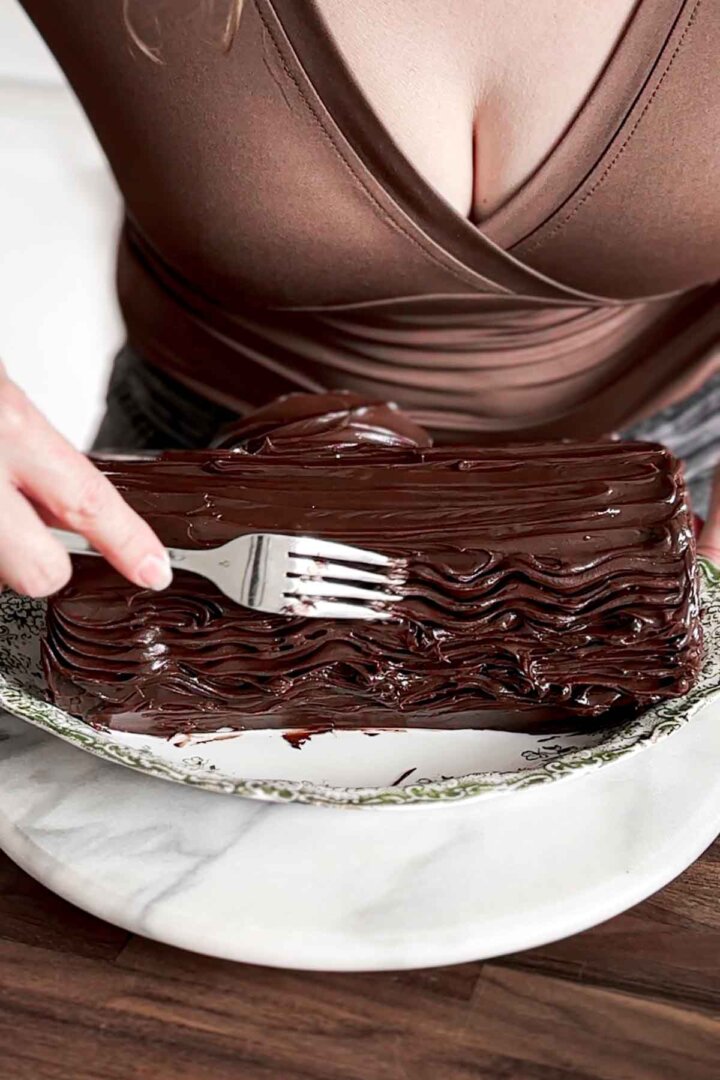
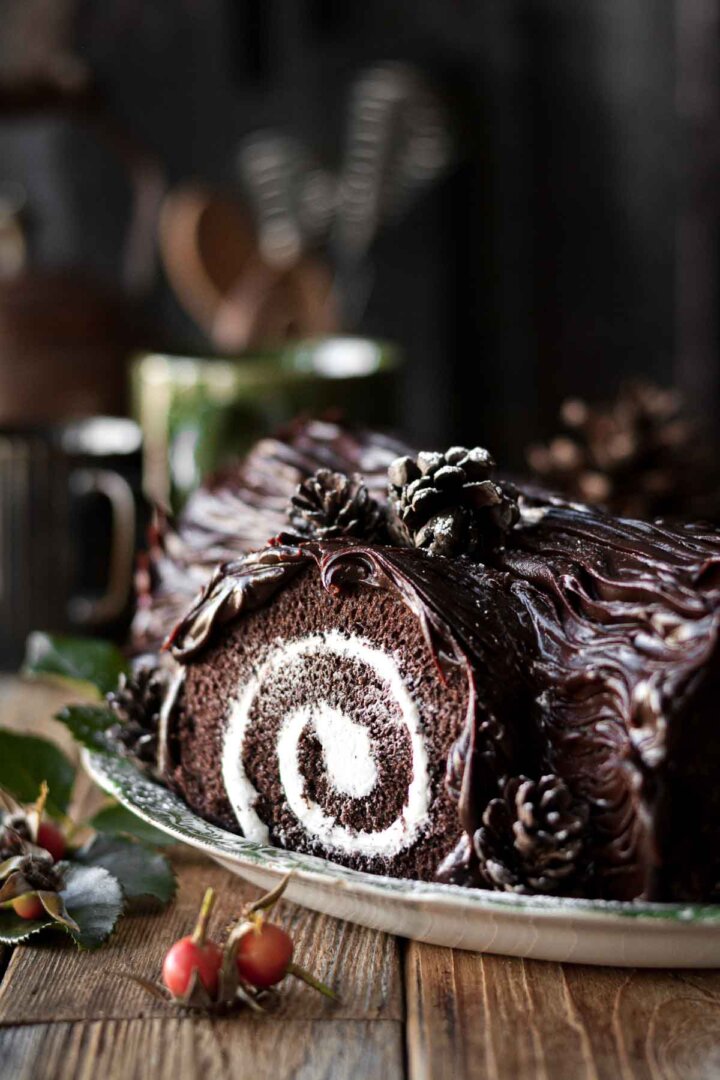
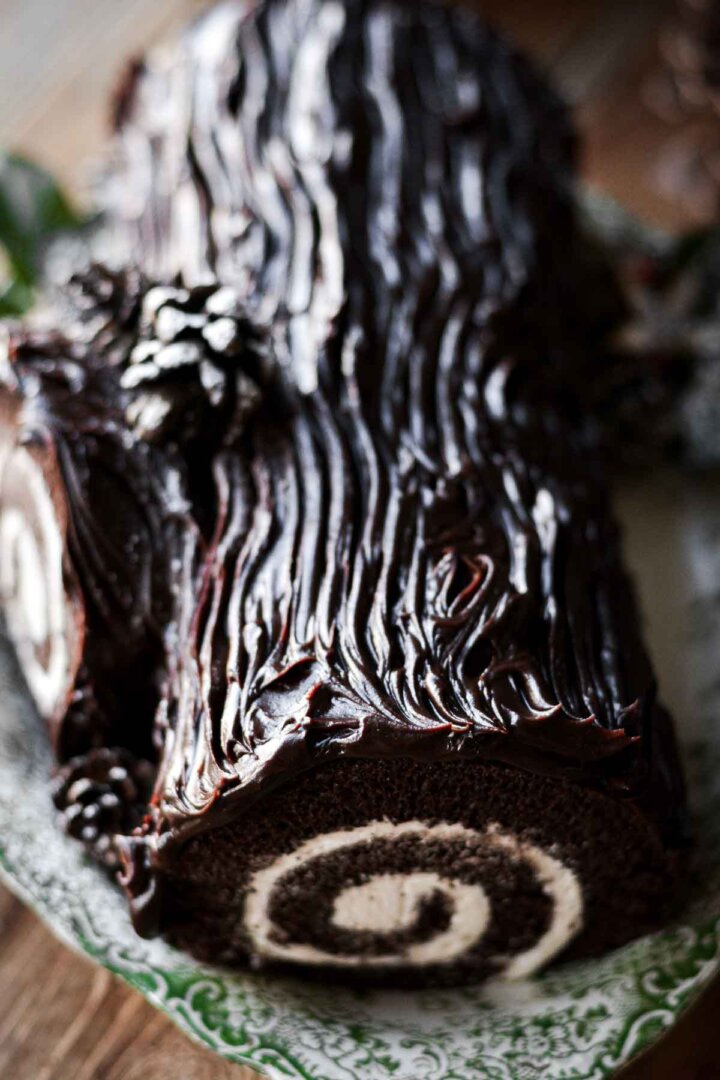
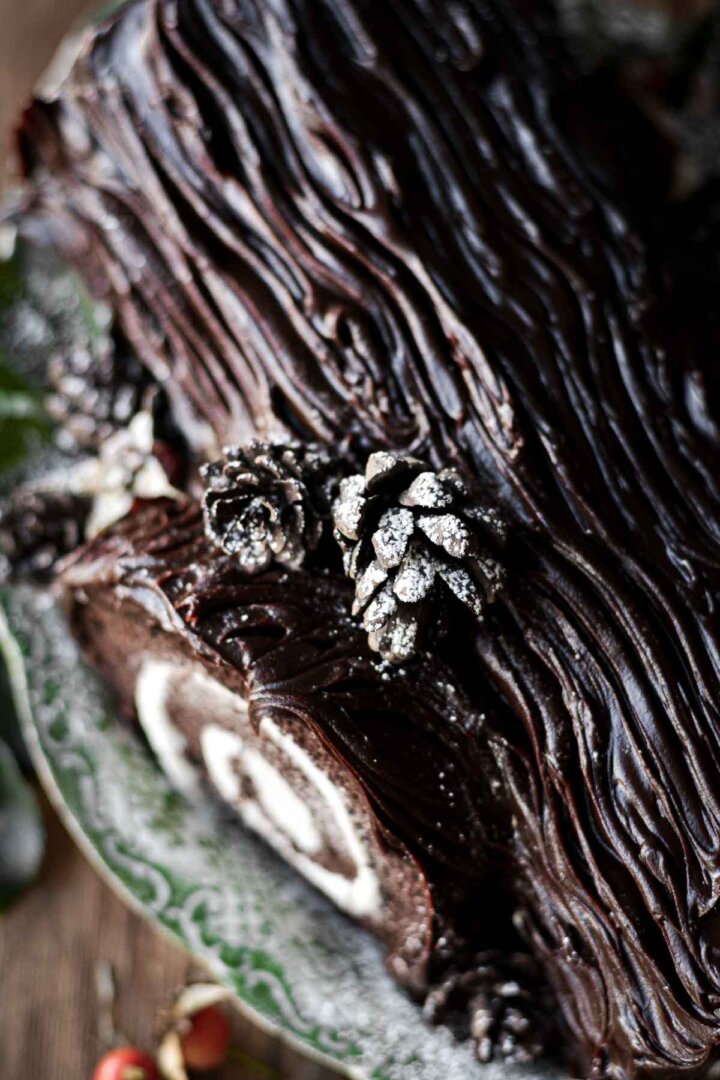
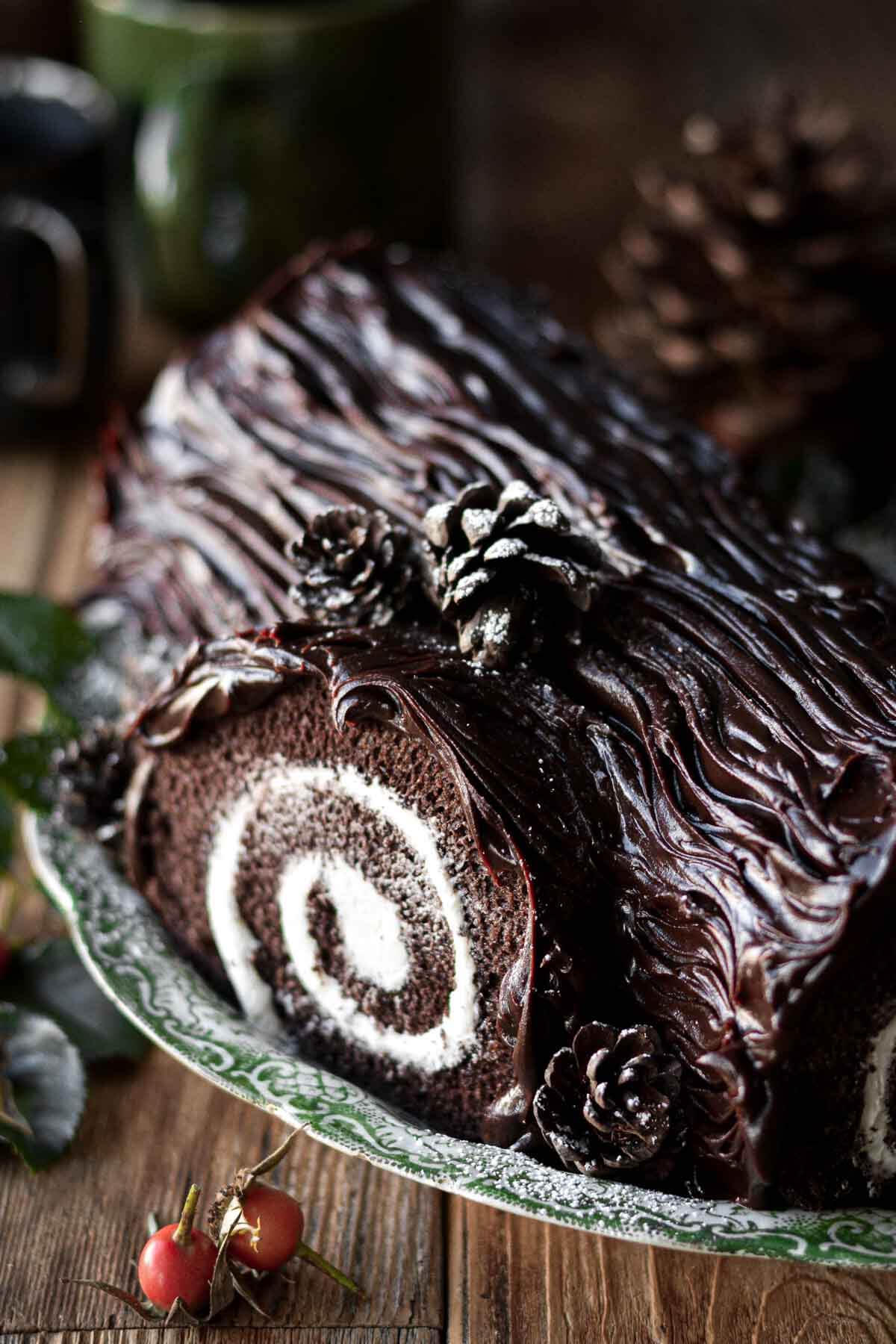
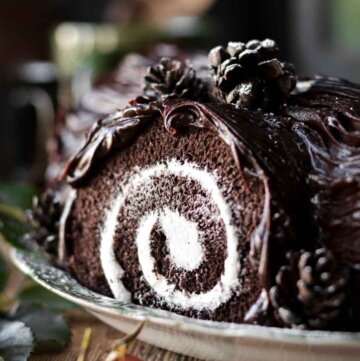
Decorating the cake is incredibly fun. You can smooth the silky ganache with an icing spatula or comb it with a fork to resemble the bark of a tree branch. Pine cones, fresh sprigs of rosemary, sugared cranberries, meringue mushrooms, powdered sugar “snow”, or even piped buttercream flowers are all lovely, festive additions to the cake. I decorated my cake with a few leaves and rose hips that I snipped from the rose bush in my garden.
See the recipe card at the end of the post for the full ingredients list and instructions.
Tools and Ingredients
- Stand Mixer with Whisk Attachment. You could likely whip the egg whites with an electric hand mixer, but a stand mixer makes it much easier. You’ll also need a stand mixer for making the buttercream.
- Rimmed Half-Sheet Pan. Many recipes for rolled cakes call for a jelly roll pan, which measures 10×15 inches. As I don’t own a jelly roll pan, I’ve used my standard 13×18 inch half sheet baking pan, which most bakers should already have on hand.
- Ganache. The ganache comes together easily with just semi-sweet chocolate chips and cream.
- Buttercream Filling. My recipe for American Buttercream is the perfect consistency for filling rolled cakes.
- Cake Flour.
- Cocoa Powder. Use unsweetened, Dutch processed cocoa powder, not natural cocoa powder.
- Granulated Sugar.
- Baking Powder.
- Salt.
- Eggs. You’ll need to separate the eggs, but you’ll be using an equal number of both yolks and whites in the cake.
- Vegetable Oil.
- Vanilla Extract.
- Cream of Tartar. This adds stability to the whipped egg whites.
Instructions
Getting Ready
- About an hour before you plan to bake your cake, separate your eggs while they’re cold from the fridge. Eggs are easiest to separate when they’re cold, but room temperature egg whites whip more quickly and easily. Separate all the yolks and whites, then let them warm up to room temperature for about an hour. Note: You don’t want any trace of egg yolk in the whites, so if one of the yolks breaks while you’re separating the eggs, set that one aside and use it for scrambled eggs or another baking project. When you separate an egg, I recommend letting the white fall into a separate small bowl first, then pour it into your mixing bowl. That way, you won’t ruin the entire bowl of egg whites if one of the yolks breaks.
- Soak a cotton ball in a little white distilled vinegar, and wipe clean the bowl and whisk attachment that you’ll be using to whip the egg whites. This ensures that they’re free of fat or grease, which can prevent the egg whites from whipping.
- Line a rimmed half sheet pan (13×18 inches) with a sheet of parchment paper. I like to snip the corners of the paper so that it neatly covers the bottom of the pan and up the rimmed sides. Lightly spray the paper with non-stick baking spray.
Ganache
- Make the ganache first, as it needs time to cool and thicken before you can use it on the cake.
- In a saucepan, combine the chocolate chips and cream. Over medium low heat, warm the mixture, stirring frequently with a rubber spatula, until the chocolate chips are nearly melted.
- Remove from the heat and stir until smooth. Pour the ganache into a bowl, and let cool and thicken at room temperature for several hours.
Baking the Cake
- Preheat the oven to 325 F, and position a rack in the center of the oven
- In a bowl, sift together the flour, cocoa powder, sugar, baking powder and salt.
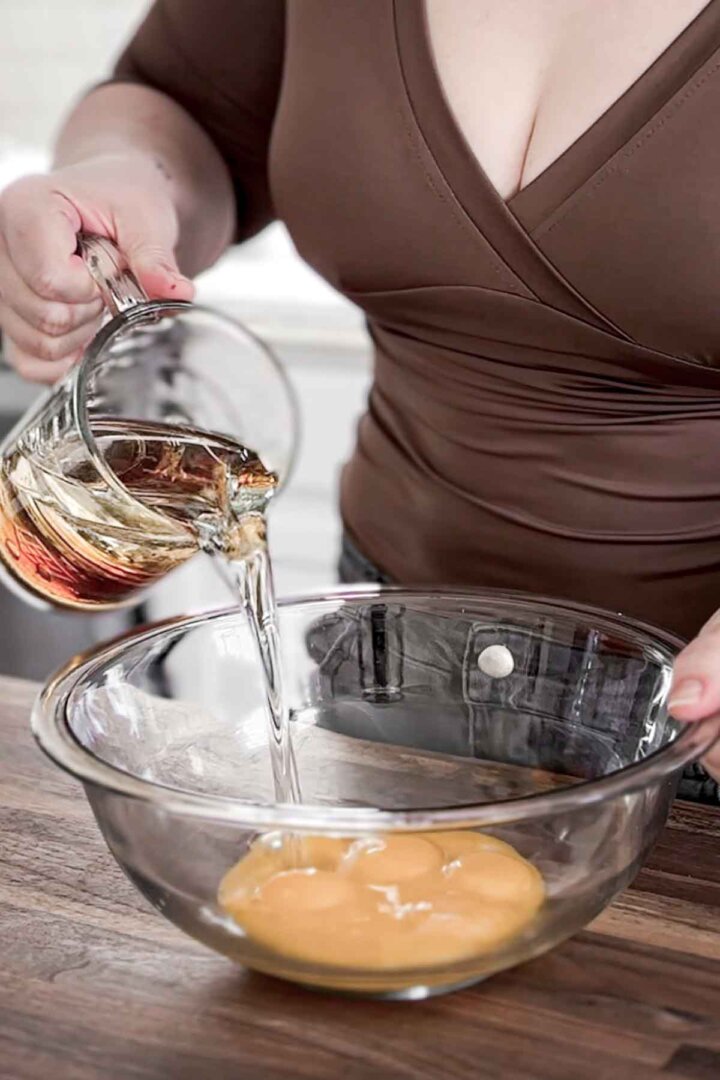
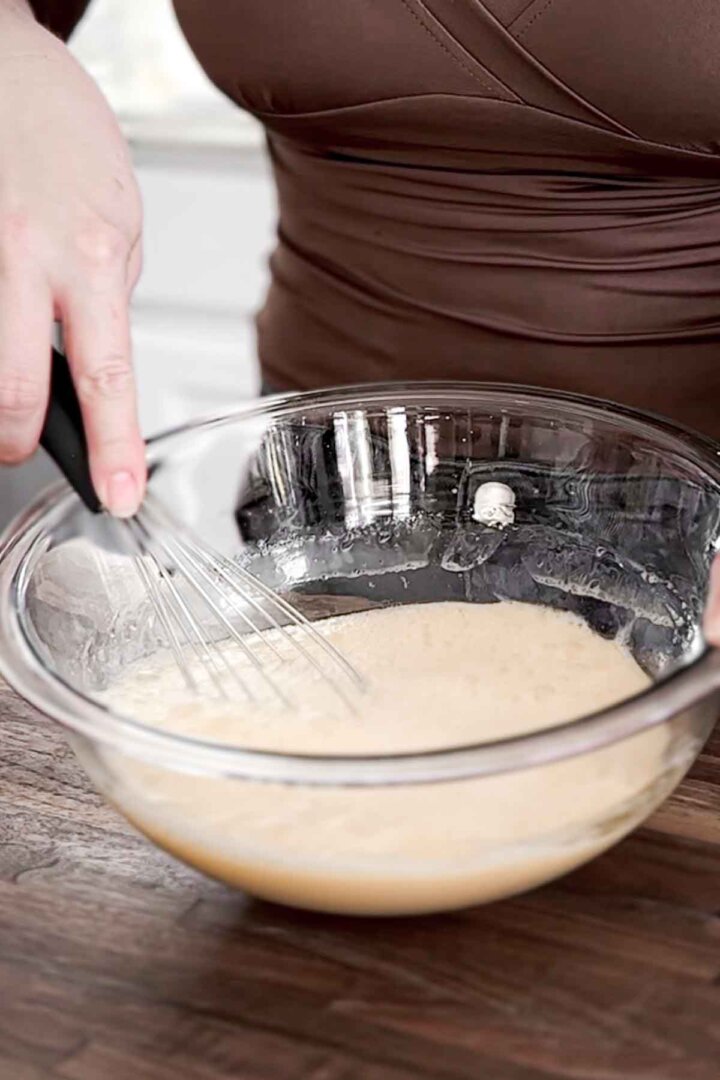
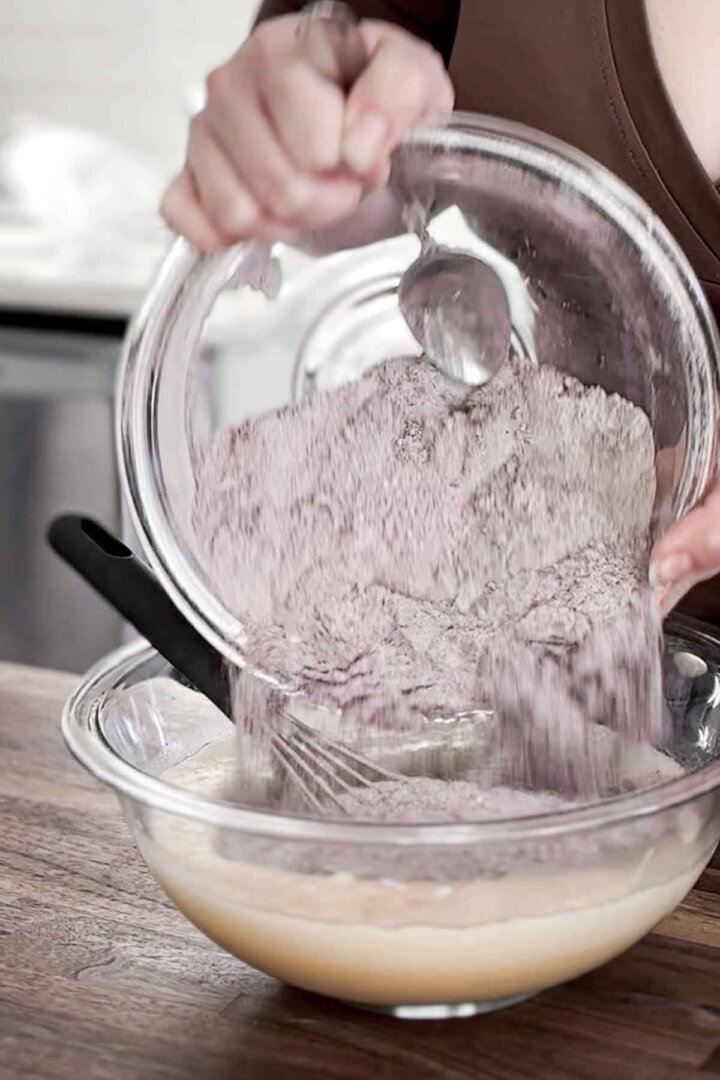
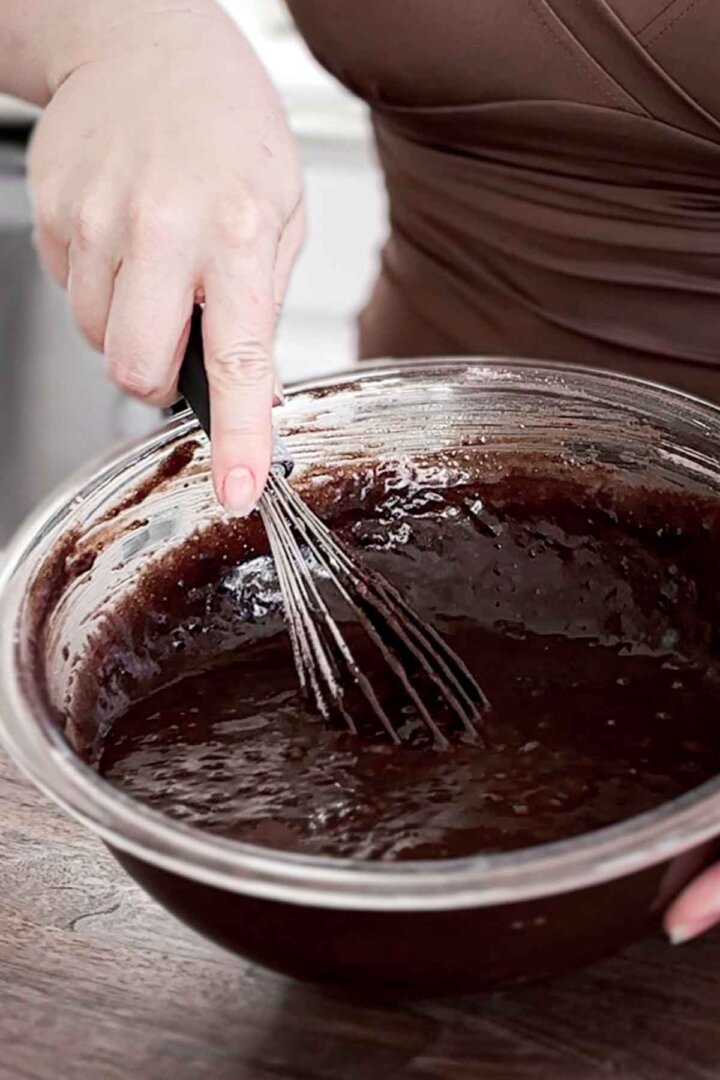
- In a separate bowl, whisk together the egg yolks, water, oil and vanilla for about 30-60 seconds, until frothy. Add the flour mixture and whisk until well combined, then set the chocolate batter aside until needed.
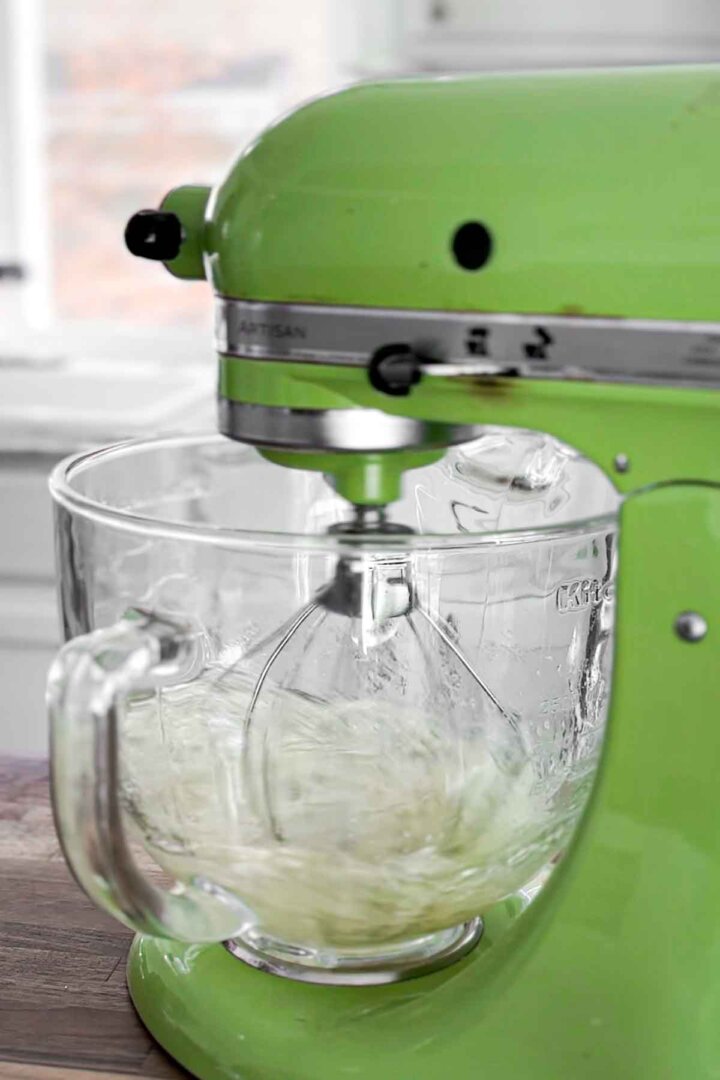
- Pour the egg whites into the bowl of your stand mixer, and add the cream of tartar. Using the whisk attachment, whip the egg whites on medium high speed, to soft peaks. This should take about 3 minutes.
- Add 1/3 of the whipped egg whites to the cake batter, gently folding them in until completely incorporated. Fold in another 1/3 of the egg whites, then fold in the last 1/3 of the egg whites, until you have a fluffy, airy batter with no visible white streaks. The batter needs to be evenly mixed so that your cake crumb is uniform throughout.
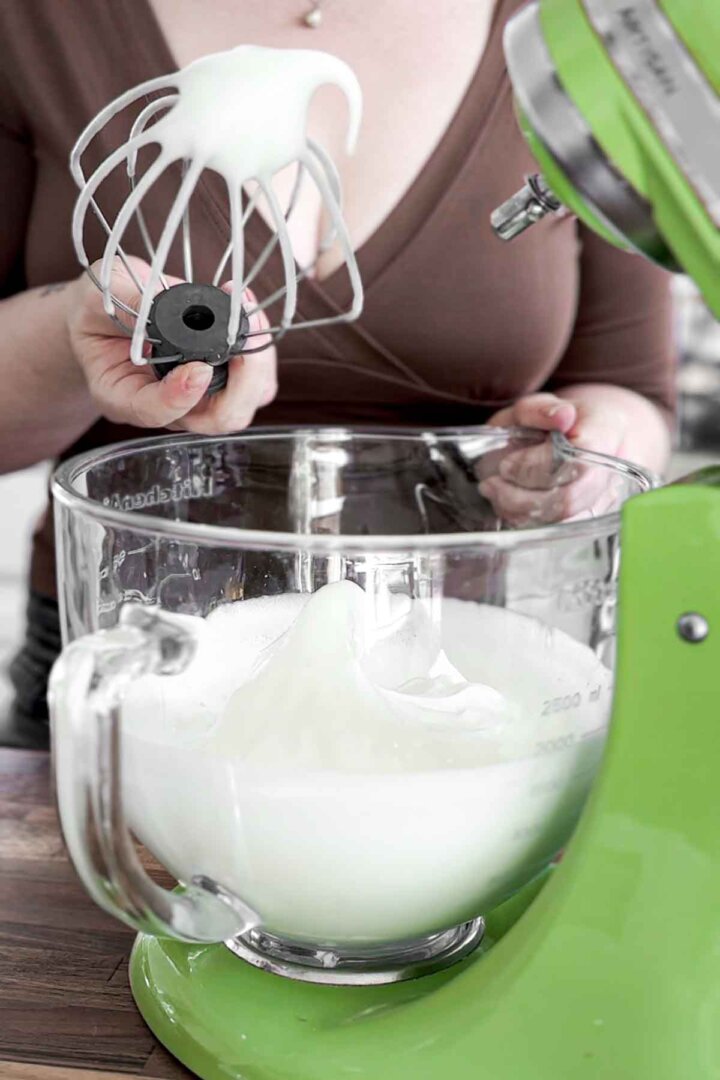
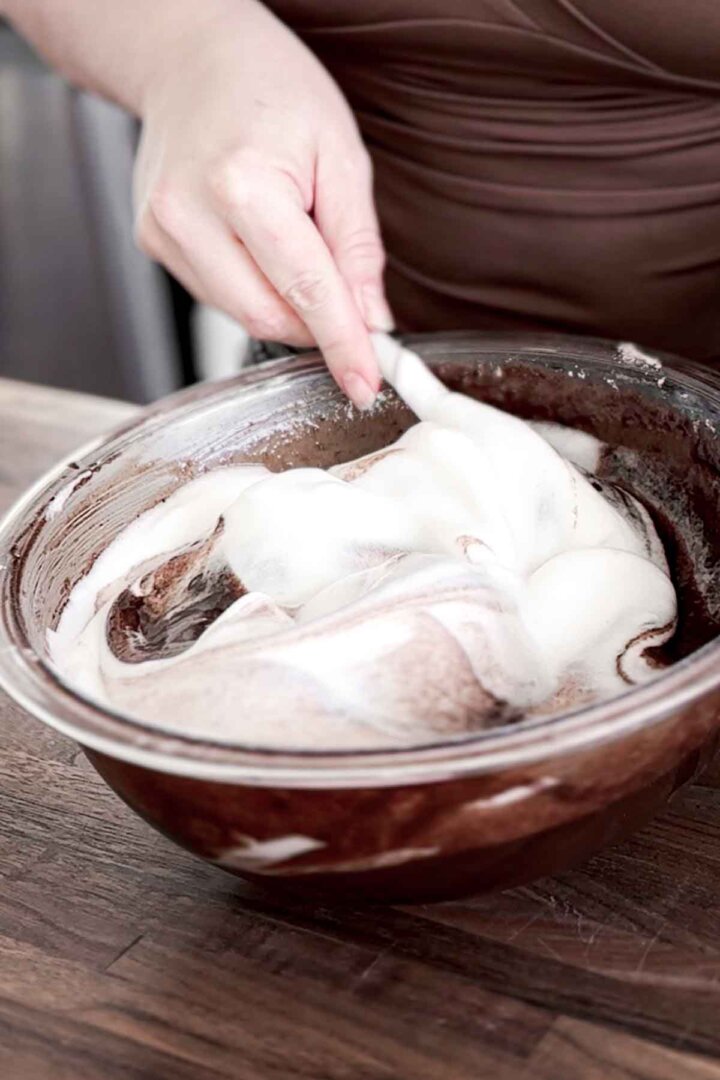
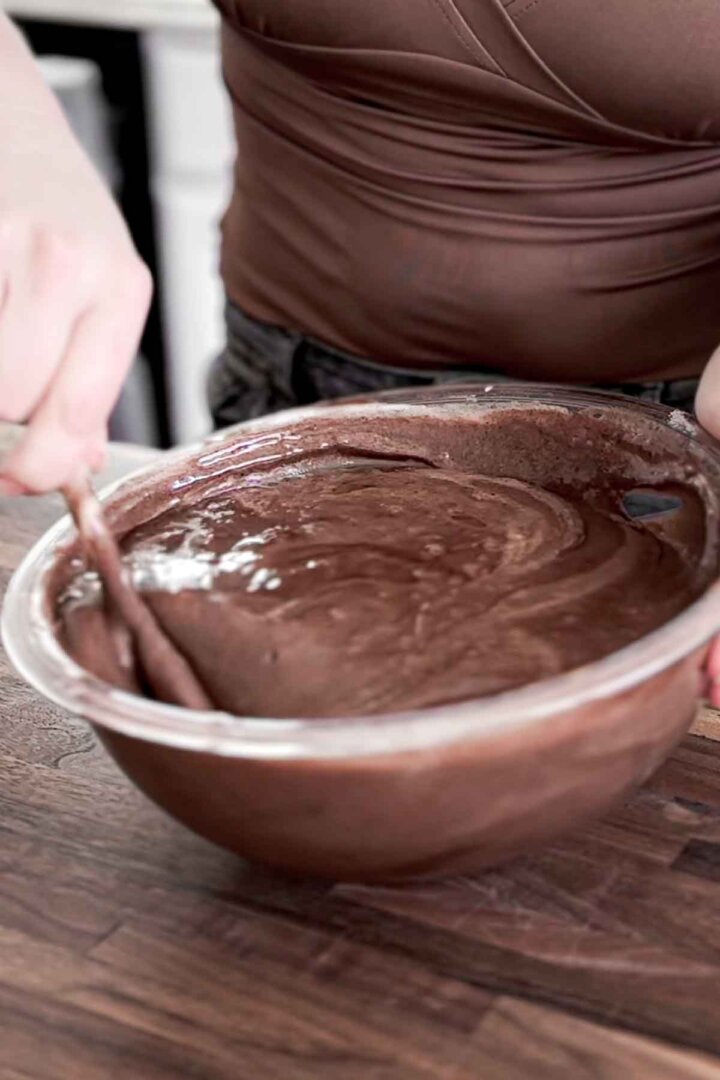
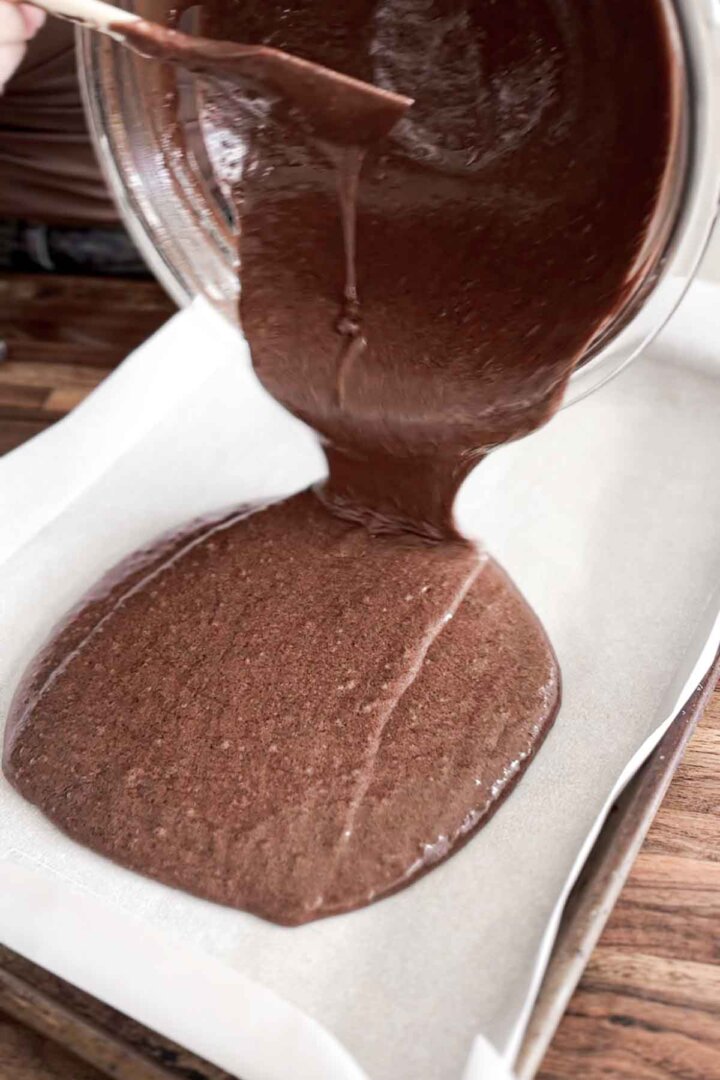
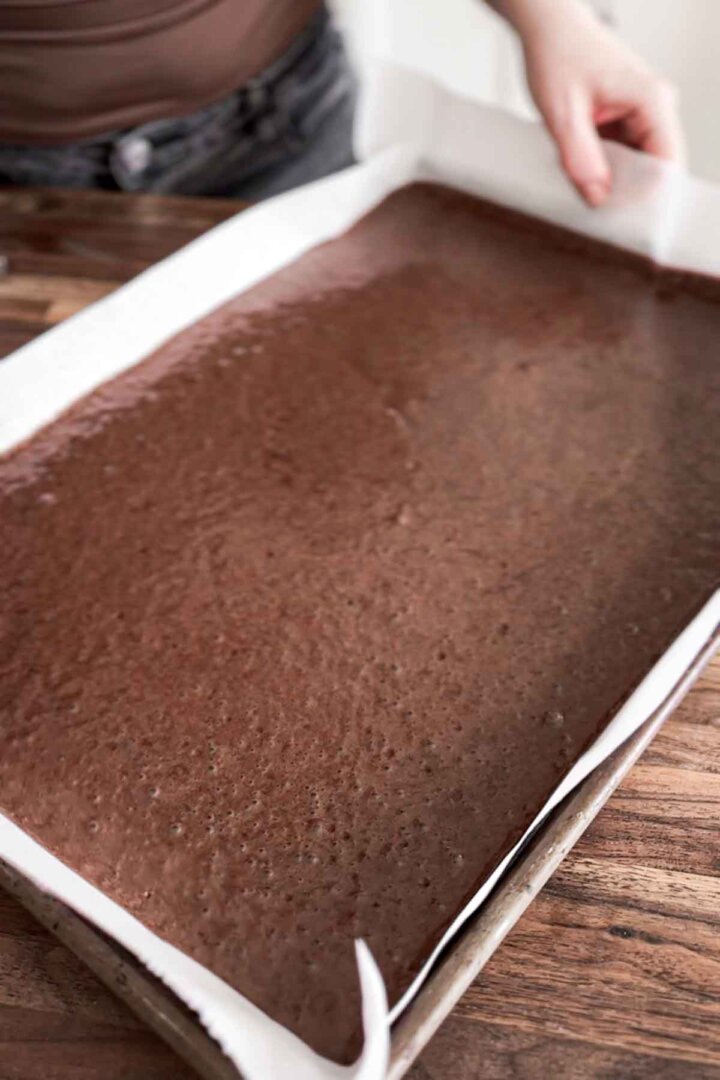
- Pour the batter into the prepared baking sheet. Tilt the baking sheet so the batter spreads evenly into all four corners, then bang it on the counter a few times to pop any air bubbles.
- Bake the cake for about 15-18 minutes, until the center springs back when gently touched.
Rolling the Cake
- Gently slide the hot cake (still on the parchment paper), off the baking sheet and onto a large cooling rack (or just your kitchen counter). Let cool for five minutes to let some of the steam escape.
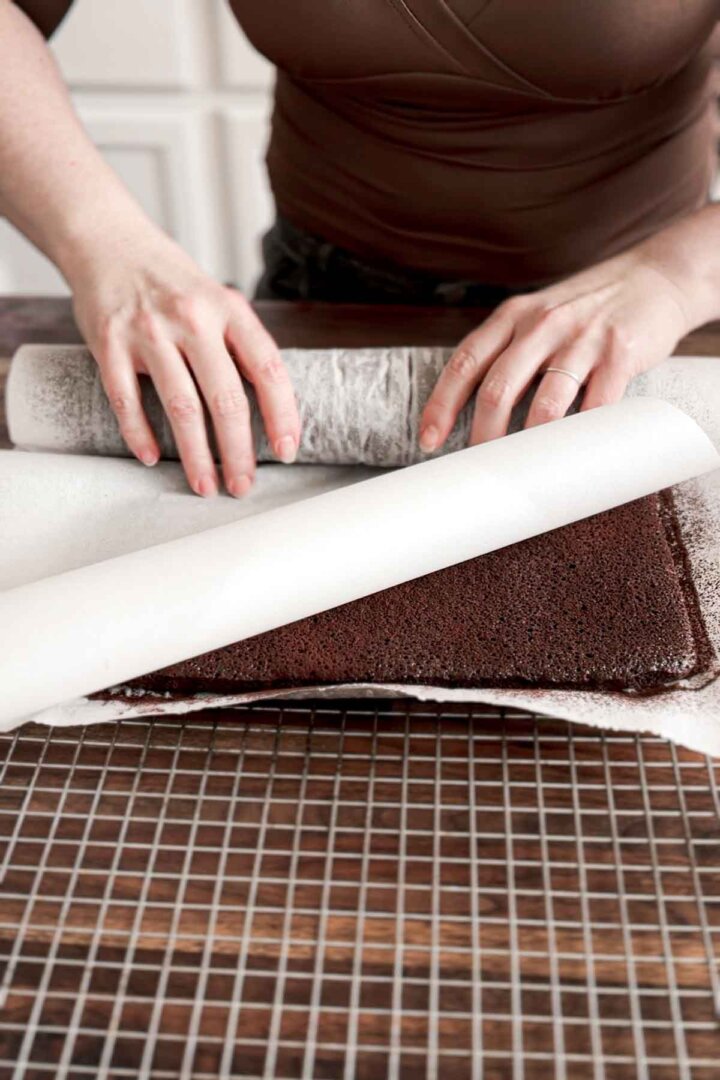
- Lightly dust the top of the warm cake with cocoa powder. Lay a second sheet of parchment paper on top of the cake, and roll the cake up (from one end to the other), between the two sheets of paper.
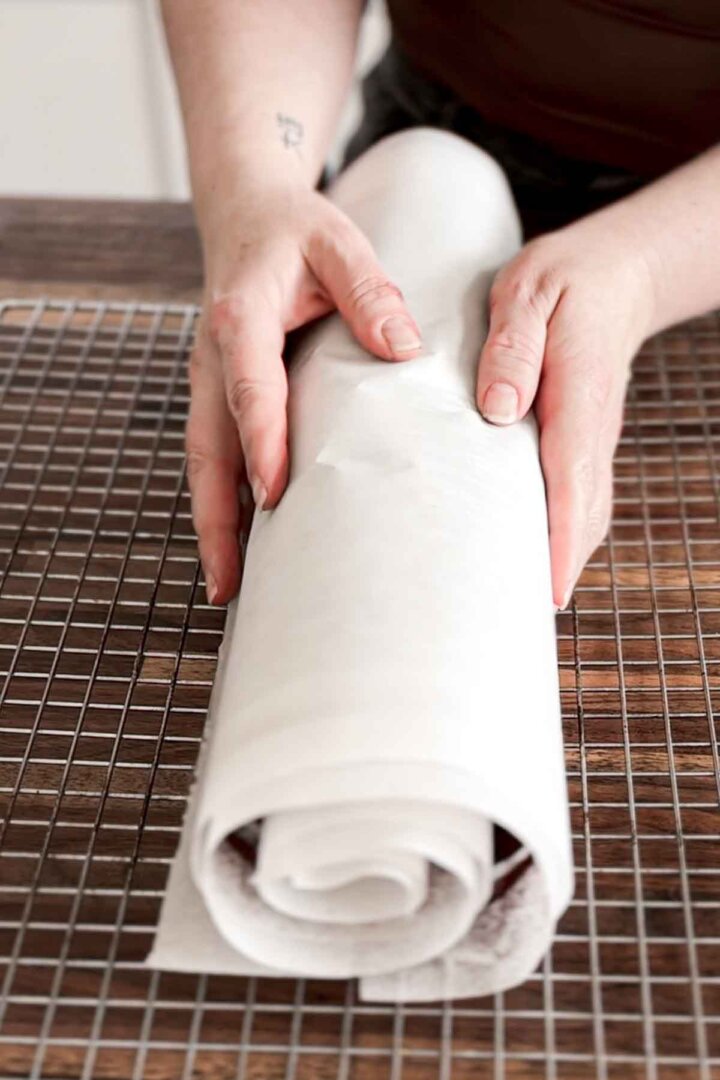
- Let the cake cool completely in its rolled up position. To speed up the cooling, I set the cake log on a pan, and set it in the refrigerator until cooled.
Buttercream Filling
- Make 2x the recipe for American buttercream.
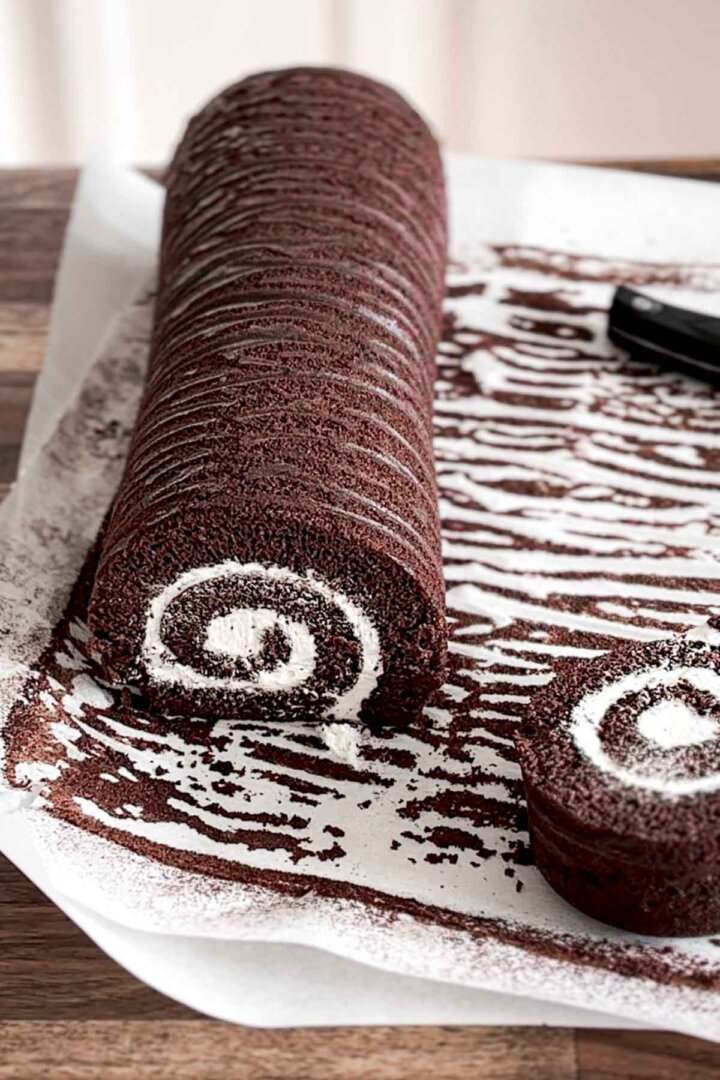
- Gently unroll the cooled cake, and remove the top sheet of parchment paper.
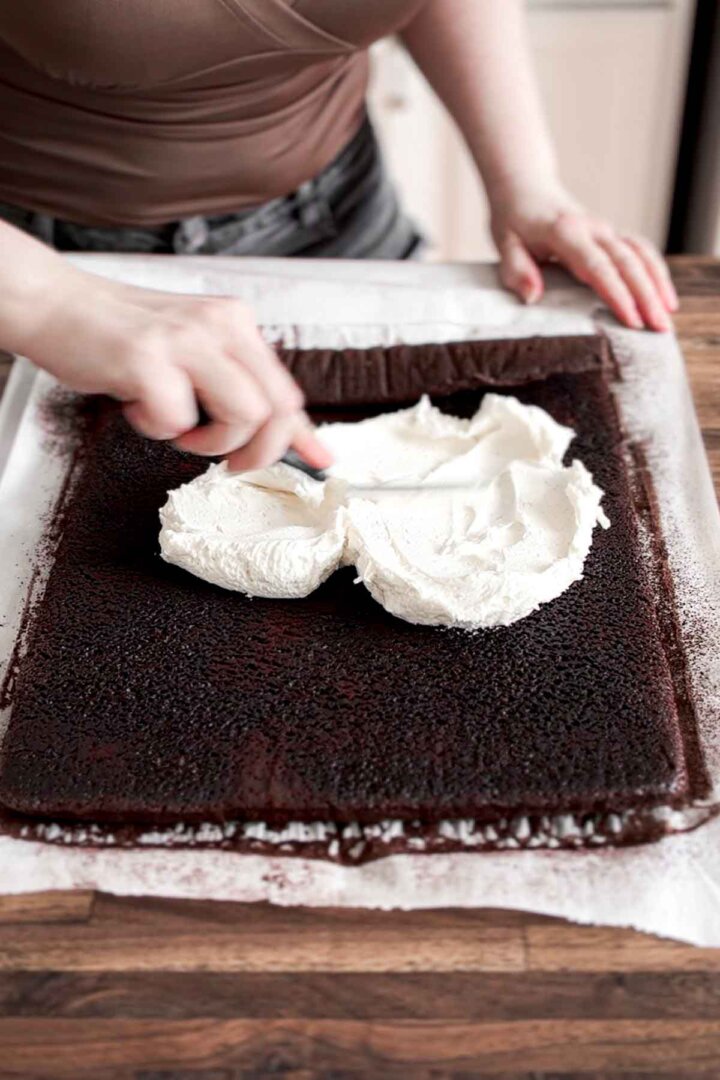
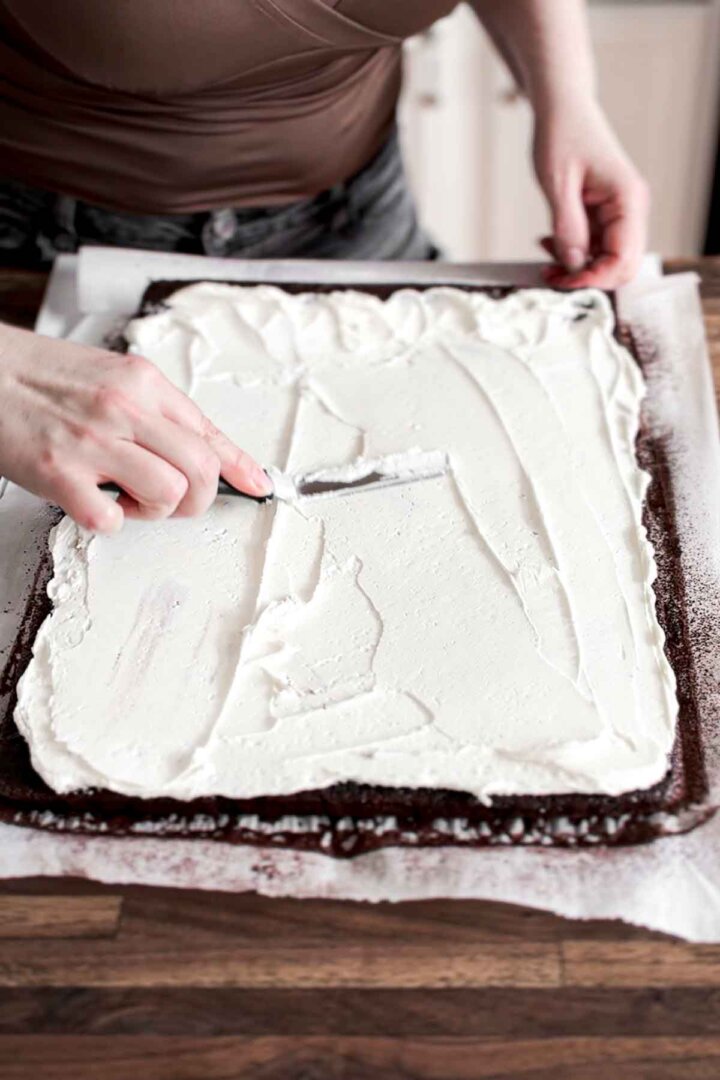
- Evenly spread the buttercream over the cake, all the way to the edges.
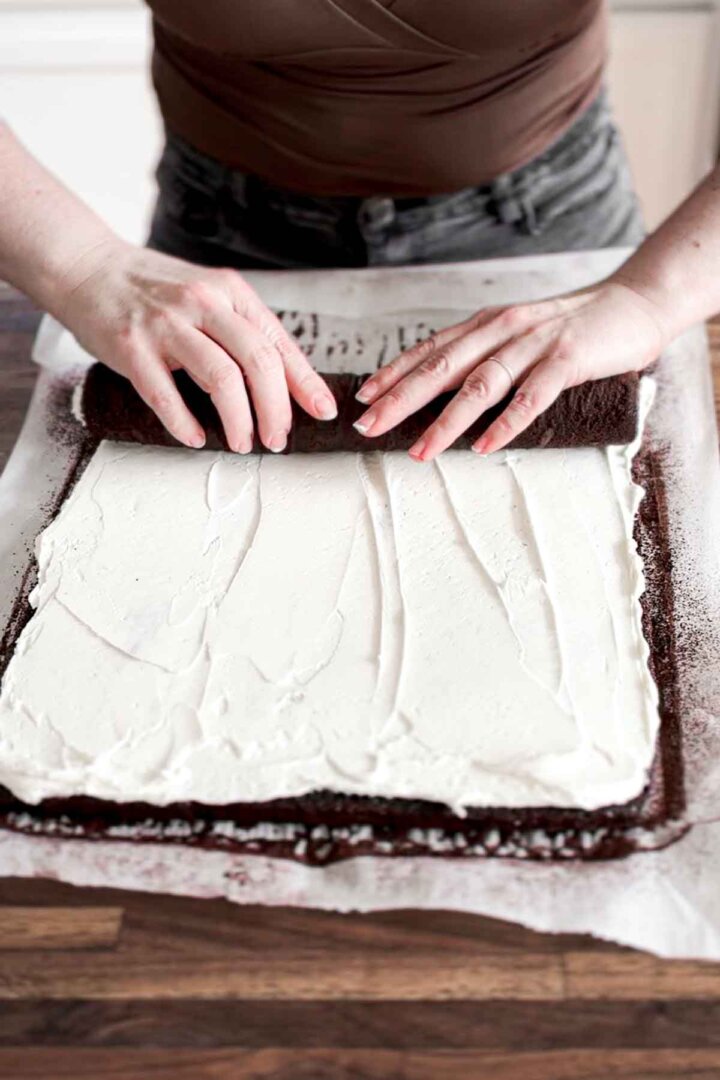
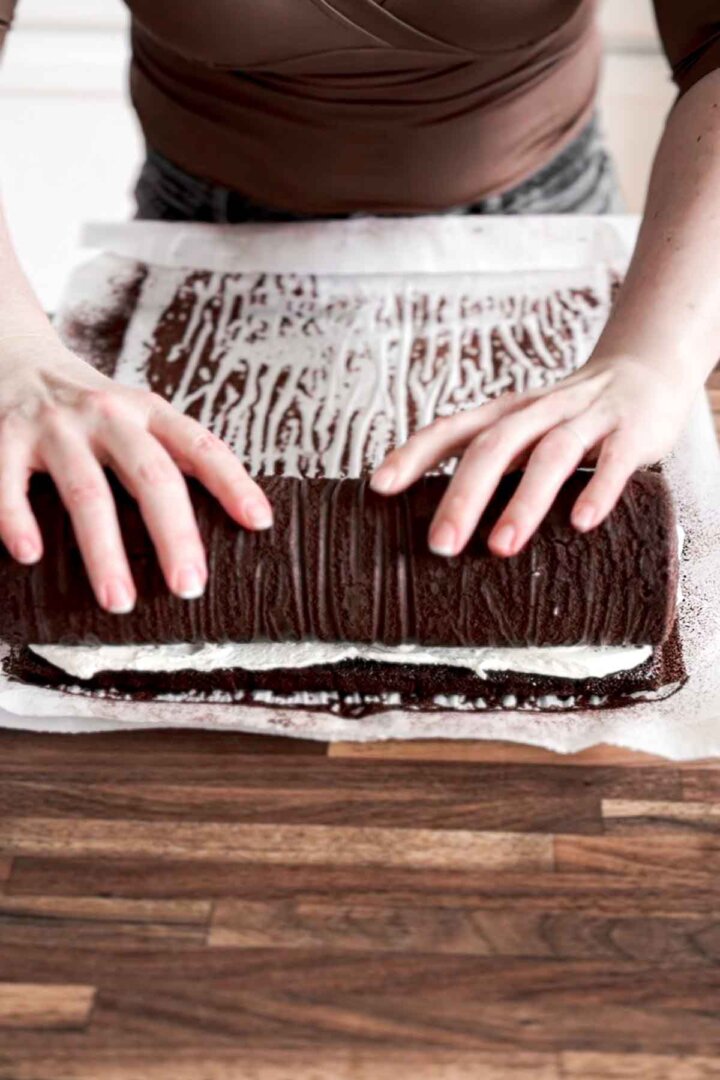
- Now roll the cake up again. As you go, the cake should peel right off the bottom sheet of parchment paper.
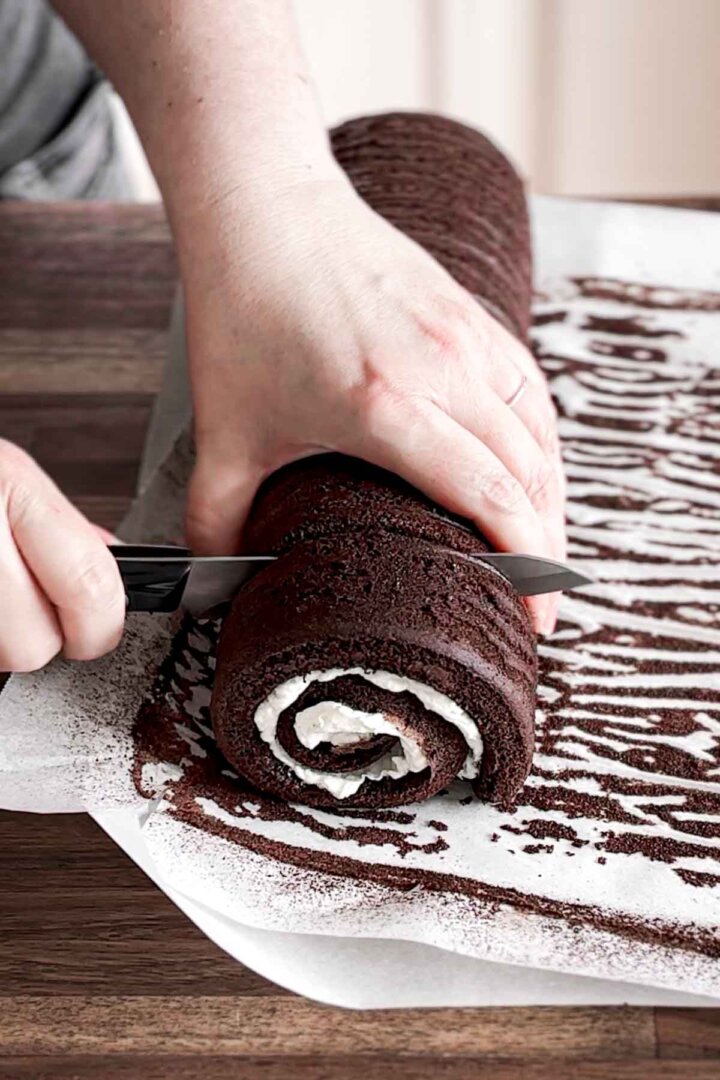
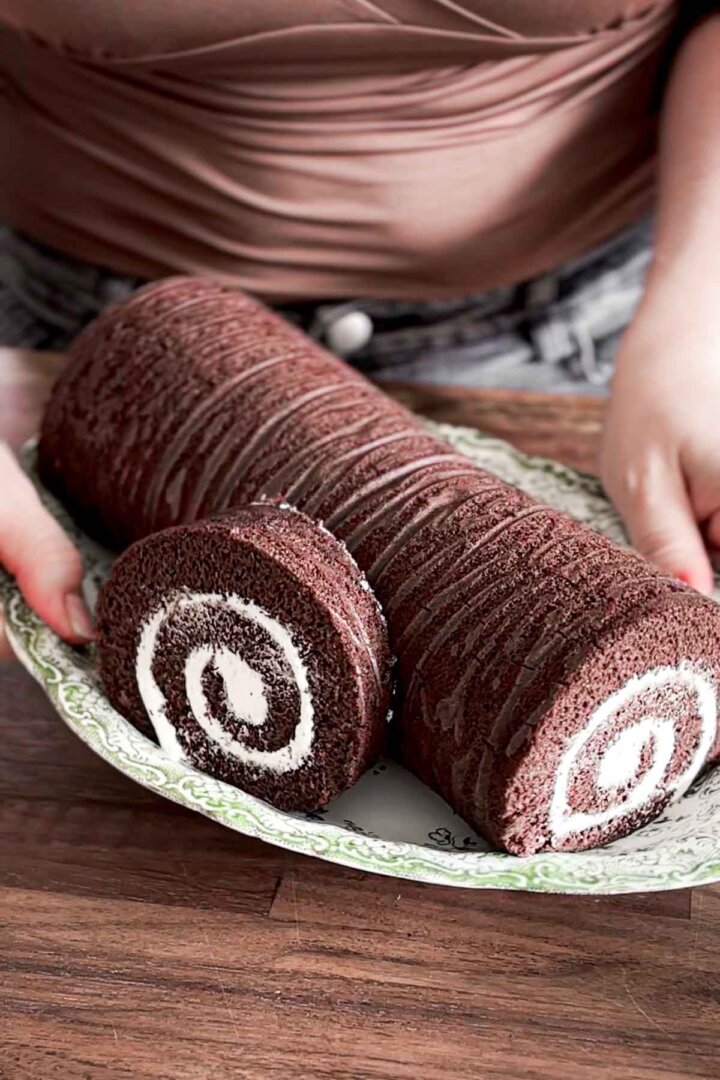
- You should now have a rolled up log of cake, measuring about 13 inches long. Cut a 2-3 inch piece off one end of the cake, cutting it at a slight angle if you like. Then set the cake log on a serving plate, with the smaller piece arranged on the side of the log, like a cut branch.
Ganache, and Decorating
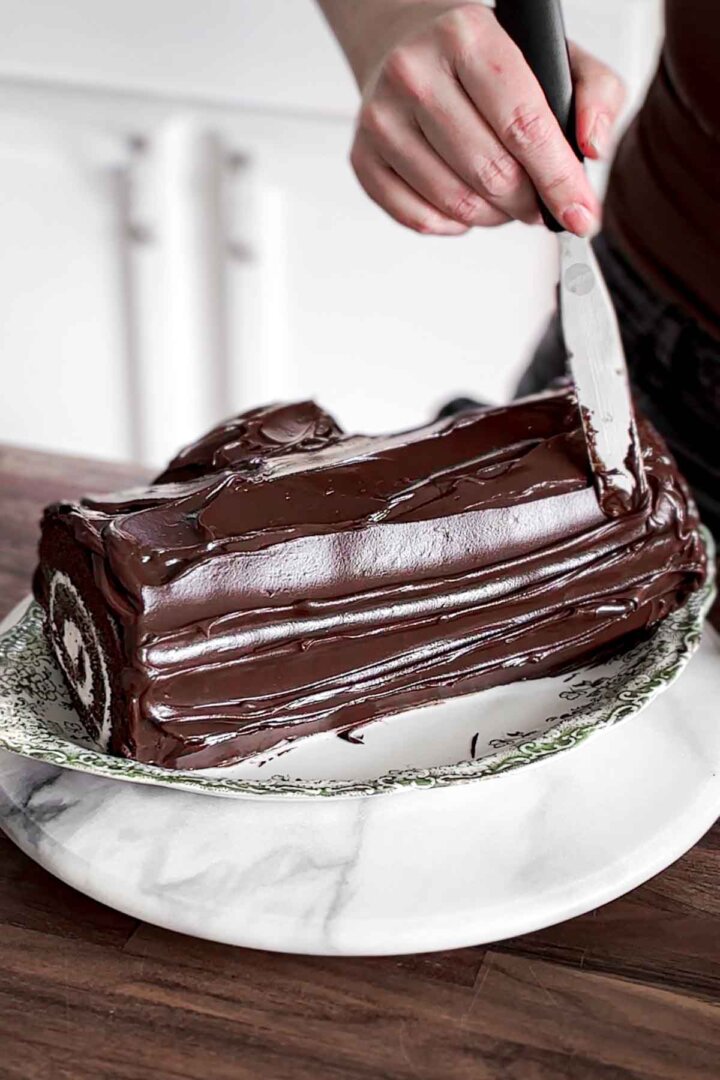
- If the ganache is sufficiently cooled and thickened, use an icing spatula to frost the cake, leaving the cut ends unfrosted. The ganache is smooth and silky, and it’s easy to add bark-like texture, either with the spatula, or with the tines of a fork.
- To finish, you can decorate your cake any way you like, with sprigs of rosemary, sugared cranberries, pine cones, meringue mushrooms, shaved chocolate shards, or a simple dusting of powdered sugar. I snipped a few leaves and rose hips from my rose bush to place around my cake, along with a few small pine cones.
Tips and Best Practices
- Use a Sponge Cake Recipe for Rolled Cakes. You actually can’t use just any cake to make a rolled cake. The soft, fluffy, crumbly, or dense texture of some cakes simply won’t work when attempting to roll the cake up into a spiral, resulting in a cracked or broken yule log cake. You need to use a sponge cake recipe (such as today’s chocolate chiffon cake), which is more flexible for rolling.
- Roll the Cake while it’s Warm. You’ll only let the cake cool for five minutes, just to allow steam to evaporate, before rolling it up between two sheets of parchment paper. The cake is more flexible while it’s warm, and since the cake will cool completely in this rolled up position, it will retain the curled shape (think of it like “muscle memory”), so that after spreading it with buttercream, you can easily roll it up again into a log without cracking the cake.
- Whip Room Temperature Egg Whites. About an hour before you plan to bake your cake, separate your eggs (they’re easier to separate when cold from the fridge), then let them warm up at room temperature. Room temperature egg whites whip more quickly and easily.
- Make the Ganache First. The ganache will thicken as it cools, so make it first, so that it has a few hours at room temperature to thicken to the perfect consistency for decorating your cake.
Be sure to read all of my BAKING FAQs where I discuss ingredients, substitutions and common questions with cake making, so that you can be successful in your own baking! I also suggest reading these comprehensive posts on making Perfect American Buttercream, How to Stack, Fill, Crumb Coat and Frost Layer Cakes and How to Use Piping Bags.
Frequently Asked Questions
Store leftover cake in an airtight container at room temperature for up to 3 days.
You need to use cake flour for the best results. Cake flour has a lower percentage of protein, making a softer, lighter, fluffier cake.
Chiffon cakes are always made with oil, not butter, which keeps them moist, light and springy. Butter can tighten the cake crumb as it cools and make it more dense than it should be. You can, however, use a neutral tasting olive oil instead of the vegetable oil.
You can make the buttercream in advance, and freeze it in an airtight container for up to 3-6 months. After thawing, you may need to re-whip it for several minutes.
Yes, you can freeze the rolled cake, already assembled and filled with buttercream and frosted with ganache, in an airtight container for up to two weeks.
You Might Also Like


Please check out my Amazon Shop for a curated collection of some of my favorite cake pans from trusted brands, baking tools, ingredients, pretty things and fashion finds. I recommend products that I buy and use every day!
This site contains affiliate links. As an Amazon associate, I earn from qualifying purchases. This means that I may make a small commission if you purchase a product using those links. This in no way affects my opinion of those products and services. All opinions expressed on this site are my own.
Did you love today’s recipe? Please rate the recipe and let me know in the comments what you thought! Also, be sure to follow Curly Girl Kitchen on Instagram, and tag me when you try one of my recipes so I can see all your delicious creations!
High Altitude Yule Log Cake (Bûche de Noël)
All recipes on Curly Girl Kitchen are developed for high altitude at 5,280 feet. See FAQs for adjusting to higher or lower elevations.

Equipment
- Stand Mixer with Whisk Attachment
- Rimmed Half-Sheet Pan (13×18 inches)
Ingredients
Chocolate Ganache
- ¾ cup semi-sweet chocolate chips
- ¾ cup (6 oz) heavy whipping cream
Chocolate Cake
- 1 cup cake flour, fluffed, spooned and leveled
- 5 tbsp unsweetened Dutch processed cocoa powder
- ½ cup granulated sugar
- 1 tsp baking powder
- ½ tsp coarse Kosher salt (if using table salt, use half the amount)
- 4 large egg yolks
- ⅓ cup water
- ⅓ cup vegetable oil
- 2 tsp vanilla extract
- 4 large egg whites, room temperature
- ¼ tsp cream of tartar
Vanilla Buttercream
- 2x recipe American Buttercream
Instructions
Getting Ready
- About an hour before you plan to bake your cake, separate your eggs while they're cold from the fridge. Eggs are easiest to separate when they're cold, but room temperature egg whites whip more quickly and easily. Separate all the yolks and whites, then let them warm up to room temperature for about an hour. Note: You don't want any trace of egg yolk in the whites, so if one of the yolks breaks while you're separating the eggs, set that one aside and use it for scrambled eggs or another baking project. When you separate an egg, I recommend letting the white fall into a separate small bowl first, then pour it into your mixing bowl. That way, you won't ruin the entire bowl of egg whites if one of the yolks breaks.
- Soak a cotton ball in a little white distilled vinegar, and wipe clean the bowl and whisk attachment that you'll be using to whip the egg whites. This ensures that they're free of fat or grease, which can prevent the egg whites from whipping.
- Line a rimmed half sheet pan (13×18 inches) with a sheet of parchment paper. I like to snip the corners of the paper so that it neatly covers the bottom of the pan and up the rimmed sides. Lightly spray the paper with non-stick baking spray.
Ganache
- Make the ganache first, as it needs time to cool and thicken before you can use it on the cake.
- In a saucepan, combine the chocolate chips and cream. Over medium low heat, warm the mixture, stirring frequently with a rubber spatula, until the chocolate chips are nearly melted.
- Remove from the heat and stir until smooth. Pour the ganache into a bowl, and let cool and thicken at room temperature for several hours.
Baking the Cake
- Preheat the oven to 325 F, and position a rack in the center of the oven
- In a bowl, sift together the flour, cocoa powder, sugar, baking powder and salt.
- In a separate bowl, whisk together the egg yolks, water, oil and vanilla for about 30-60 seconds, until frothy. Add the flour mixture and whisk until well combined, then set the chocolate batter aside until needed.
- Pour the egg whites into the bowl of your stand mixer, and add the cream of tartar. Using the whisk attachment, whip the egg whites on medium high speed, to soft peaks. This should take about 3 minutes.
- Add 1/3 of the whipped egg whites to the cake batter, gently folding them in until completely incorporated. Fold in another 1/3 of the egg whites, then fold in the last 1/3 of the egg whites, until you have a fluffy, airy batter with no visible white streaks. The batter needs to be evenly mixed so that your cake crumb is uniform throughout.
- Pour the batter into the prepared baking sheet. Tilt the baking sheet so the batter spreads evenly into all four corners, then bang it on the counter a few times to pop any air bubbles.
- Bake the cake for about 15-18 minutes, until the center springs back when gently touched.
Rolling the Cake
- Gently slide the hot cake (still on the parchment paper), off the baking sheet and onto a large cooling rack (or just your kitchen counter). Let cool for five minutes to let some of the steam escape.
- Lightly dust the top of the warm cake with cocoa powder. Lay a second sheet of parchment paper on top of the cake, and roll the cake up (from one end to the other), between the two sheets of paper.
- Let the cake cool completely in its rolled up position. To speed up the cooling, I set the cake log on a pan, and set it in the refrigerator until cooled.
Buttercream Filling
- Gently unroll the cooled cake, and remove the top sheet of parchment paper.
- Evenly spread the buttercream over the cake, all the way to the edges.
- Now roll the cake up again. As you go, the cake should peel right off the bottom sheet of parchment paper.
- You should now have a rolled up log of cake, measuring about 13 inches long. Cut a 2-3 inch piece off one end of the cake, cutting it at a slight angle if you like. Then set the cake log on a serving plate, with the smaller piece arranged on the side of the log, like a cut branch.
Ganache, and Decorating
- If the ganache is sufficiently cooled and thickened, use an icing spatula to frost the cake, leaving the cut ends unfrosted. The ganache is smooth and silky, and it's easy to add bark-like texture, either with the spatula, or with the tines of a fork.
- To finish, you can decorate your cake any way you like, with sprigs of rosemary, sugared cranberries, pine cones, meringue mushrooms, shaved chocolate shards, or a simple dusting of powdered sugar. I snipped a few leaves and rose hips from my rose bush to place around my cake, along with a few small pine cones.
Video
Notes
 https://curlygirlkitchen.com/

Leave a Reply