
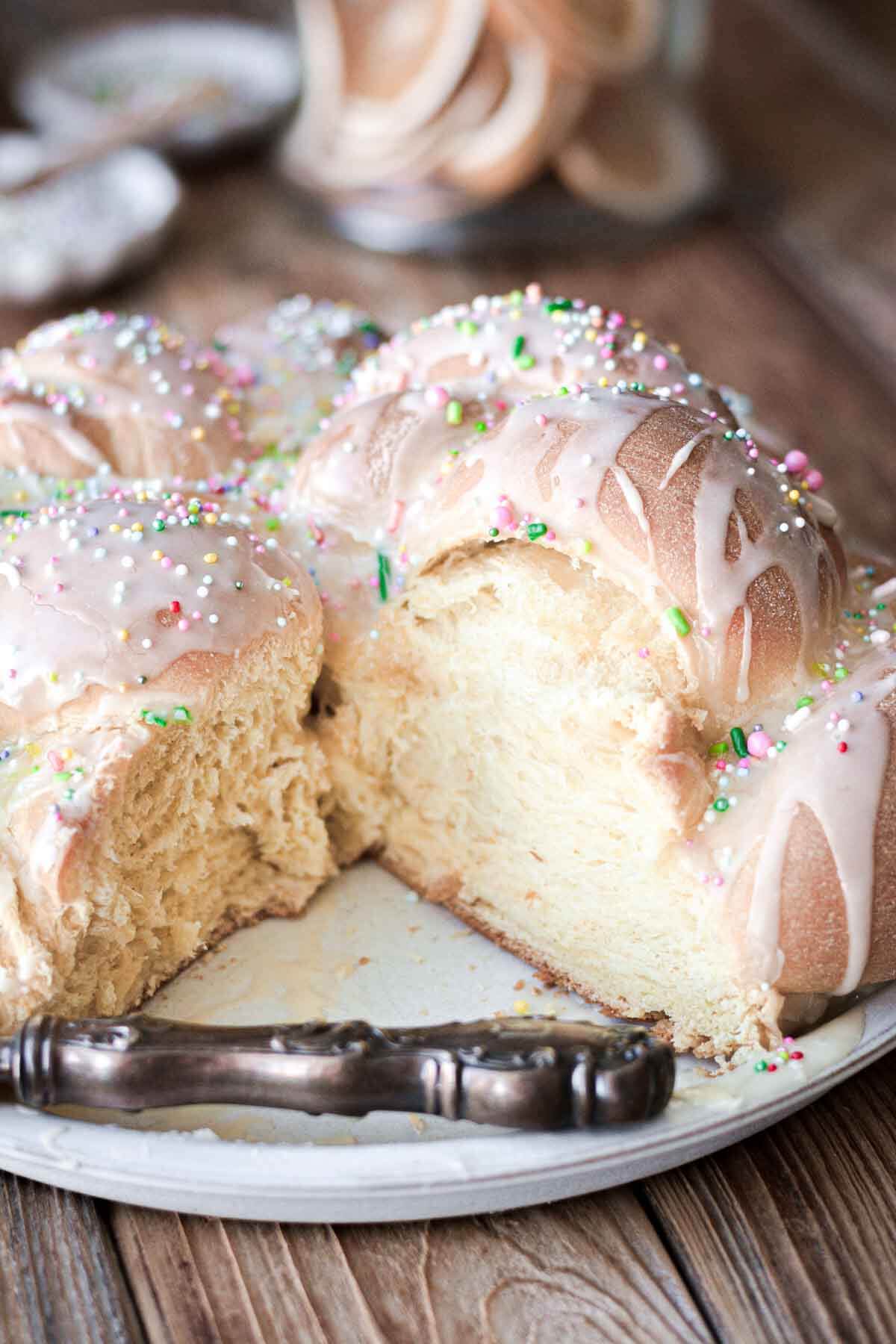
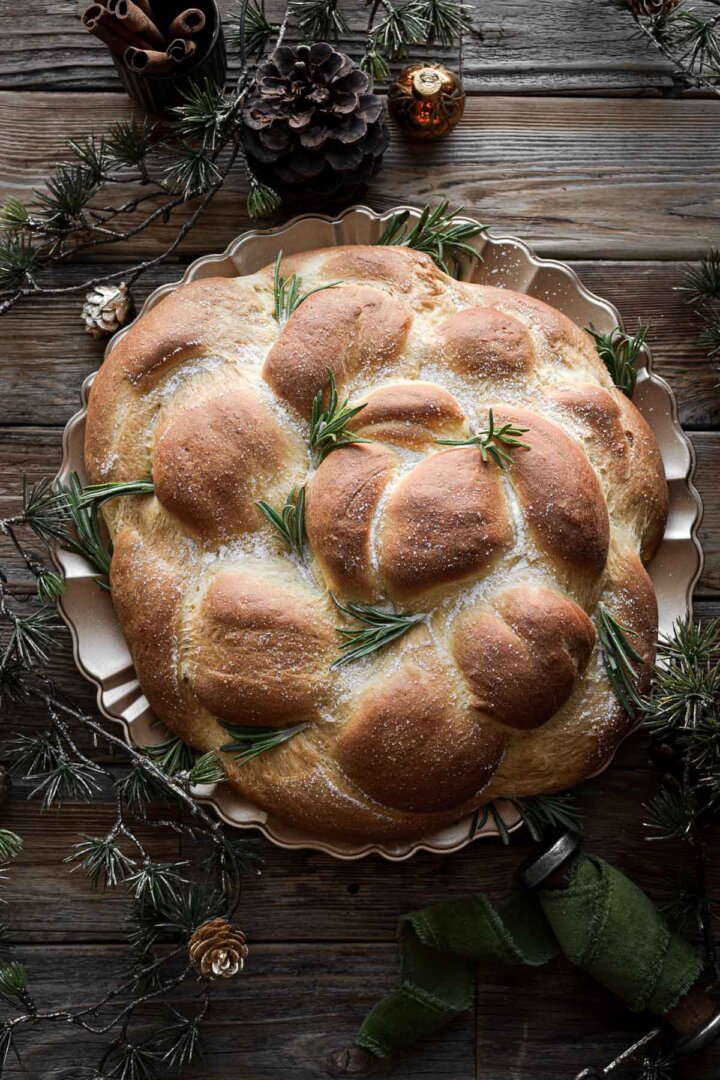
This high altitude tested, homemade Easter bread is soft, fluffy, buttery and sweet, flavored with cardamom, anise and fresh orange zest. Drizzled with orange icing and decorated with sprinkles, it makes a beautiful dessert bread to serve in the springtime. Be sure to see the tutorial video in the recipe card!
You might also like these recipes for cinnamon swirl bread, Danish almond kringle, and homemade bagels.

This site contains affiliate links. As an Amazon associate, I earn from qualifying purchases. This means that I may make a small commission if you purchase a product using those links. This in no way affects my opinion of those products and services. All opinions expressed on this site are my own.
What is Easter Bread?
Easter bread is a sweet dessert bread that’s traditionally made in the spring or for the Easter holiday. The dough is enriched with butter, milk and eggs, and is often flavored with anise and citrus zest. I also added cardamom to mine, which is just lovely with all the other flavors in the bread.
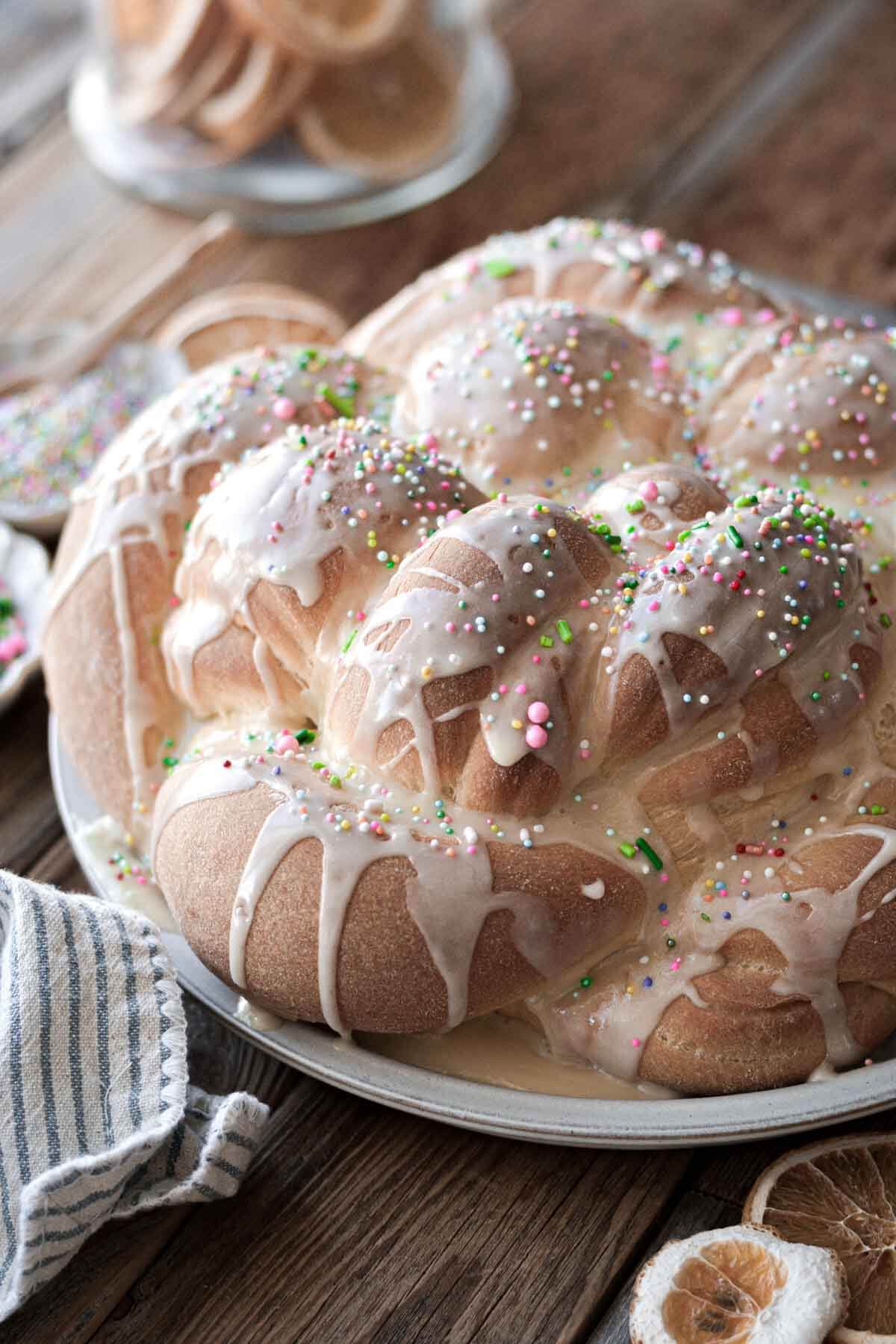
You can add colored eggs on top to bake into the bread, and for a festive touch, add sweet icing and rainbow sprinkles on top. My kids loved this bread even more than cinnamon rolls!
Why You’ll Love This Recipe
Versatile Shapes. You can use this dough to make any shape of loaf, wreath, or braid that you like.
Faster Rising Time. The addition of the tangzhong in the dough helps it to rise twice as quickly as when I tested it without the tangzhong. The tangzhong also keeps the bread softer for longer after baking.
Incredibly Soft. To develop today’s yeast bread, I started with my recipe for homemade challah, but with a few changes. I scaled the recipe down a bit, so it wouldn’t make quite such a large loaf. And compared to challah, this bread is a little sweeter, a little more buttery and less eggy. After shaping the dough, it bakes up pillowy soft and light, with laminated layers that pull apart beautifully.
High Altitude Tested. I develop all the recipes on my site for Denver’s altitude of 5,280 feet. If you’re at a lower or higher elevation, please see my FAQs for guidance on adjusting recipes for your altitude. That said, most of my yeast dough recipes for rolls, buns and bread can be made at any altitude without adjusting the ingredients. The main difference will simply be on how long it takes your dough to rise, since dough tends to rise faster at higher elevations.
See the recipe card at the end of the post for the full ingredients list and instructions.
Ingredients
- Milk. Whole milk adds richness and moisture to the dough. Use water or non-dairy milk for a Kosher alternative.
- Yeast. My preferred yeast for bread making is Red Star Platinum Premium Instant Yeast.
- Sugar. The sugar adds a touch of sweetness, and helps the crust of the bread to brown.
- Bread Flour. Bread flour has a higher percentage of protein than all-purpose flour, giving yeast breads a chewier texture. For today’s Easter bread, I used High Altitude Hungarian Flour, which is a high protein bread flour. You can find it on the baking aisle at King Soopers throughout Colorado and a few other mid-western states.
- Spices. I used ground cardamom, as well as anise extract. The flavor of the anise is very subtle, but you can trade it for vanilla extract if you like.
- Butter and Eggs. Adds moisture and a rich flavor.
- Orange. One navel orange will give you enough orange zest to flavor the dough, as well as juice for the icing.


Instructions
Tangzhong
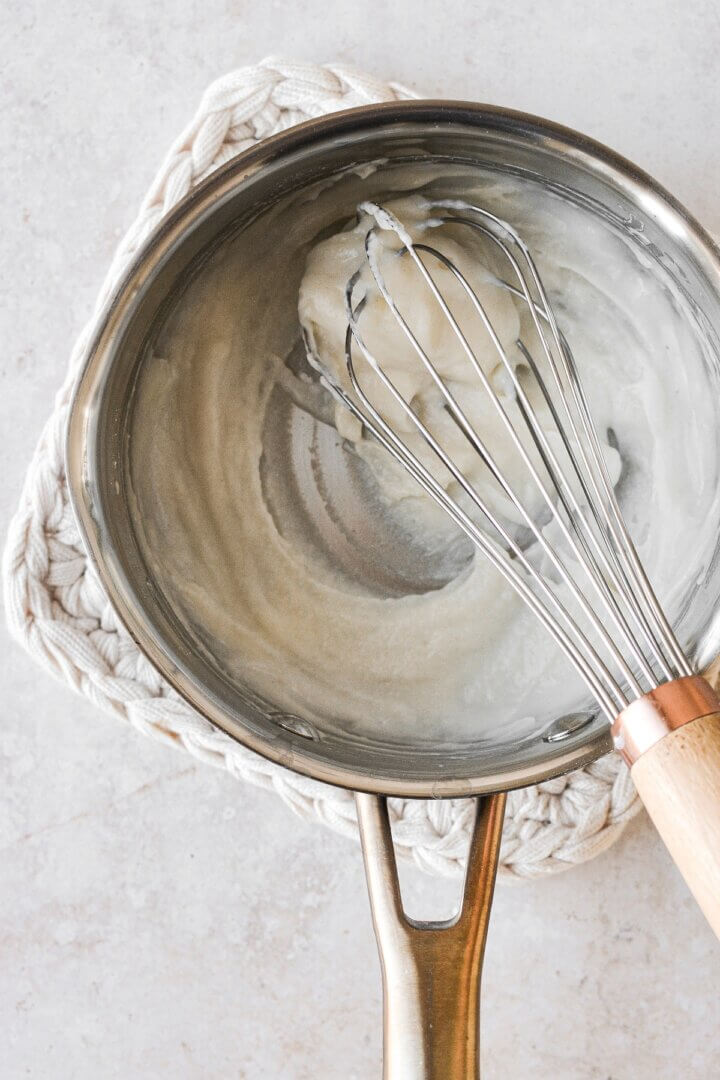
- In a small saucepan, whisk together the water, milk and flour. Cook over medium heat for several minutes, whisking constantly, until it thickens into a paste.
- Remove from the heat and set aside until needed.

Dough
- Warm the milk to between 110-115F. Stir in the yeast and 1 tsp of the sugar, then let it sit for about 5 minutes, until bubbly.
- In the bowl for your stand mixer, combine the flour with the rest of the sugar, salt, and cardamom. Add the tangzhong, the milk/yeast mixture, the soft butter, eggs, anise/vanilla extract, and orange zest, then stir into a rough, shaggy dough.
- With the dough hook, knead the dough for 10 minutes on medium low speed. The dough should be soft, smooth and stretchy, pulling away from the sides of the bowl but still sticking a little at the bottom. If kneading the dough by hand on your counter, knead the dough for 15 minutes. If the dough seems too loose, add more flour, a tablespoon at a time. If it seems too stiff, add some warm water, a teaspoon at a time. After kneading, you should be able to easily gather the dough into a ball with your hands.
- Gather the dough into a ball and place it into a greased bowl that’s at least twice as big as the dough. Cover the bowl tightly with plastic wrap and set it in a warm place to rise until the dough is doubled in size. Depending on the freshness and quality of your yeast, as well as the warmth of the ingredients and environment, this may take 1-2 hours. For me, it took 1 hour with the bowl sitting inside my oven on the “bread proof” setting.


Shaping
- Note: I highly recommend watching the video in the recipe card for a tutorial on this step.
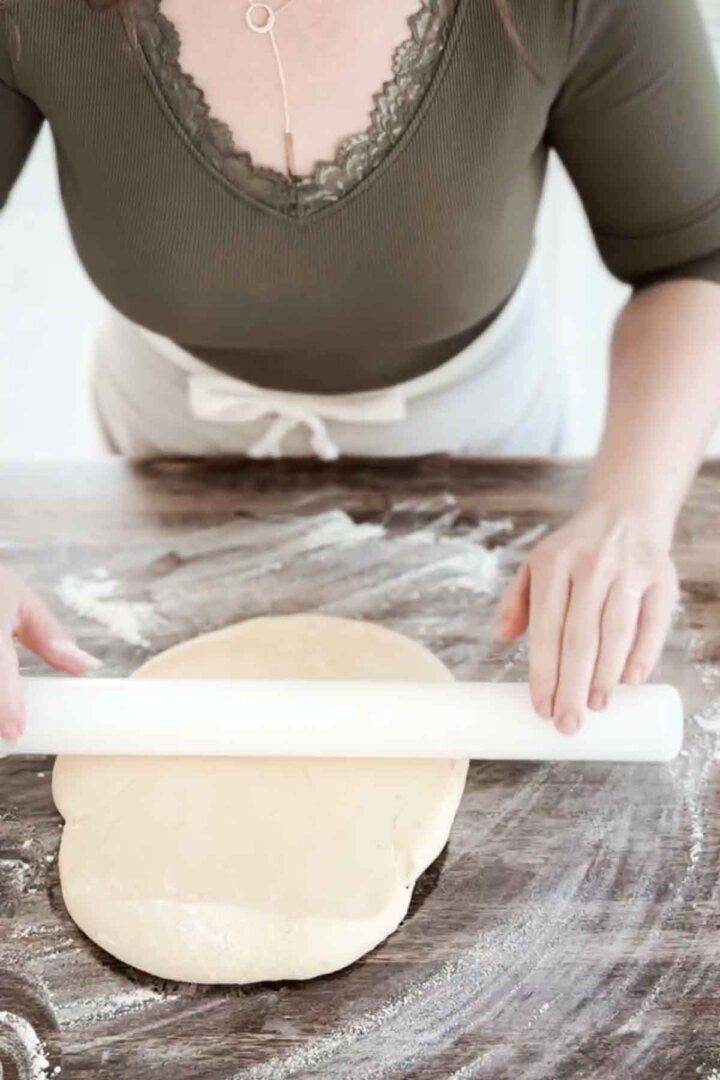
- Lightly flour a clean counter top, and turn the dough out onto the counter. Gently deflate the dough by pressing on it with your hands, and roll it out into a rectangle measuring approximately 15×7 inches.
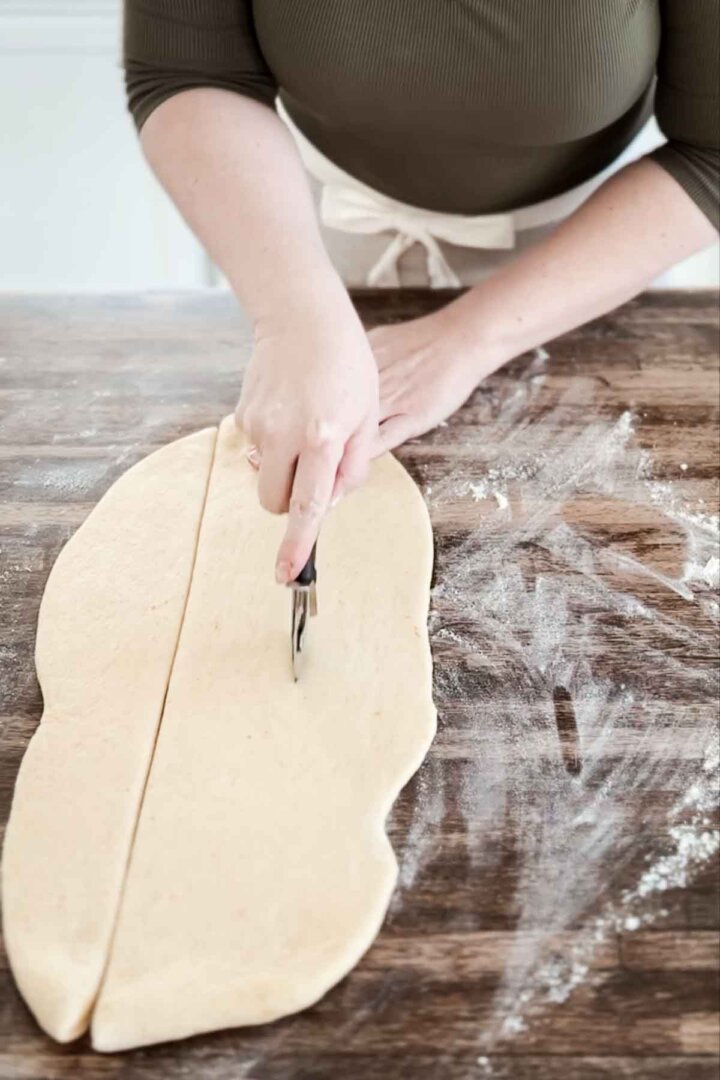
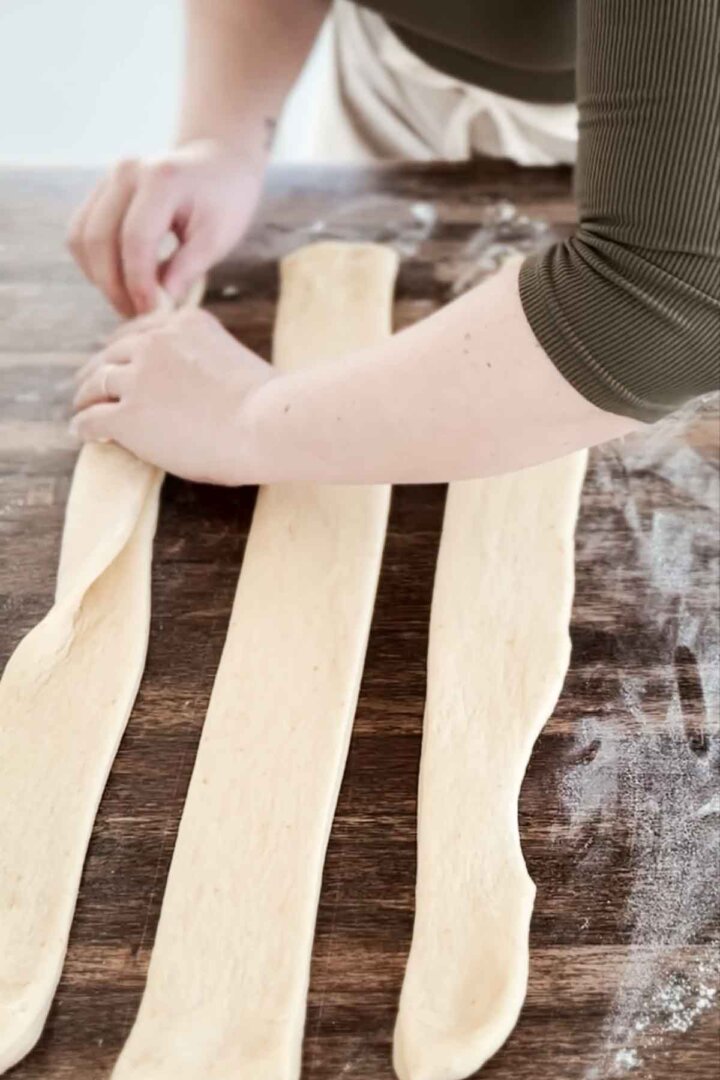
- Use a rolling pastry wheel cutter or pizza wheel to cut the dough into 3 equal portions lengthwise. Gently stretch the strips of dough a little longer, then fold each of the strips in half, lengthwise, to form long ropes of dough.
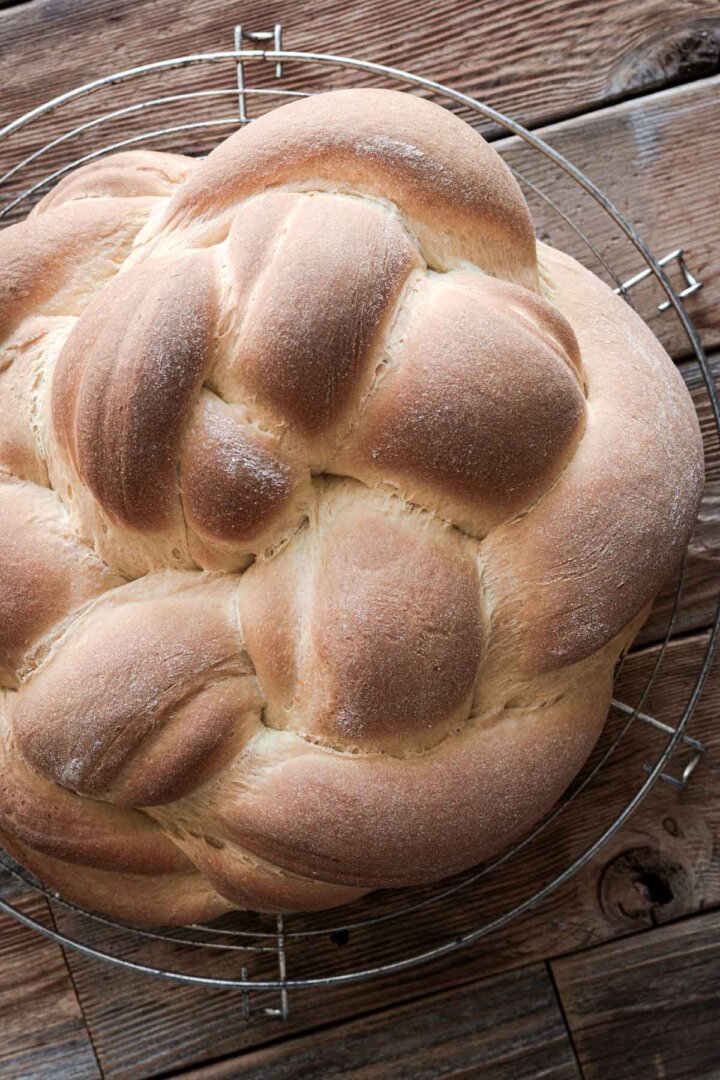
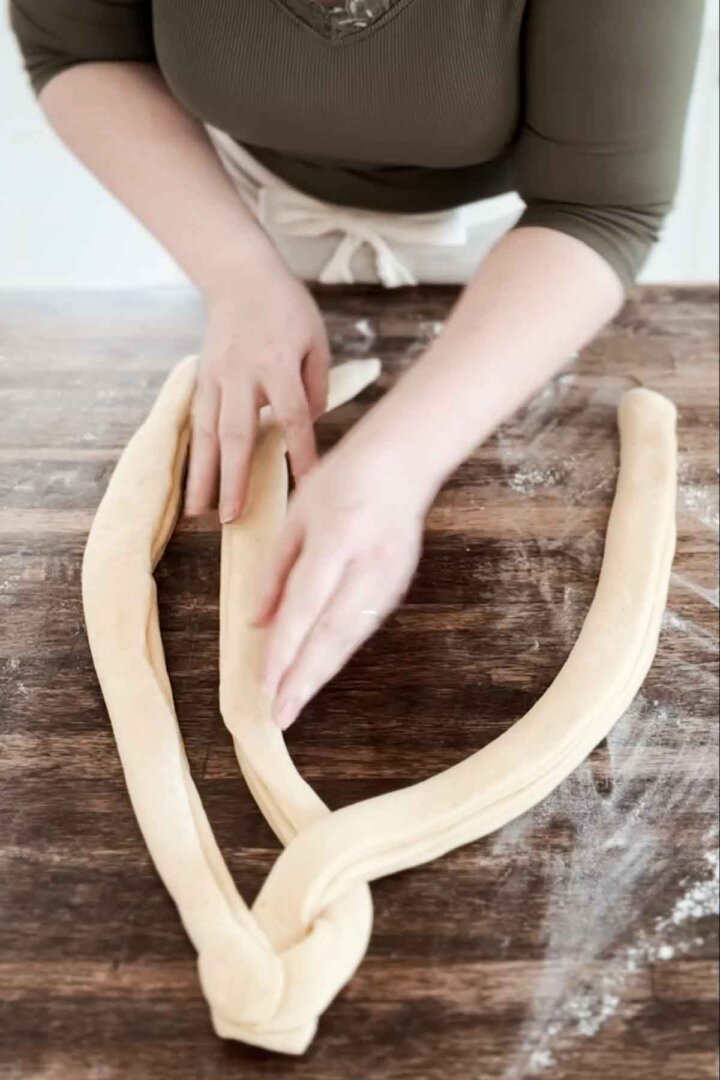
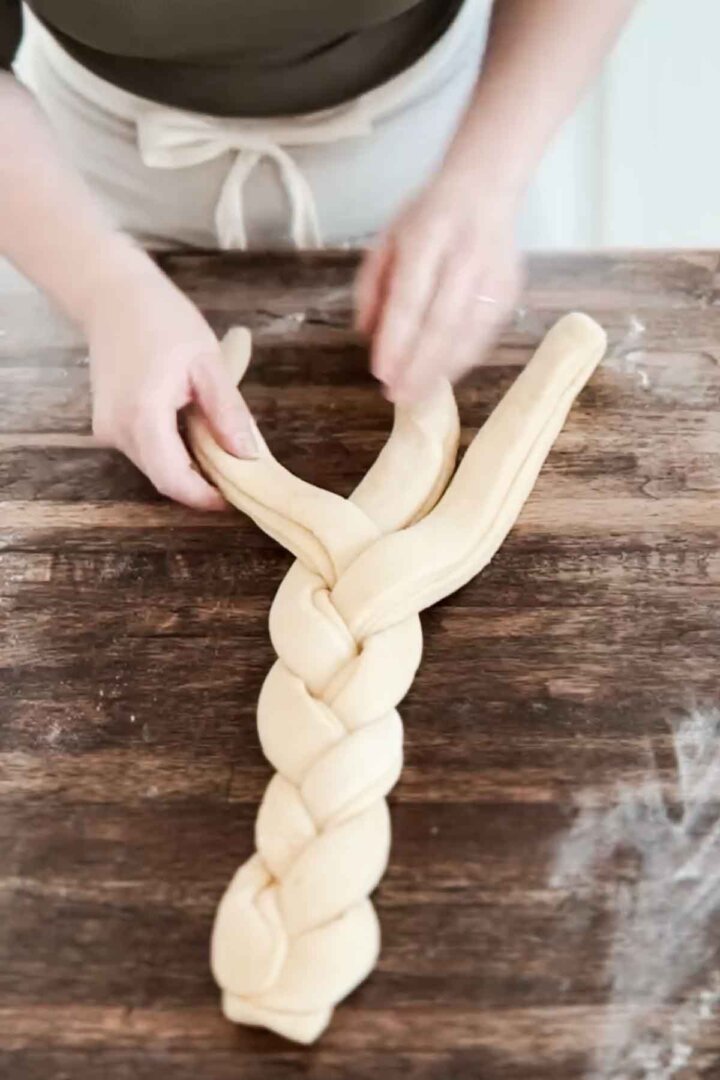
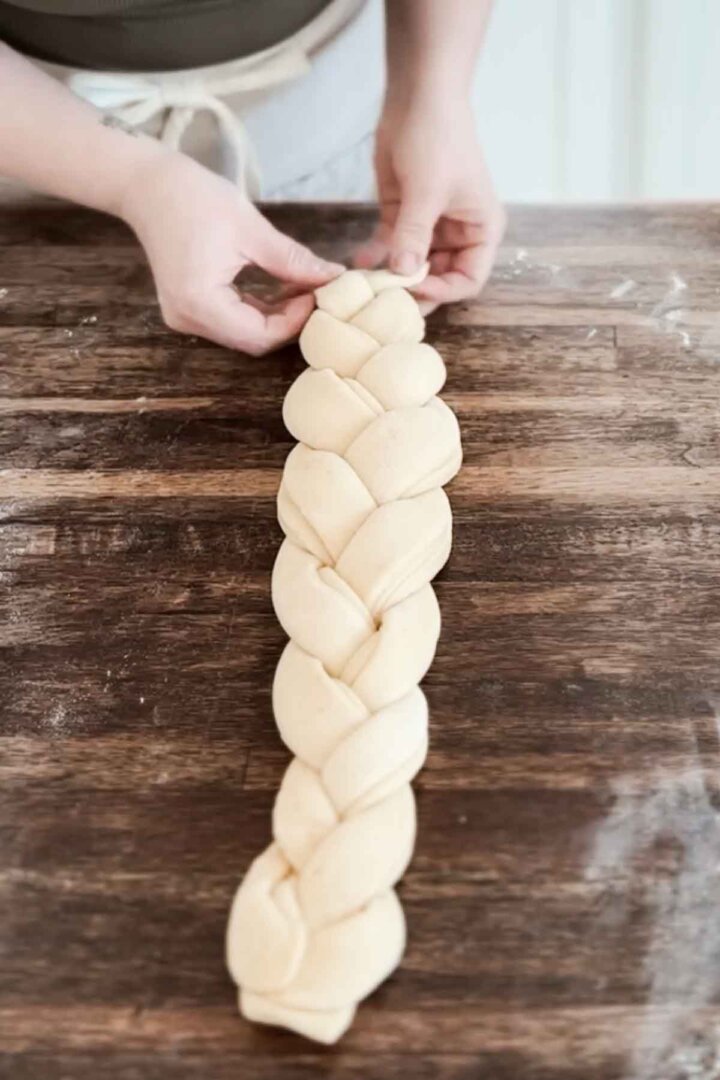
- Lay the three strands side by side and braid them together from one end to the other, pressing the ends together at each end of the braid.
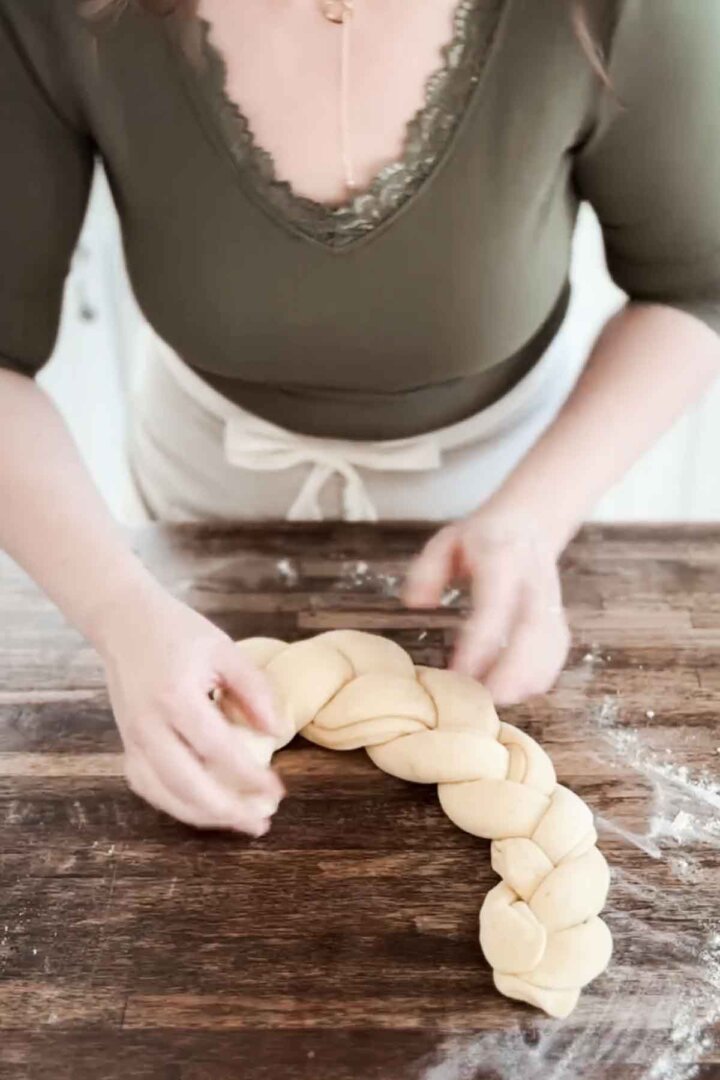
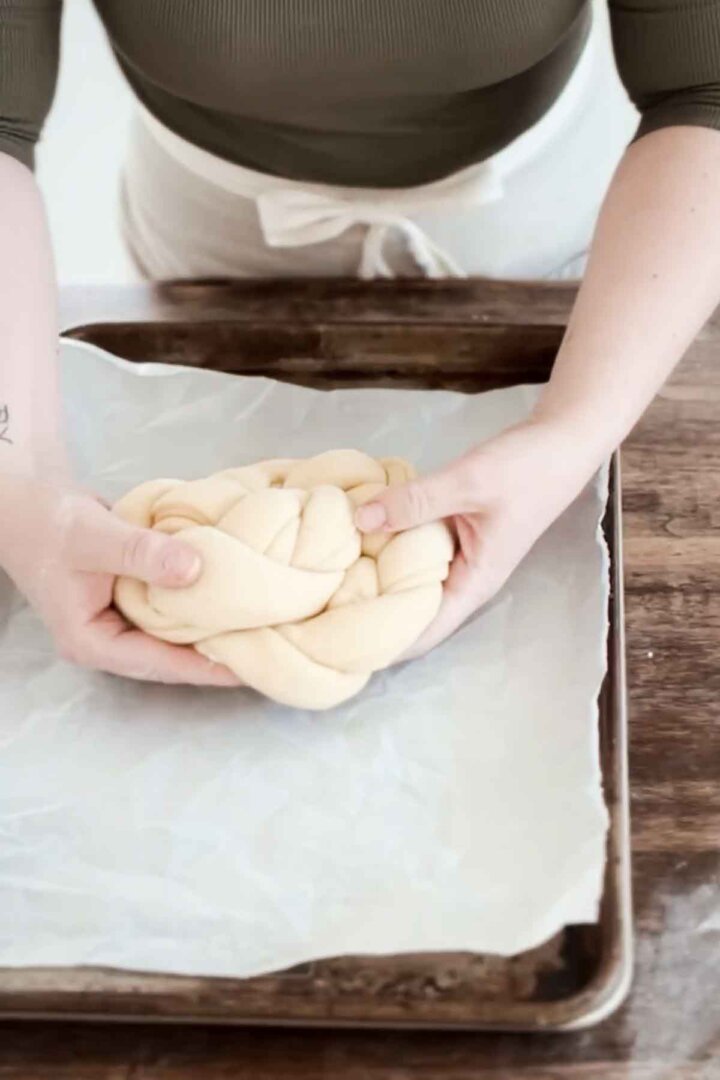
- For a wreath shape, bring the two ends of the braid together and pinch them together. For a round loaf, simply coil the braid up into a spiral, tucking the end underneath the outer edge of the loaf.For a long loaf, just pinch and tuck the ends of the braids under at each end. For this option, you could even tuck the braided loaf into a 13-inch pullman pan, and bake it in the loaf pan (without the lid).
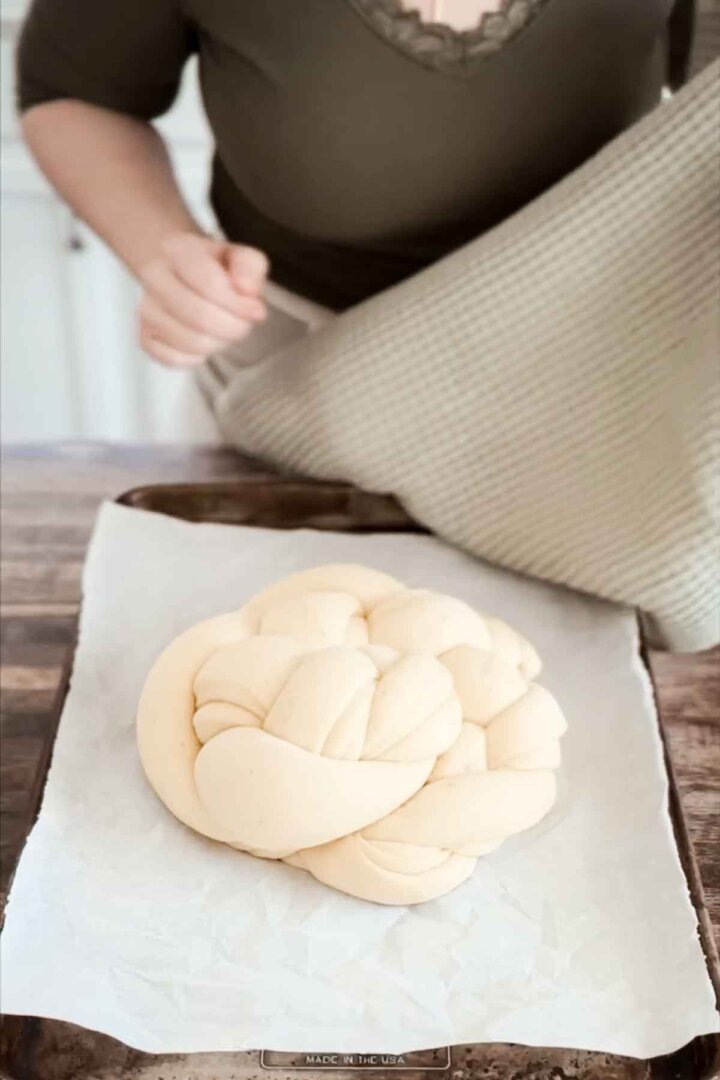
- Stack two baking sheets together (which helps to insulate the bottom of the bread to keep it from browning too quickly), and line the top one with parchment paper. Gently transfer your shaped loaf to the baking sheet.
- Optional: Some people like to decorate Easter bread with whole, uncooked eggs in the shell (sometimes dyed different colors), which bake into the bread. If doing this, place the eggs onto the dough now.
- Cover with a clean kitchen towel and set in a warm place to proof for 1-2 hours, until puffy. Again, this will depend on the freshness and quality of your yeast, and the warmth of the environment. Mine only needed 1 hour to proof, but if your loaf isn’t very puffy after an hour, continue to let it proof for another hour.

Bake
- Preheat the oven to 350 F, and position a rack in the center of the oven.
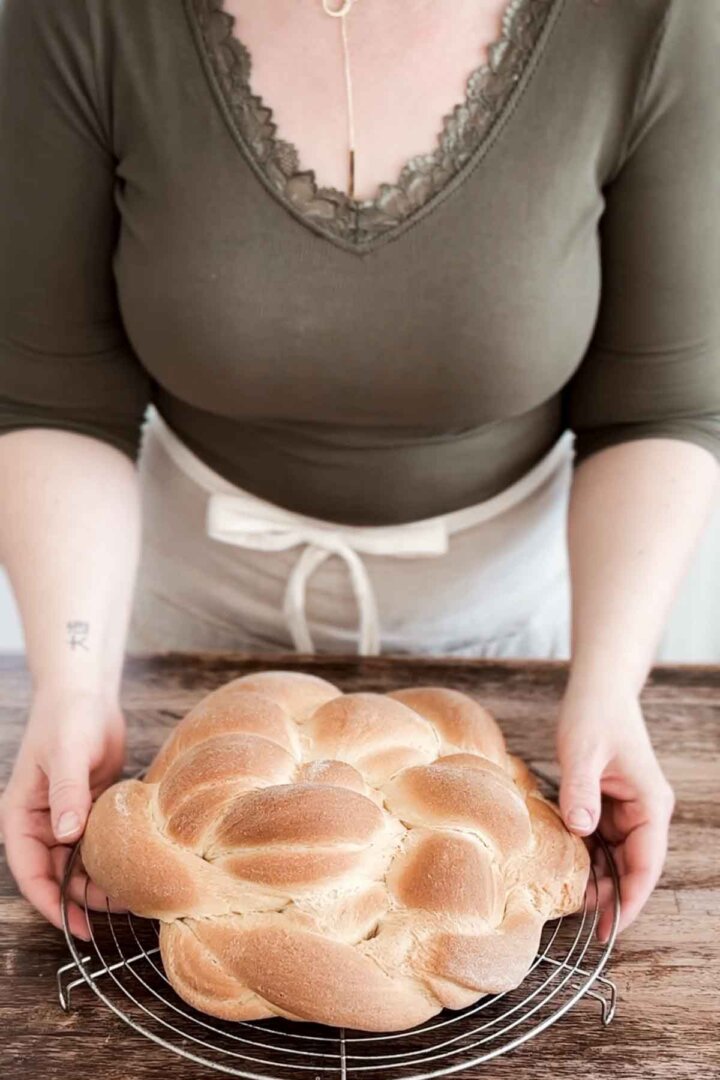
- Bake the bread until a digital instant read thermometer inserted into the largest part of the bread reads 190F. For a wreath, this may only take 20-25 minutes, but for a round loaf that’s more dense in the middle, this may take 30-40 minutes.
- Let the bread cool for 15 minutes, before adding the icing.
Icing
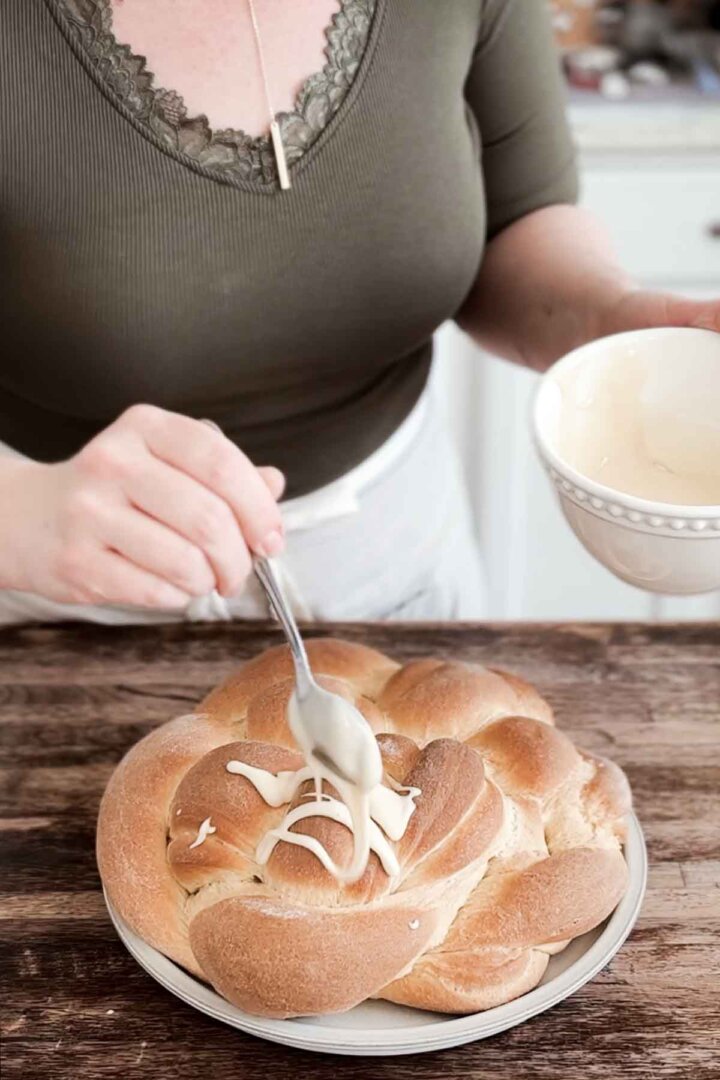
- In a bowl, combine the powdered sugar and meringue powder (which will help the icing to set quickly, rather than remaining sticky). Stir in the vanilla and orange juice, until smooth and drizzly.
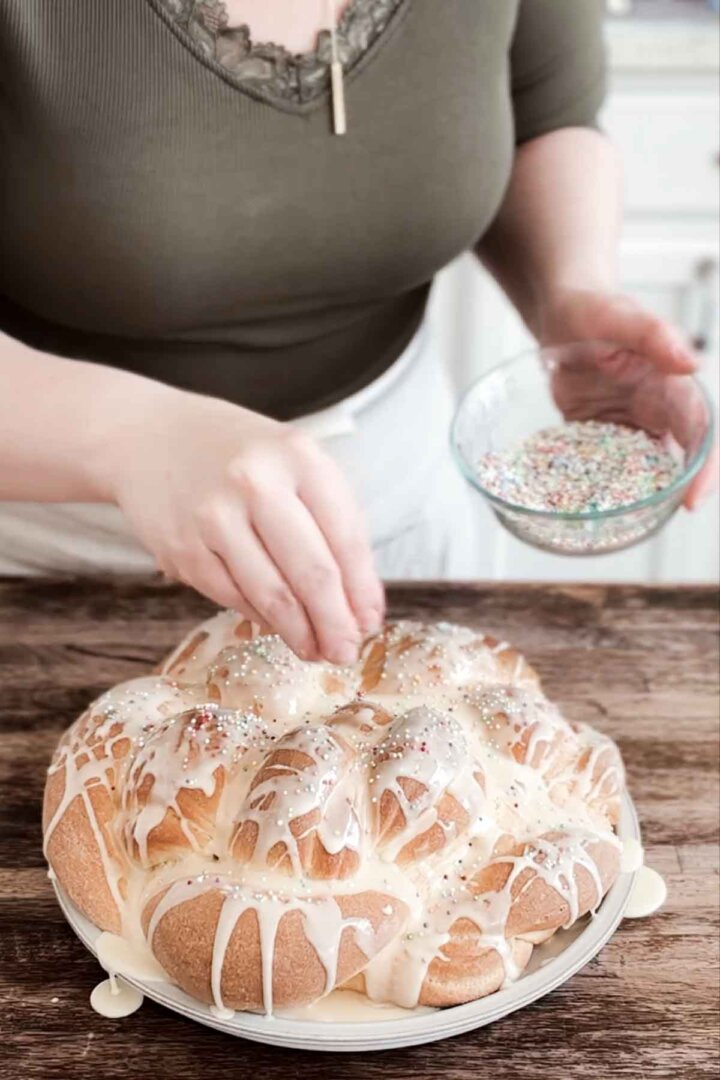
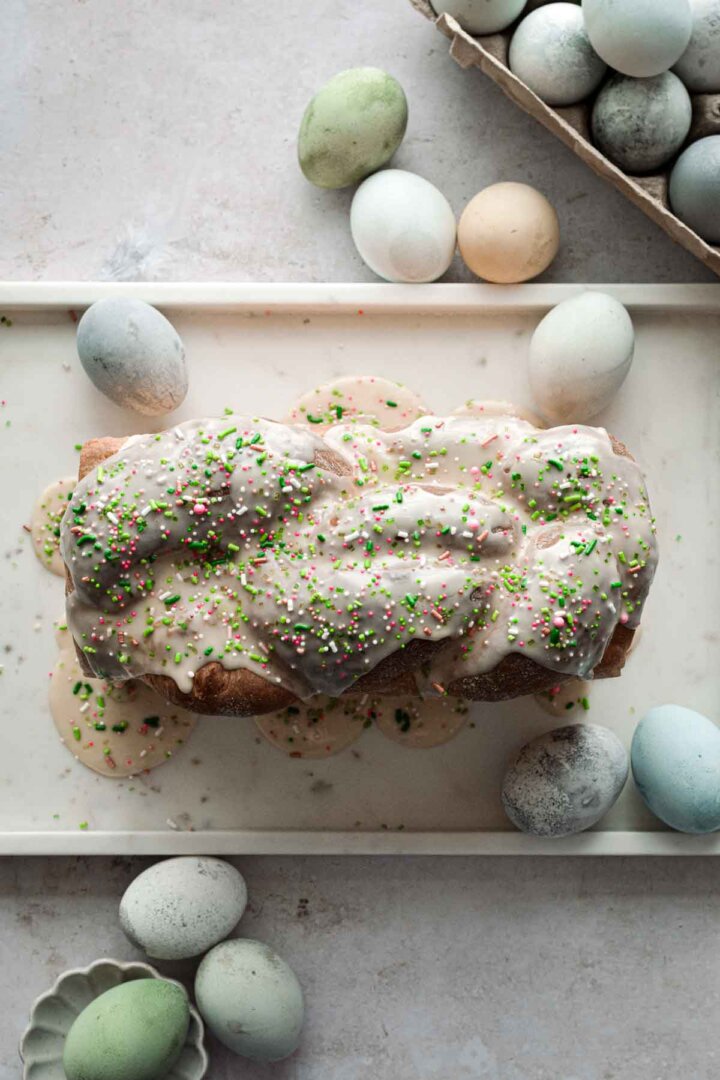
- Drizzle the icing over the warm bread, then immediately decorate with sprinkles before the icing sets.
- Enjoy the bread warm, or at room temperature.
- You can just tear off portions of the bread, or use a serrated knife, cutting in a back-and-forth sawing motion to cut slices.
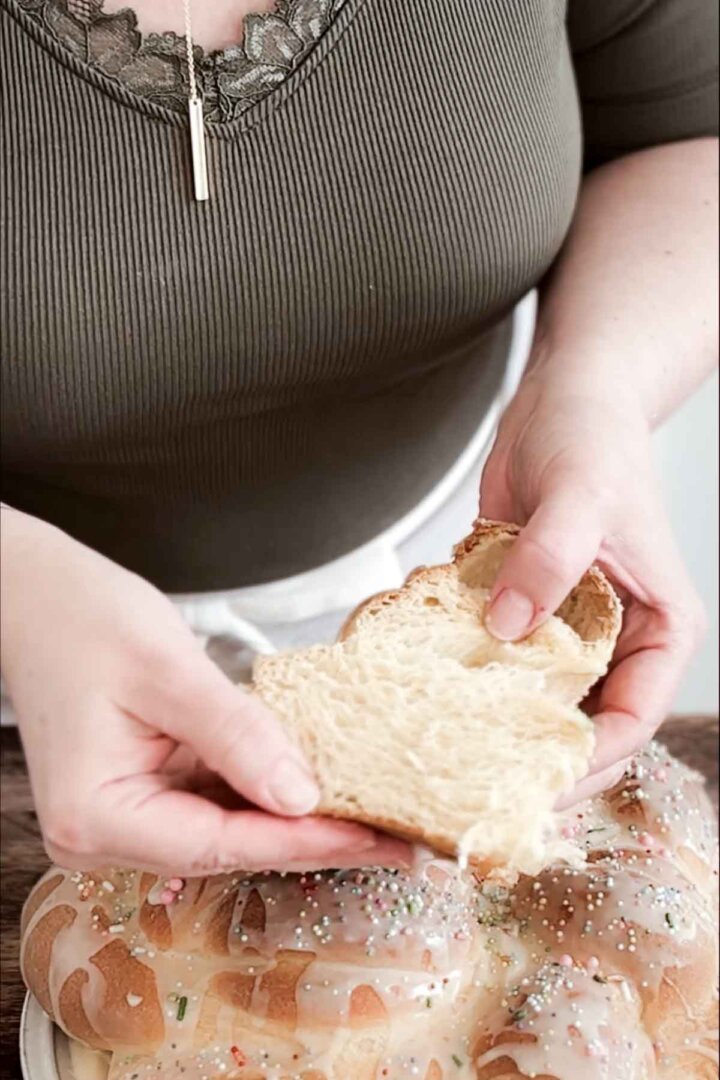
Best Baking Tips
- Use a premium yeast. Red Star Platinum Premium Instant Yeast is the yeast I use and recommend for all my yeast dough recipes. The results when I use this yeast are always superior to when I use grocery store brands.
- Use room temperature or warm ingredients. If you add cold eggs to your dough, or don’t heat your milk to the correct temperature (110-115F), it can severely slow down your dough during the proofing. Do yourself a favor and place your eggs in a bowl of warm water for a few minutes before adding them to the dough.
- Don’t skip the tangzhong. Tangzhong or tang zhong is a simple roux or paste made of water, milk and flour. When this paste is added to yeast dough, it plays a very important role in improving the texture of the dough and the baked bread. It helps the starches in the flour absorb more liquid, which in turn makes the dough less sticky and easier to knead and shape into buns. It can help the bread rise higher and fluffier as it bakes. The baked bread, rolls or buns will stay soft and fresh for longer. And in the case of today’s recipe, it also significantly reduces the rising or proofing time needed for the dough.
- Double up on baking sheets. Insulate the bottom of your bread with two baking sheets, which will help to prevent the bottom from over-browning before it’s baked through.
- Be patient with the proofing. Enriched dough is notorious for needing a long time to rise or proof, which is due to the high ratio of eggs, butter and milk in the dough. When testing this recipe with a grocery store brand of yeast and no tangzhong, my dough took 2 hours to rise until doubled, and another 2 hours for the shaped loaf to proof. But when I used my favorite premium instant yeast and added tangzhong, the dough only took half the amount of time to rise and proof. The point is, you can’t rush this process, or your bread will be dense and heavy, rather than light and fluffy.
Be sure to read all of my BAKING FAQs where I discuss ingredients, substitutions and common baking questions, so that you can be successful in your own baking!
Frequently Asked Questions
Store leftover Easter bread in an airtight container at room temperature for up to 2 days.
No problem. Just leave it out and use vanilla extract instead.
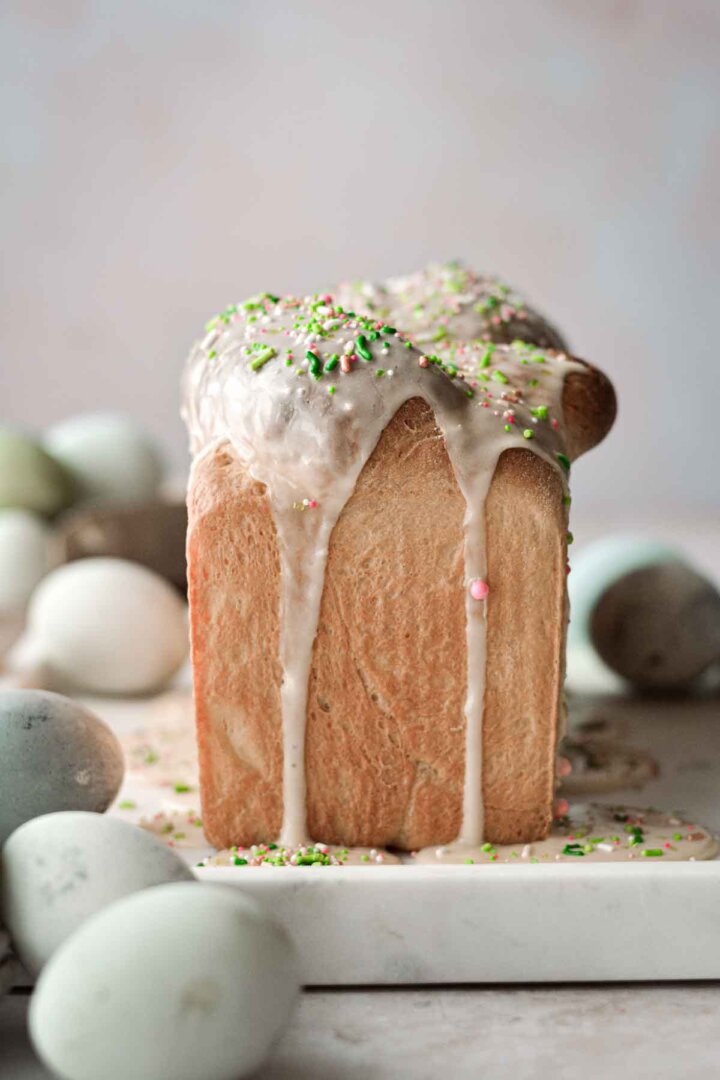
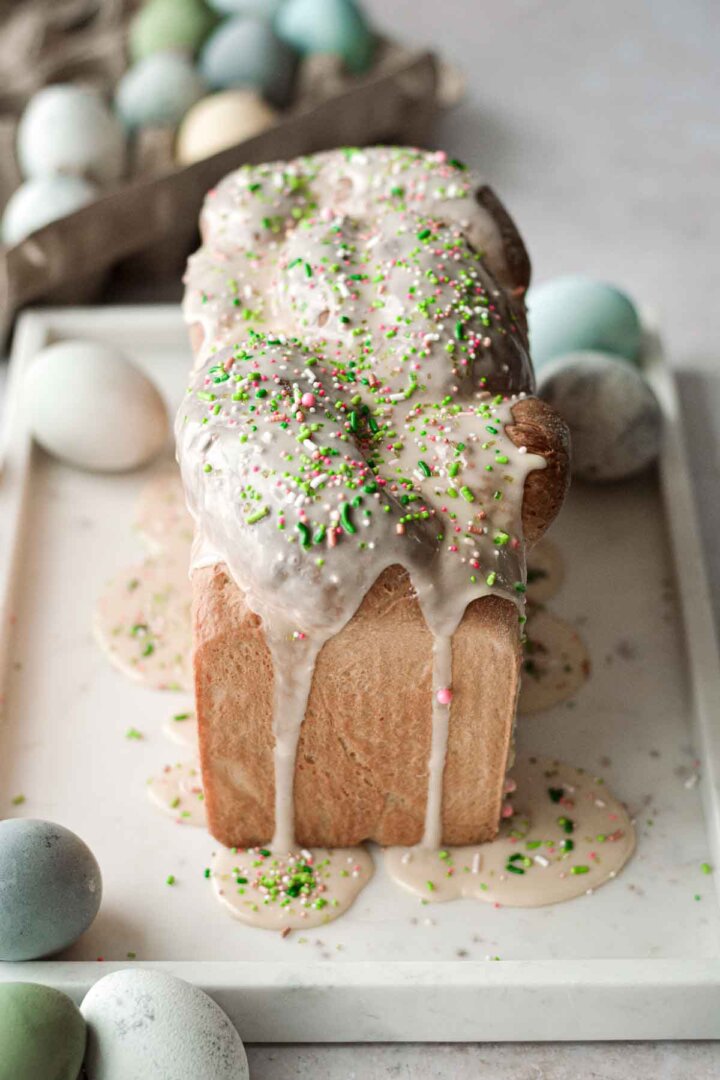
For the tall loaf pictured above, I braided the bread, but instead of coiling it into a round loaf, I just folded the bread into thirds, fit it into my pullman pan (small size), let it proof, and then baked it.
You Might Also Like



Please check out my Amazon Shop for a curated collection of some of my favorite cake pans from trusted brands, baking tools, ingredients, pretty things and fashion finds. I recommend products that I buy and use every day!
Did you love today’s recipe? Please rate the recipe and let me know in the comments what you thought! Also, be sure to follow Curly Girl Kitchen on Instagram, and tag me when you try one of my recipes so I can see all your delicious creations!

High Altitude Orange Cardamom Easter Bread
All recipes on Curly Girl Kitchen are developed for high altitude at 5,280 feet. See FAQs for adjusting to higher or lower elevations.

Equipment
- Stand Mixer with Dough Hook (this dough can also be kneaded by hand)
Ingredients
Tangzhong
- 2 tbsp whole milk
- 2 tbsp water
- 1 ½ tbsp bread flour
Dough
- 1/3-1/2 cup whole milk, warmed to between 110-115F
- 1 packet (2 1/4 tsp) good quality instant or rapid rise yeast
- ¼ cup granulated sugar
- 3 cups (14 oz) bread flour, fluffed, spooned and leveled
- 1 tsp coarse Kosher salt (if using table salt, use half the amount)
- ½ tsp ground cardamom
- 5 tbsp unsalted butter, very soft
- 2 large eggs, room temperature
- ¾ tsp anise extract (or vanilla extract)
- freshly grated zest of 1 navel orange
Icing
- 1 cup powdered sugar
- 1 tsp meringue powder
- 2 tbsp orange juice (use the juice from the orange you zested)
- ½ tsp vanilla extract
- rainbow sprinkles
Instructions
Tangzhong
- In a small saucepan, whisk together the water, milk and flour. Cook over medium heat for several minutes, whisking constantly, until it thickens into a paste.
- Remove from the heat and set aside until needed.
Dough
- Warm the milk to between 110-115F. Stir in the yeast and 1 tsp of the sugar, then let it sit for about 5 minutes, until bubbly.
- In the bowl for your stand mixer, combine the flour with the rest of the sugar, salt, and cardamom. Add the tangzhong, the milk/yeast mixture, the soft butter, eggs, anise/vanilla extract, and orange zest, then stir into a rough, shaggy dough.
- With the dough hook, knead the dough for 10 minutes on medium low speed. The dough should be soft, smooth and stretchy, pulling away from the sides of the bowl but still sticking a little at the bottom. If kneading the dough by hand on your counter, knead the dough for 15 minutes. If the dough seems too loose, add more flour, a tablespoon at a time. If it seems too stiff, add some warm water, a teaspoon at a time. After kneading, you should be able to easily gather the dough into a ball with your hands.Note: This is a dough that you do not want to be too soft or loose, or it will be difficult to braid and shape. If you cannot gather it into a ball in your hands, knead in a little more flour.
- Gather the dough into a ball and place it into a greased bowl that's at least twice as big as the dough. Cover the bowl tightly with plastic wrap and set it in a warm place to rise until the dough is doubled in size. Depending on the freshness and quality of your yeast, as well as the warmth of the ingredients and environment, this may take 1-2 hours. For me, it took 1 hour with the bowl sitting inside my oven on the "bread proof" setting.
Shaping
- Note: I highly recommend watching the video in the recipe card for a tutorial on this step.
- Lightly flour a clean counter top, and turn the dough out onto the counter. Gently deflate the dough by pressing on it with your hands, and roll it out into a rectangle measuring approximately 15×7 inches.
- Use a rolling pastry wheel cutter or pizza wheel to cut the dough into 3 equal portions lengthwise. Gently stretch the strips of dough a little longer, then fold each of the strips in half, lengthwise, to form long ropes of dough.
- Lay the three strands side by side and braid them together from one end to the other, pressing the ends together at each end of the braid.
- For a wreath shape, bring the two ends of the braid together and pinch them together. For a round loaf, simply coil the braid up into a spiral, tucking the end underneath the outer edge of the loaf.For a long loaf, just pinch and tuck the ends of the braids under at each end. For this option, you could even tuck the braided loaf into a 13-inch pullman pan, and bake it in the loaf pan (without the lid).
- Stack two baking sheets together (which helps to insulate the bottom of the bread to keep it from browning too quickly), and line the top one with parchment paper. Gently transfer your shaped loaf to the baking sheet.
- Optional: Some people like to decorate Easter bread with whole, uncooked eggs in the shell (sometimes dyed different colors), which bake into the bread. If doing this, place the eggs onto the dough now.
- Cover with a clean kitchen towel and set in a warm place to proof for 1-2 hours, until puffy. Again, this will depend on the freshness and quality of your yeast, and the warmth of the environment. Mine only needed 1 hour to proof, but if your loaf isn't very puffy after an hour, continue to let it proof for another hour.
Bake
- Preheat the oven to 350 F, and position a rack in the center of the oven.
- Bake the bread until a digital instant read thermometer inserted into the largest part of the bread reads 190F. For a wreath, this may only take 20-25 minutes, but for a round loaf that's more dense in the middle, this may take 30-40 minutes.
- Let the bread cool for 15 minutes, before adding the icing.
Icing
- In a bowl, combine the powdered sugar and meringue powder (which will help the icing to set quickly, rather than remaining sticky). Stir in the vanilla and orange juice, until smooth and drizzly.
- Drizzle the icing over the warm bread, then immediately decorate with sprinkles before the icing sets.
- Enjoy the bread warm, or at room temperature.
- You can just tear off portions of the bread, or use a serrated knife, cutting in a back-and-forth sawing motion to cut slices.
Video
Notes
 https://curlygirlkitchen.com/
I’ve never left a recipe review before, but I just had to say thank you for this fabulous recipe!! I made this for an Easter gathering this past weekend. I followed the instructions exactly and it was divine! Everyone oh’d and ah’d at how beautiful it was and it tasted even better!
I moved to Colorado a year ago. We live in the foothills at almost 8,000 feet. I’ve always loved baking but I was really struggling after we moved from the east coast, at sea level. Your website has been an absolute go to for me. The perfect chocolate chip cookies, the marry me oatmeal cookies, the whoopie pies, and more are now part of my regular rotation when I need to bake something delicious. Thank you thank you thank you!!!
This makes me so happy to hear, and I’m so glad my recipes have been helpful!