
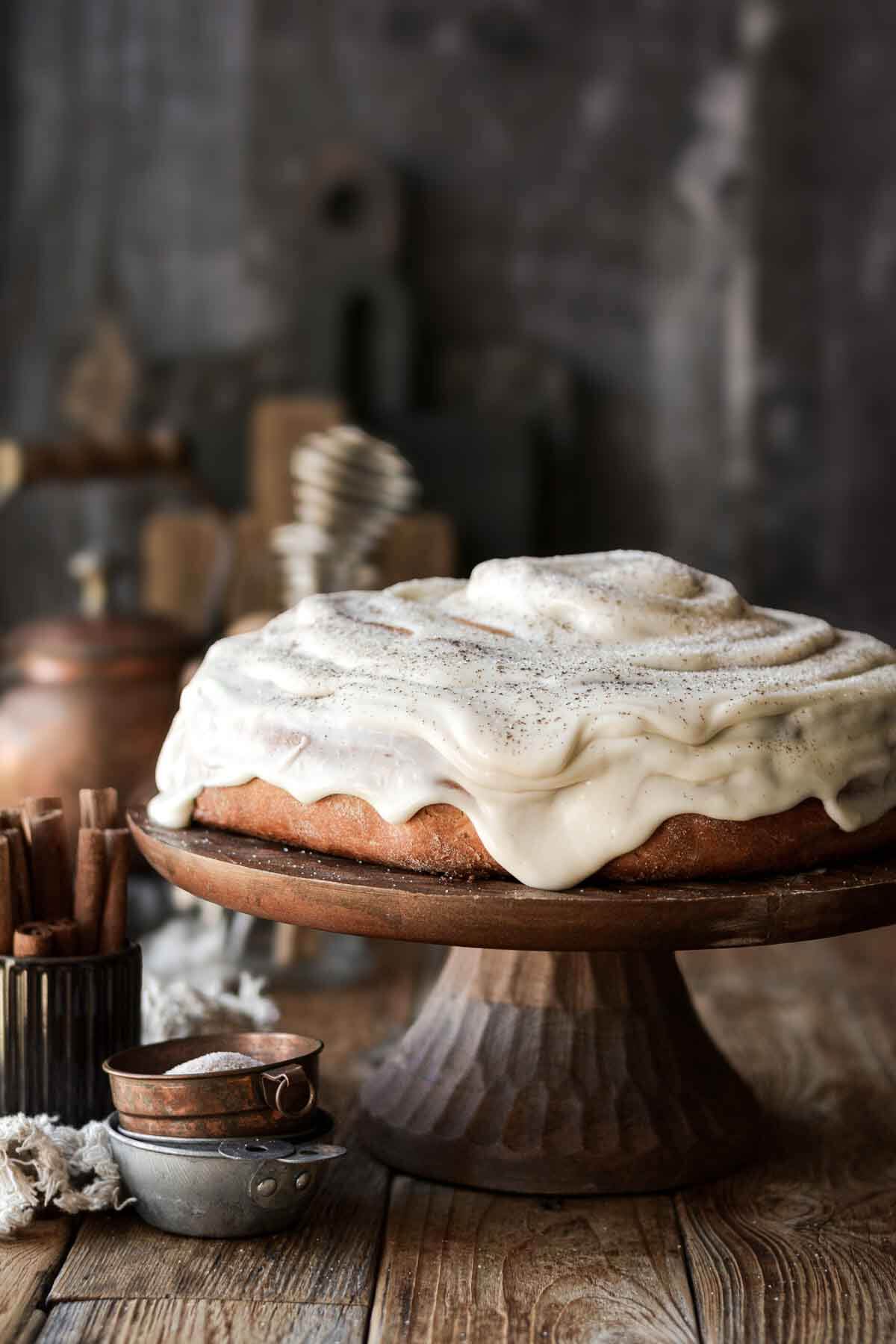
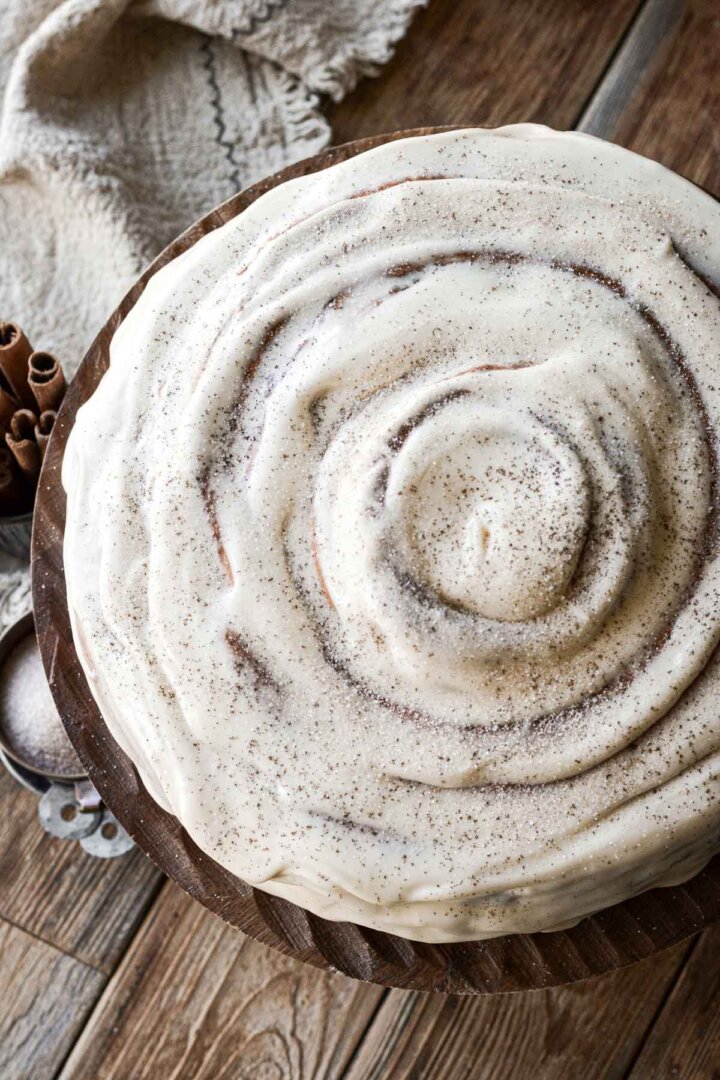
This high altitude tested, giant cinnamon roll cake is made with homemade, pillowy yeast dough, arranged in one big spiral and baked until fluffy and golden brown. Best enjoyed warm from the oven, slathered in cream cheese frosting.
You might also love these recipes for cinnamon crumb coffee cake, snickerdoodle bundt cake, and brown sugar cinnamon layer cake.
This site contains affiliate links. As an Amazon associate, I earn from qualifying purchases. This means that I may make a small commission if you purchase a product using those links. This in no way affects my opinion of those products and services. All opinions expressed on this site are my own.
Why You’ll Love This Recipe
One Big Cinnamon Roll Cake. If you love cinnamon rolls, but you’re wanting to serve a cake for a birthday or special occasion, this giant cinnamon roll cake is the perfect dessert!
Make Ahead Options. You can make the dough and assemble the cake the night before, so it’s ready to bake the next day. Bake it just before dinner, so you can enjoy the cake warm from the oven.
High Altitude Tested. I develop all the recipes on my site for Denver’s altitude of 5,280 feet. If you’re at a lower or higher elevation, please see my FAQs for guidance on adjusting recipes for your altitude.
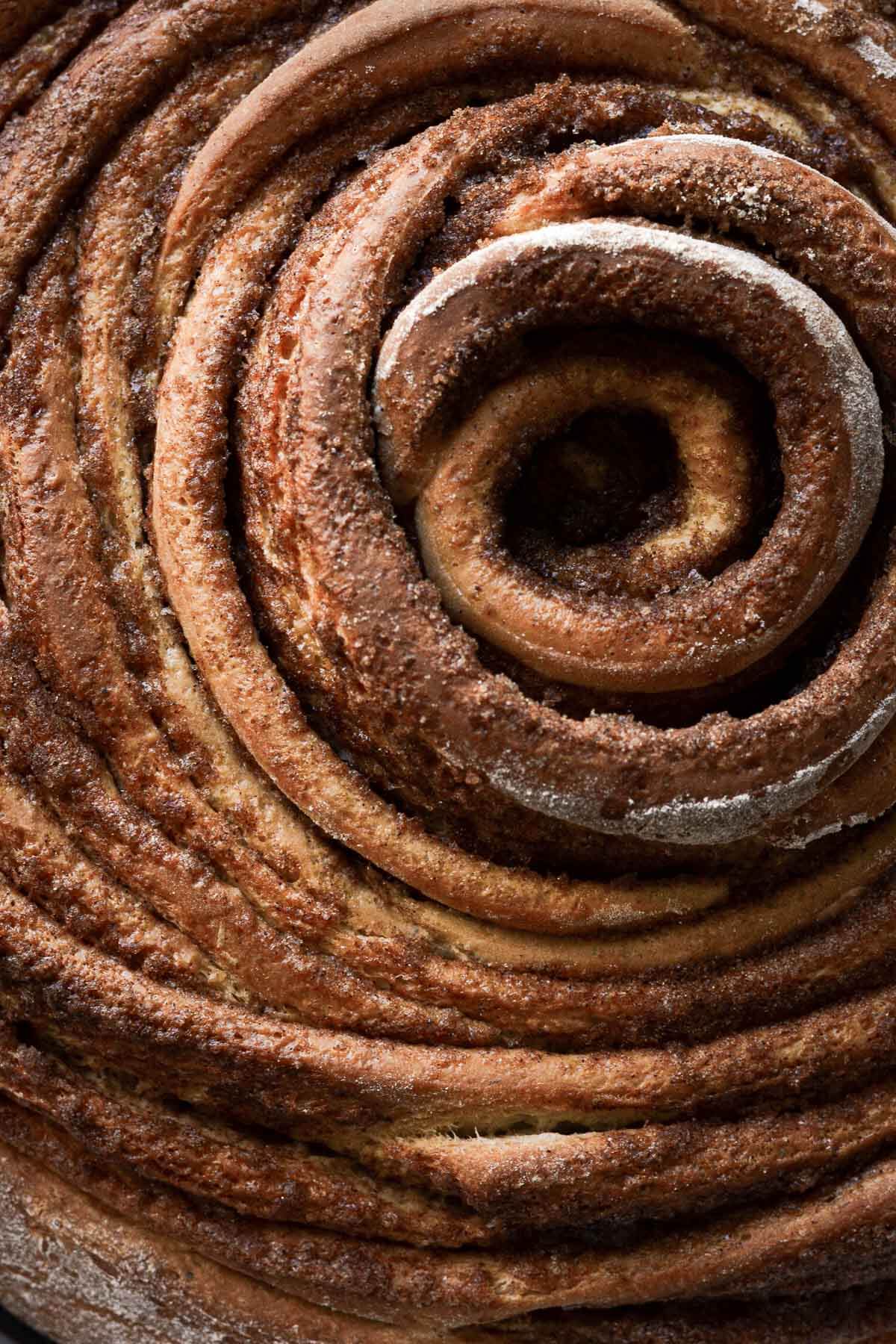
See the recipe card at the end of the post for the full ingredients list and instructions.
Ingredients
- Dairy. You’ll need milk, butter, eggs, heavy whipping cream, and cream cheese.
- Sugar. You’ll need granulated sugar, brown sugar and powdered sugar.
- Yeast. I prefer instant/rapid rise yeast.
- Flour. I like to use bread flour for this recipe, but you can also use all purpose flour.
- Salt.
- Nutmeg + Cinnamon.
- Vanilla Extract.
Instructions
Making the Dough
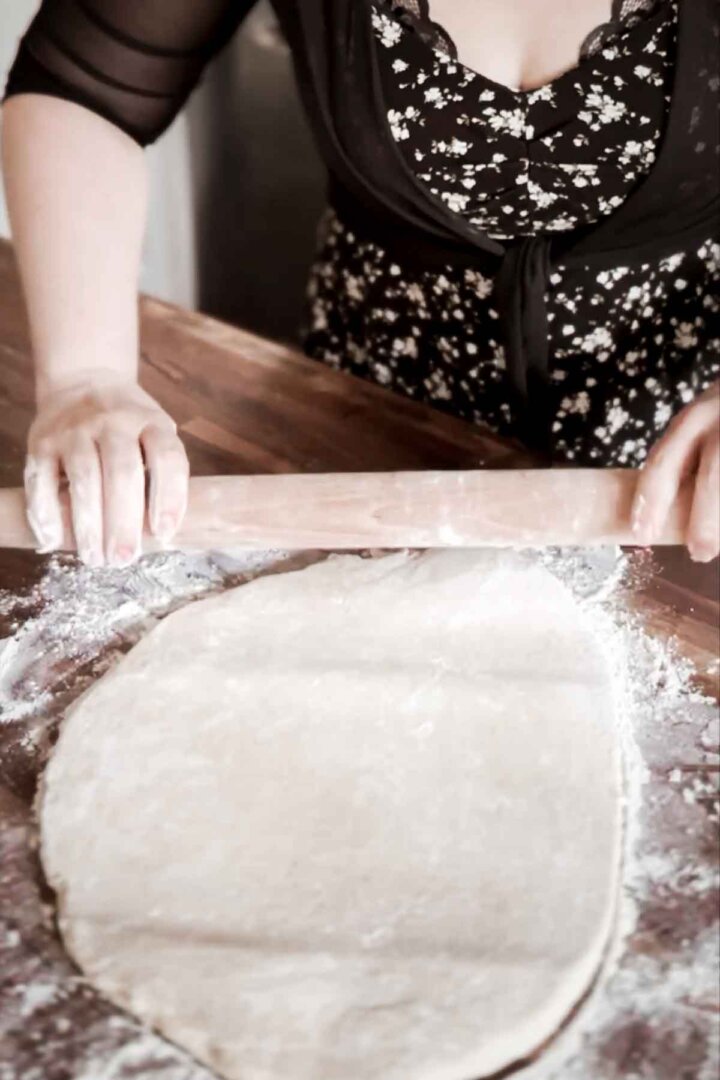
For step-by-step photos, as well as a video, of making the yeast dough, you can see this post for my homemade cinnamon rolls recipe. In today’s post, my focus is more on how to shape and bake the dough for a giant cinnamon roll cake.
Shaping
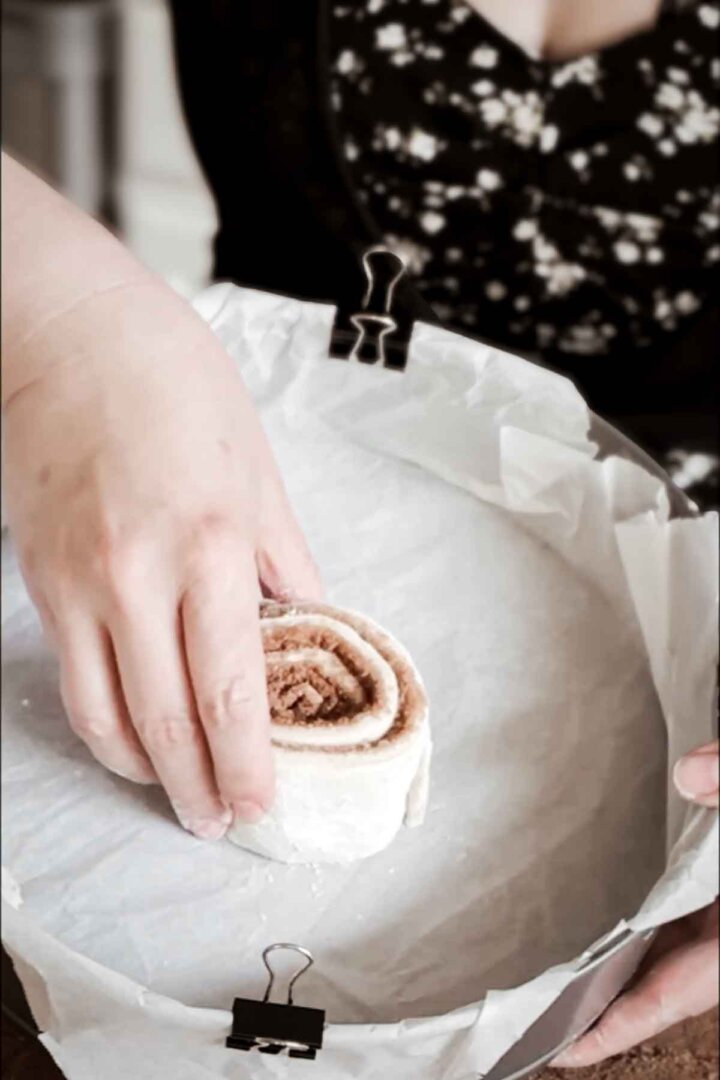
- Line a 10 inch springform pan or round cake pan with parchment paper, so that the bottom and sides of the pan are covered with paper.
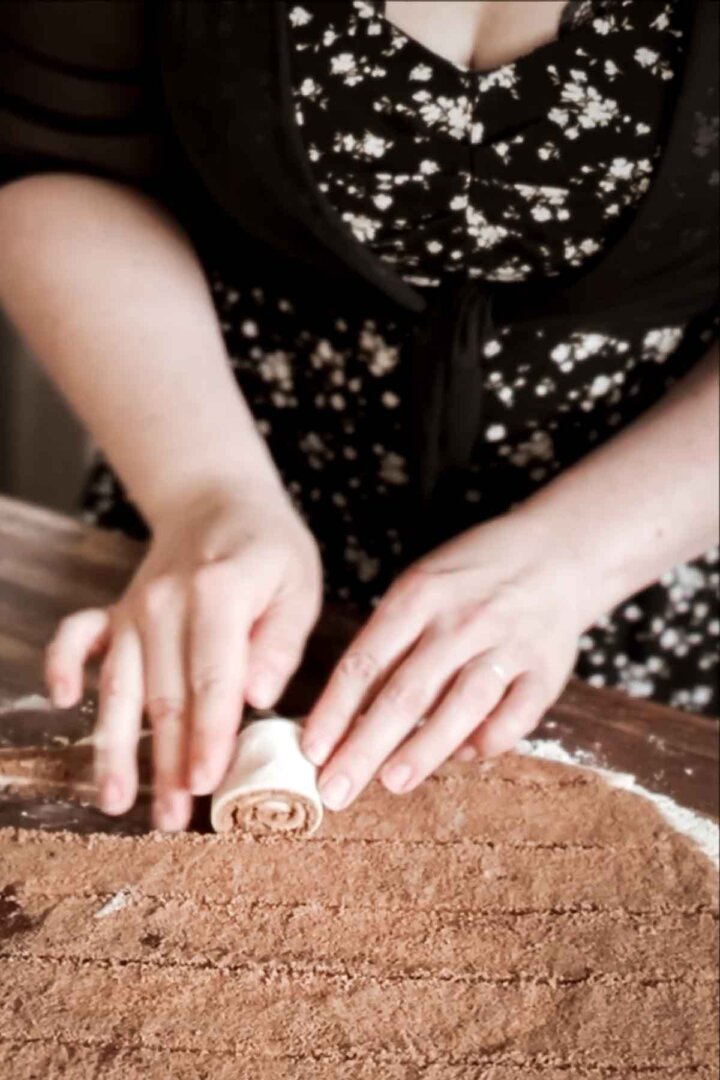
- Use a rolling pastry cutter or pizza cutter to cut the dough into 1 1/2 inch strips.
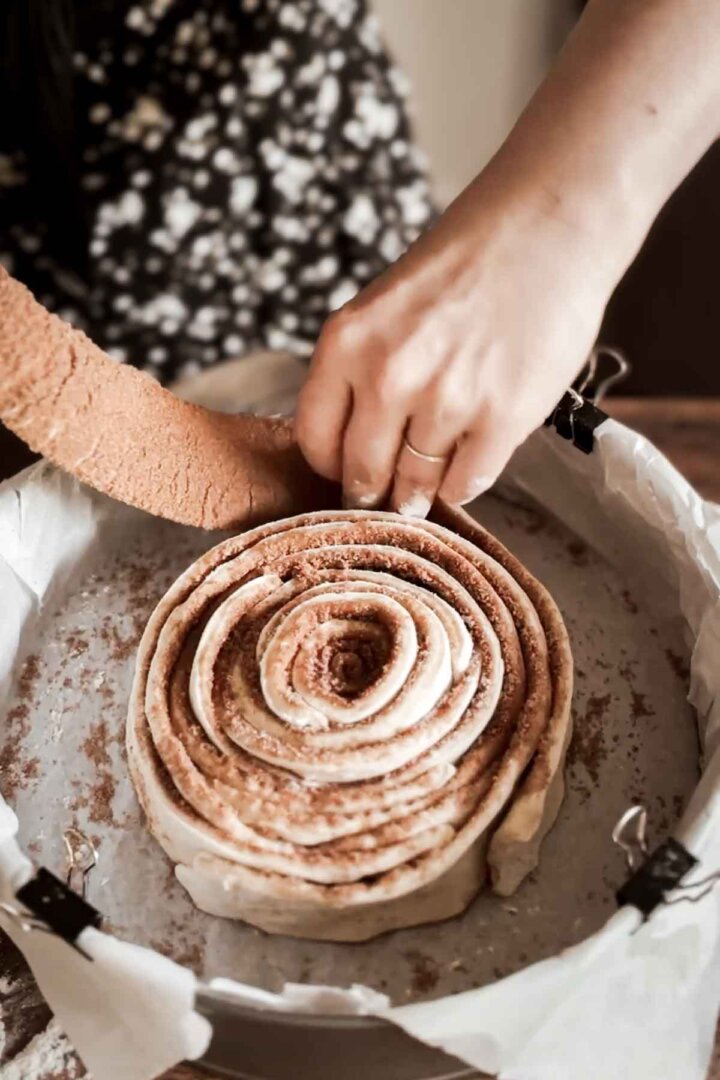
- Roll up one of the strips to make a spiral that will form the center of your cake; place this roll into the prepared pan.
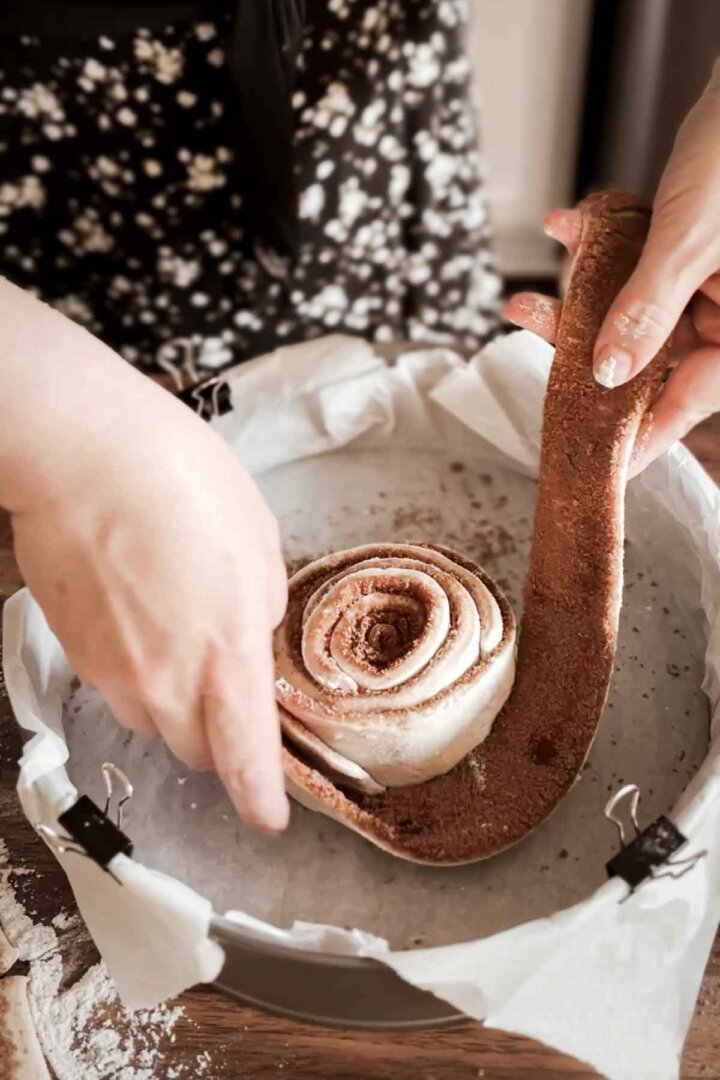
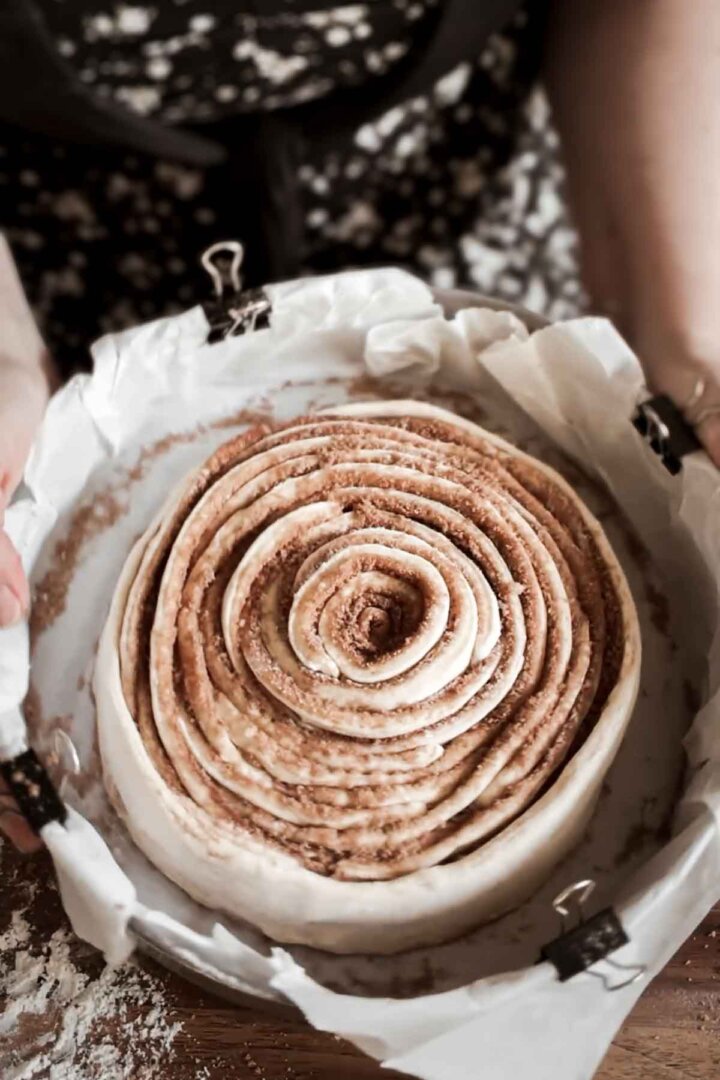
- Wrap the rest of the strips of dough around the center spiral, working your way to the outer edge, until you’ve used up all the dough and created one big cinnamon roll.
- Set the pan aside in a warm place to let the dough rest and puff up for about 30 minutes.
Bake
- Preheat the oven to 350 F, and position a rack in the center of the oven.
- Set the springform pan or cake pan on a baking sheet, to help insulate the bottom of the cake so that it doesn’t become overly brown before the center cooks through.
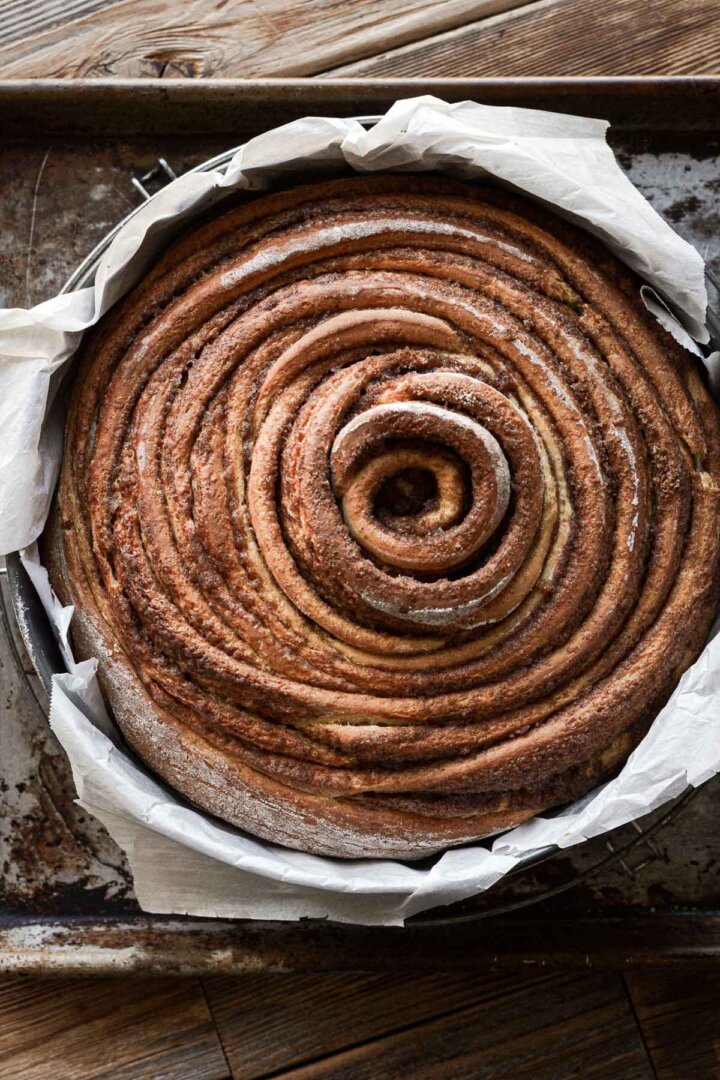
- Bake the cake for about 40-45 minutes, until a digital instant read thermometer inserted into the center of the cake reaches between 185-190 F (for a slightly gooeyer texture), or 195 F (for a completely baked-through texture).
- Let the cake cool in the pan for about 10 minutes, then remove the sides of the springform pan so you can slide the cake off the paper and onto a serving plate (or just lift the paper out of a regular cake pan.
Frosting
- With an electric mixer (stand or hand held), beat the frosting ingredients for several minutes until smooth and creamy.
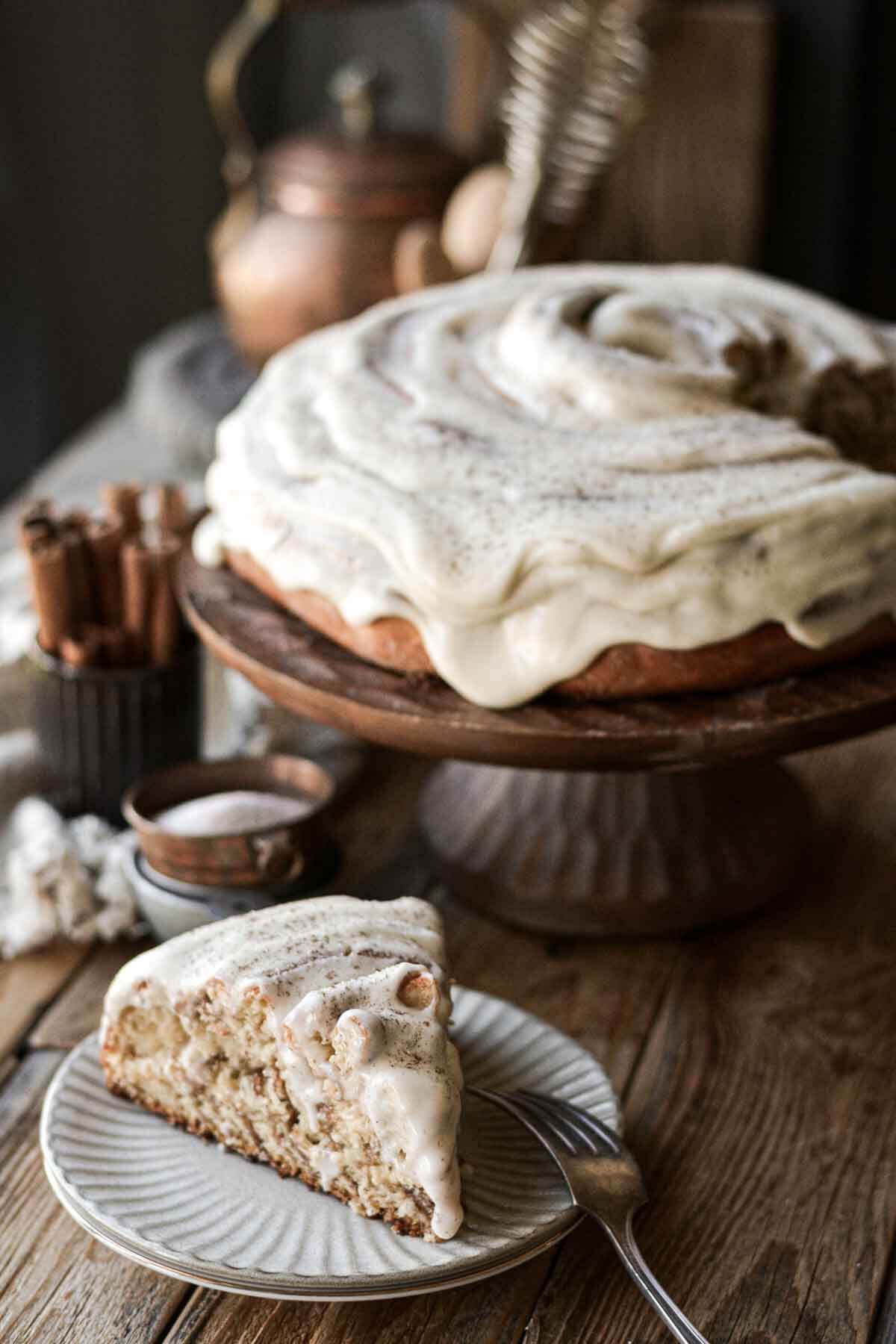
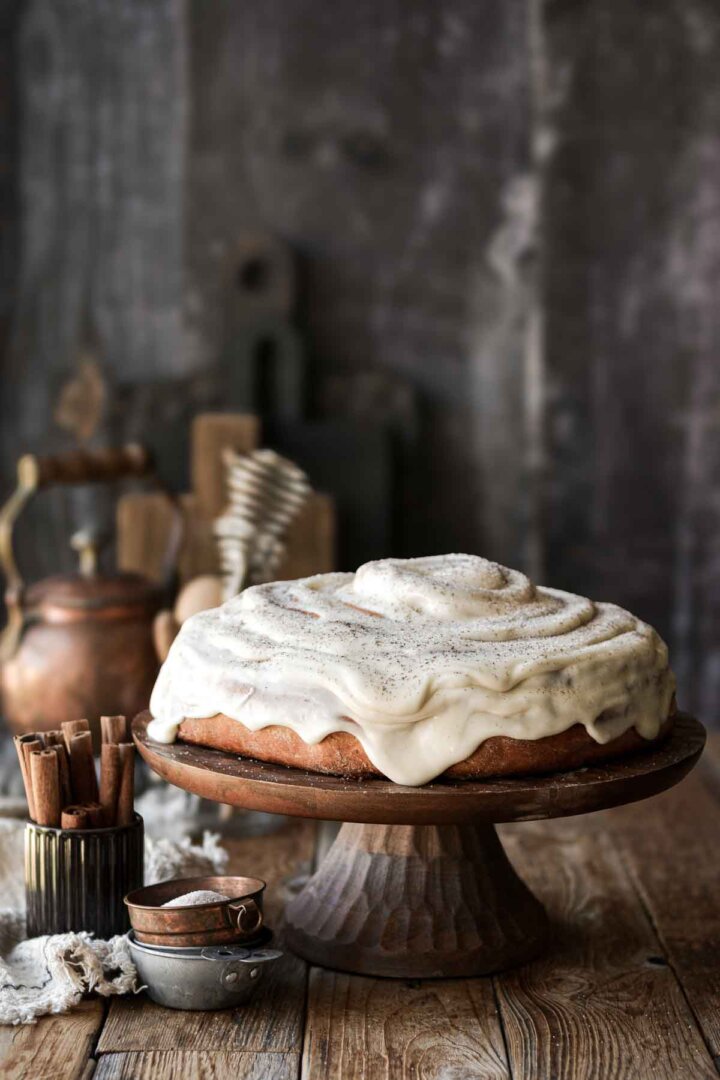
- Spread the frosting over the warm cake. I also sprinkled the top with a little cinnamon sugar and ground vanilla bean powder.
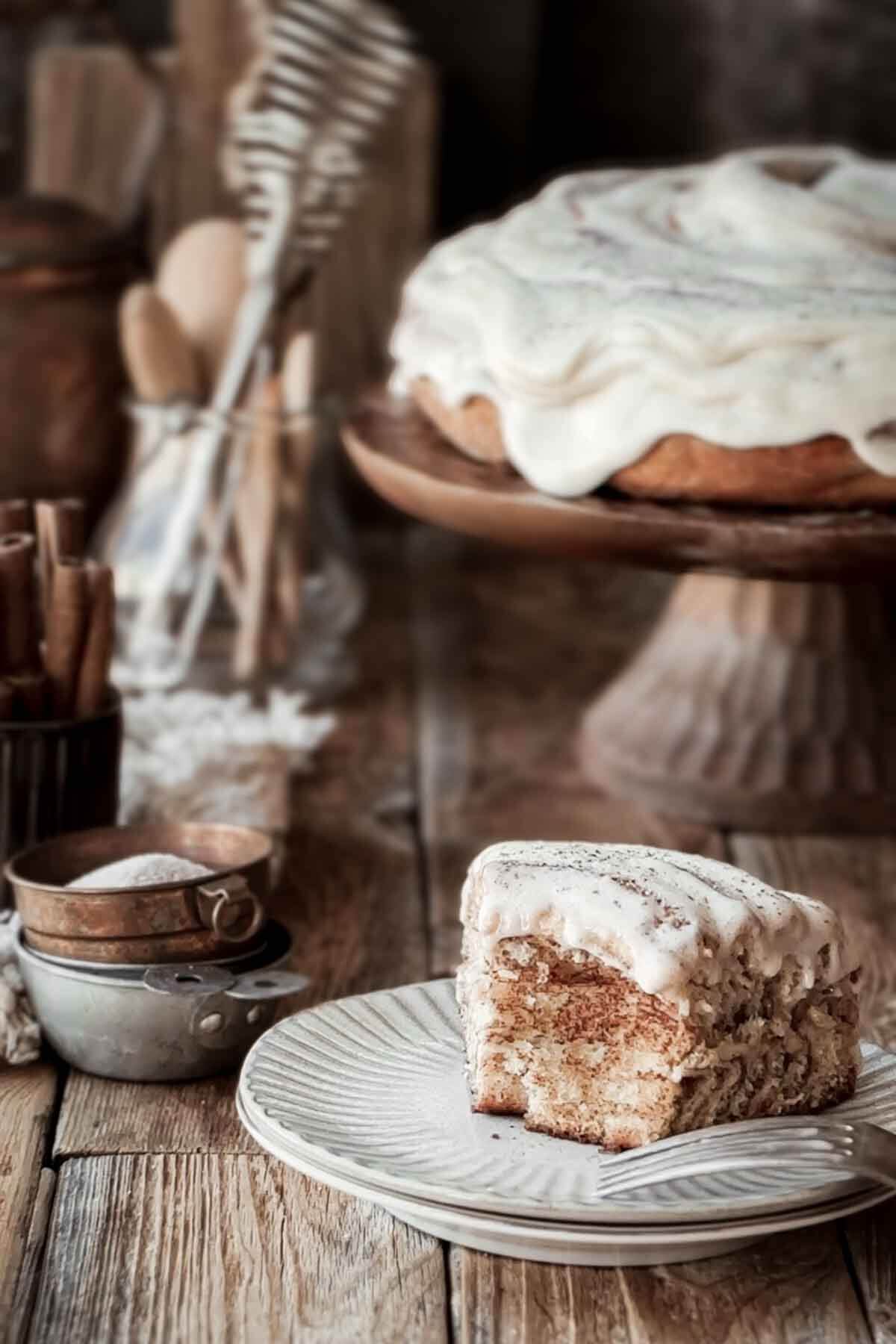
- Use a sharp knife and a gentle back-and-forth sawing motion to slice the cake, and serve immediately.
Be sure to read all of my BAKING FAQs where I discuss ingredients, substitutions and common baking questions, so that you can be successful in your own baking!
Frequently Asked Questions
If you’re prepping this cake a day in advance, after you’ve shaped the dough in the cake pan, you can cover the pan and refrigerate the unbaked cake overnight. The next day, let it warm up at room temperature for several hours before baking.
You really do. You’ll need an accurate reading of the temperature of the liquid in order to properly activate the yeast. You’ll also need to check the internal temperature of the baked cake, to ensure it’s baked through and not too doughy.

Other Cinnamon Roll Recipes
- Cardamom Orange Cinnamon Rolls
- Peach Crumble Cinnamon Rolls
- Easy Biscuit Dough Cinnamon Rolls
- Caramel Apple Pie Cinnamon Rolls
- Pumpkin Spice Cinnamon Rolls
- Gingerbread Cinnamon Rolls
- Chocolate Cinnamon Rolls
- Apple Butter Cinnamon Rolls
- Original Homemade Cinnamon Rolls
- Cinnamon Honey Whole Wheat Dinner Rolls
- Cinnamon Sugar Pull Apart Bread
- Cinnamon Swirl Loaf Bread
- Single Serving Cinnamon Roll
- Chocolate Cinnamon Roll Knots
- Caramel Rolls
- Cardamom Morning Buns
- Cinnamon Babka
- Almond Sweet Rolls
- Poppy Seed Breakfast Rolls
- Lemon Rolls



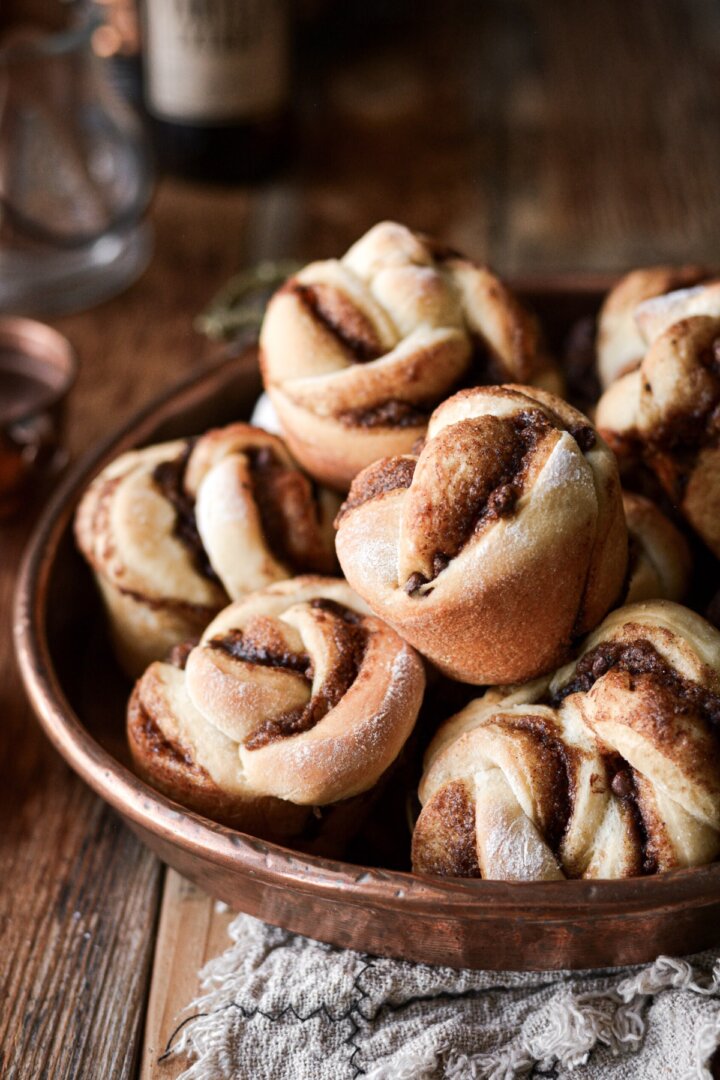

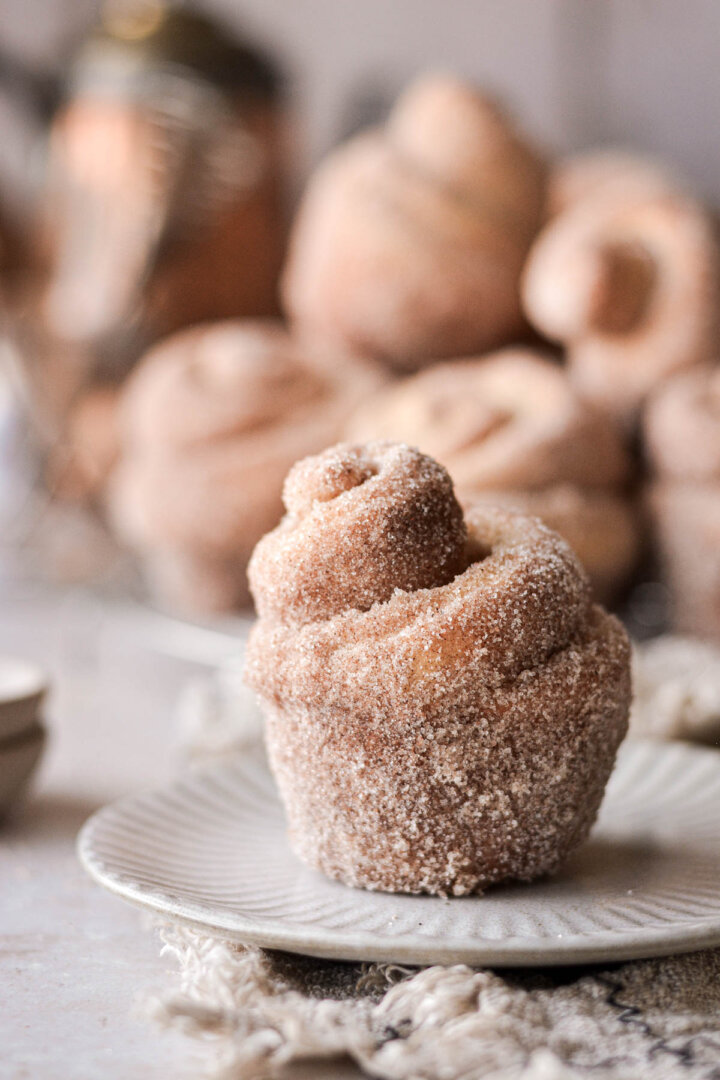
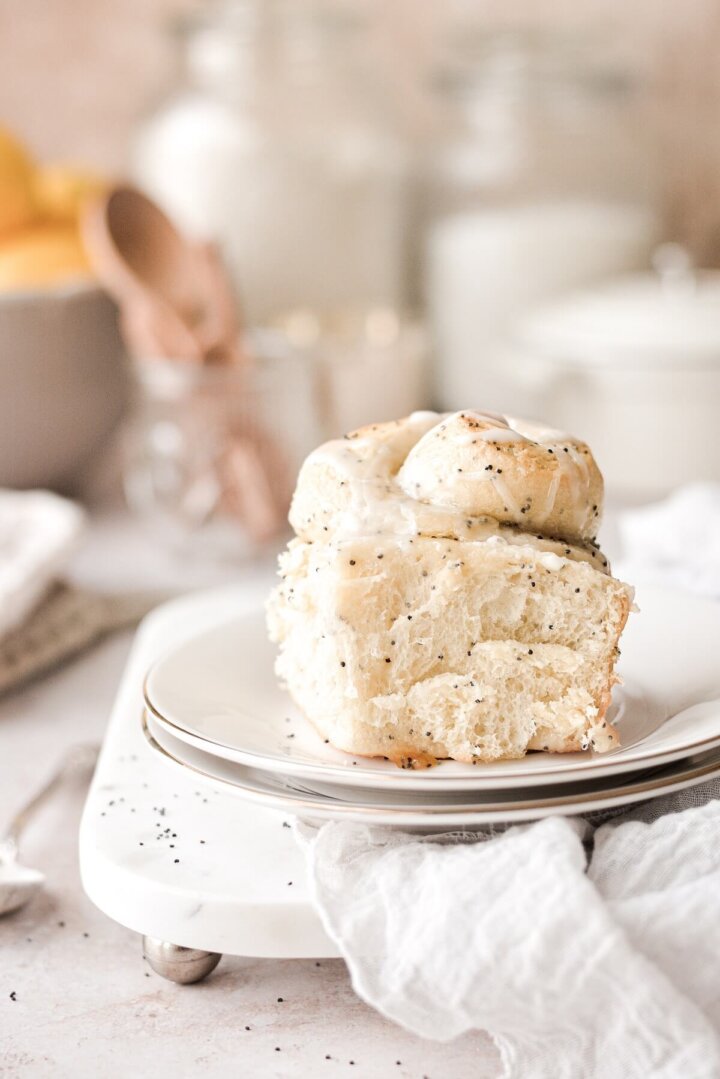
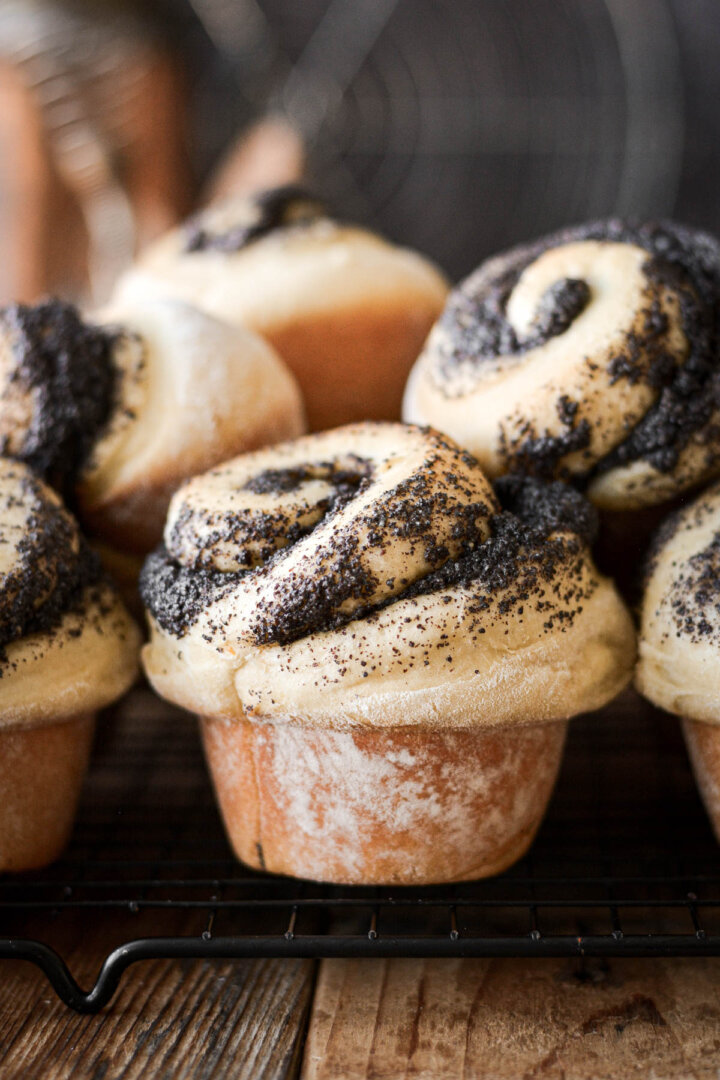
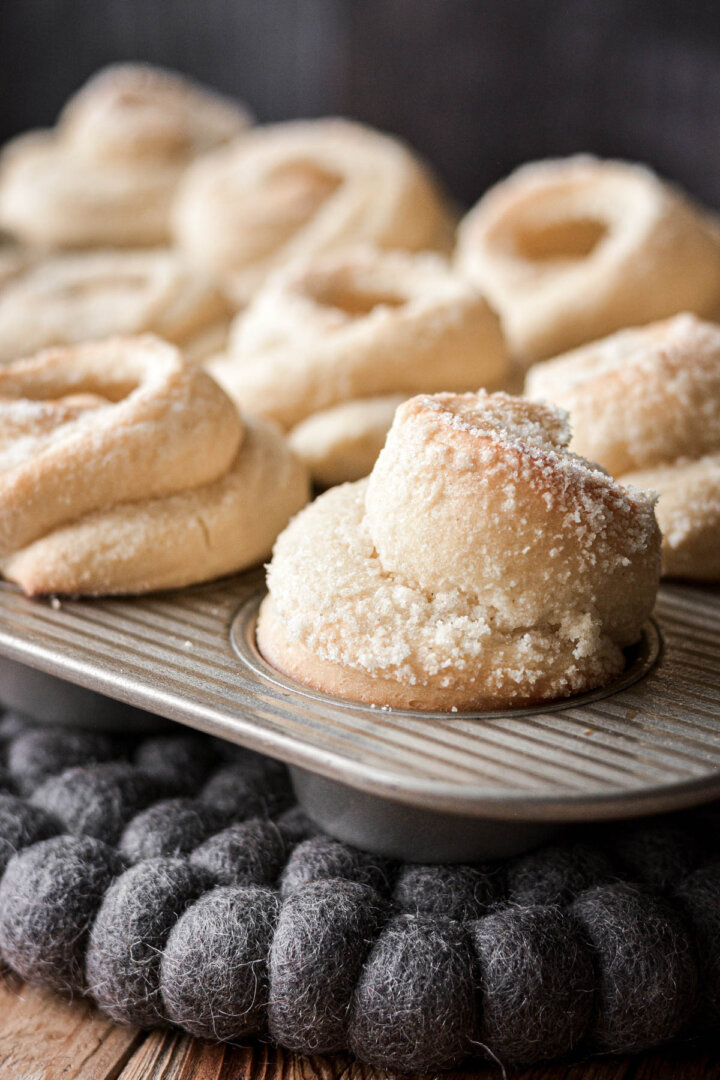

Please check out my Amazon Shop for a curated collection of some of my favorite cake pans from trusted brands, baking tools, ingredients, pretty things and fashion finds. I recommend products that I buy and use every day!
Did you love today’s recipe? Please rate the recipe and let me know in the comments what you thought! Also, be sure to follow Curly Girl Kitchen on Instagram, and tag me when you try one of my recipes so I can see all your delicious creations!
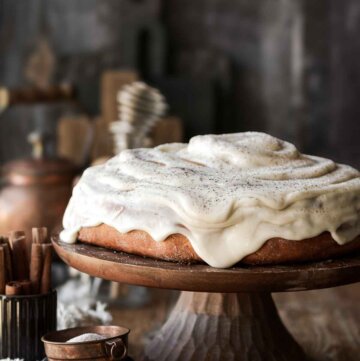
Giant Cinnamon Roll Cake
All recipes on Curly Girl Kitchen are developed for high altitude at 5,280 feet. See FAQs for adjusting to higher or lower elevations.

Equipment
- Stand Mixer with Dough Hook
- 10 Inch Springform Pan (or a regular 10 inch round cake pan)
- Digital Instant Read Thermometer
Ingredients
Dough
- 4 tbsp unsalted butter
- ¾ cup whole milk
- 2 ¼ tsp (1 packet) instant/rapid rise yeast or active dry yeast
- ¼ cup granulated sugar, divided
- 3 cups bread flour, fluffed, spooned and leveled
- 1 tsp coarse Kosher salt (if using table salt, use half the amount)
- ¼ tsp ground nutmeg
- 2 large eggs (room temperature)
- 2 tsp vanilla extract
Filling
- 4 tbsp unsalted butter, melted
- ¾ cup light or dark brown sugar, packed
- 1 ½ tbsp cinnamon
Frosting
- 1 ½ cups powdered sugar
- 4 oz (1/2 brick) cream cheese, softened to room temperature
- 2 tbsp heavy whipping cream
- 1 tsp vanilla extract
Instructions
Dough
- Melt the butter in a small saucepan over medium heat. Add the milk and stir. Warm the mixture just until it reaches between 110-115 degrees F.If it gets too hot, let it sit for a few minutes until it cools down to the correct temperature. It's important that you check the temperature – if it's too cold, it won't activate the yeast, and if it's too hot, it will kill the yeast.
- Remove the saucepan from the heat. Stir in the yeast and 1 teaspoon of the sugar. Let stand for 5 to 10 minutes until it begins to foam and bubble; this will let you know that the yeast is active.Baker's Note: If using instant/rapid rise yeast, you can choose to skip this step of proofing the yeast in the warm liquid first, and simply add the warm liquid and the yeast to the rest of the dough ingredients. However, I like to proof the yeast every time, simply to ensure the yeast is active and not expired, before adding it to the dough.
- In the bowl of your stand mixer, stir together the flour with the warm milk mixture, the sugar, salt, nutmeg, eggs and vanilla, into a rough shaggy dough. With the dough hook, knead on medium/low speed for 10 minutes. The dough will be soft, sticky and loose, but don't add more flour.
- Lightly spray a large bowl with nonstick spray. Scrape the dough into the bowl, cover tightly with plastic wrap, and set in a warm place to rise until doubled in size, about 60-90 minutes.If your oven has a bread-proofing setting, you can use that to proof your dough. If not, let your oven preheat to the lowest setting, turn the oven off, and then set your dough inside to rise.
- Set the bowl of dough, still covered, in the refrigerator to chill for at least 1-2 hours, or overnight.The chill time allows the gluten to rest and the dough to develop flavor. It's also much easier to work with the dough when it's cold, since this is a soft dough.
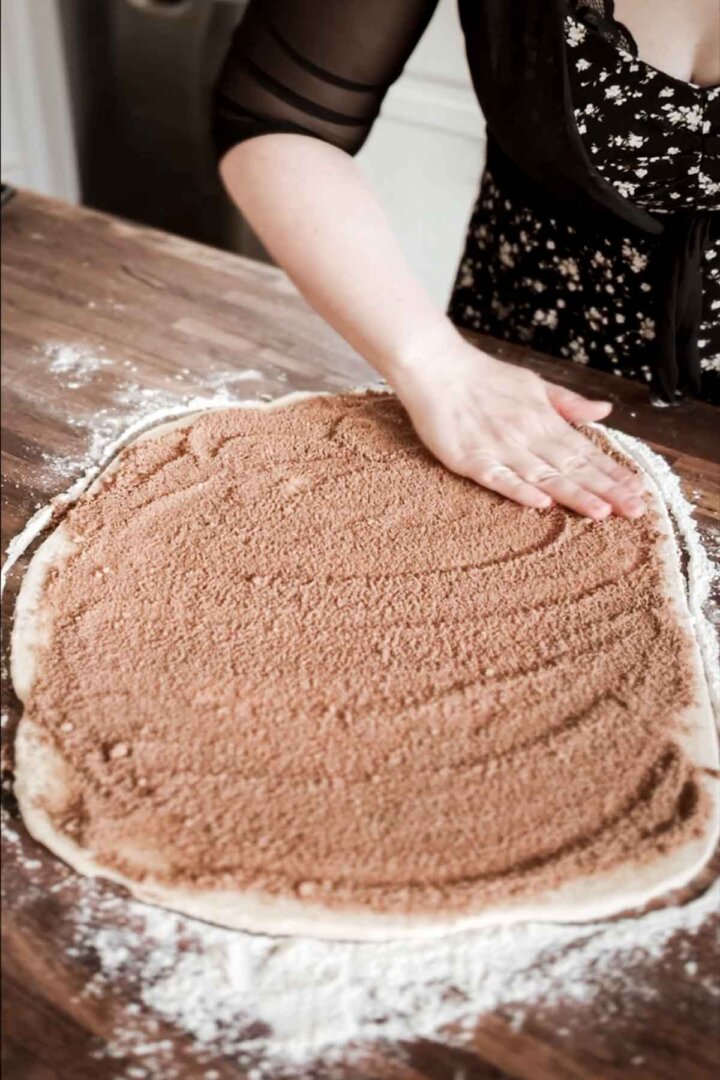
- Turn the cold dough out onto a lightly floured work surface. Using more flour as needed, roll your dough out into a rectangle measuring approximately 12×18 inches.
Filling
- Melt the butter and use a pastry brush to spread it evenly over the dough, all the way to the edges.
- In a bowl, mix together the brown sugar and cinnamon, then sprinkle that evenly over the butter. Firmly press the sugar mixture into the dough.
Shaping
- Line a 10 inch springform pan or round cake pan with parchment paper, so that the bottom and sides of the pan are covered with paper.
- Use a rolling pastry cutter or pizza cutter to cut the dough into 1 1/2 inch strips.
- Roll up one of the strips to make a spiral that will form the center of your cake; place this roll into the prepared pan.
- Wrap the rest of the strips of dough around the center spiral, working your way to the outer edge, until you've used up all the dough and created one big cinnamon roll.
- Set the pan aside in a warm place to let the dough rest and puff up for about 30 minutes.
Bake
- Preheat the oven to 350 F, and position a rack in the center of the oven.
- Set the springform pan or cake pan on a baking sheet, to help insulate the bottom of the cake so that it doesn't become overly brown before the center cooks through.
- Bake the cake for about 40-45 minutes, until a digital instant read thermometer inserted into the center of the cake reaches between 185-190 F (for a slightly gooeyer texture), or 195 F (for a completely baked-through texture).
- Let the cake cool in the pan for about 10 minutes, then remove the sides of the springform pan so you can slide the cake off the paper and onto a serving plate (or just lift the paper out of a regular cake pan.
Frosting
- With an electric mixer (stand or hand held), beat the frosting ingredients for several minutes until smooth and creamy.
- Spread the frosting over the warm cake. I also sprinkled the top with a little cinnamon sugar and ground vanilla bean powder.
- Use a sharp knife and a gentle back-and-forth sawing motion to slice the cake, and serve immediately.
Video
Notes
- Yeast: This recipe calls for instant or rapid-rise yeast, which does not require any proofing first, so you can just mix it right into the dough. If you only have regular active dry yeast, you should proof it first, before adding to the dough. To do this, heat your butter and buttermilk as instructed, then sprinkle the yeast, and 1 teaspoon of sugar, over the liquid. Stir in and let sit until foamy, about 5-10 minutes. Add to your dough and mix as instructed.
- Eggs: Your eggs will be too cold if you use them straight from the fridge, and the chill could prevent your dough from rising. Let them sit out for about an hour (or place the eggs in a glass of hot water) to warm up to room temperature before adding to your dough.
- 110-115 Degrees: It’s very important that you check the temperature of your melted butter and warmed milk. The amount noted here is not a suggestion; it’s essential to correctly activating your yeast. Too cold, and the yeast won’t be activated. Too hot, and it will kill the yeast.
- Icing: This recipe makes a generous amount of frosting to spread over the cake. If you like less frosting, you can certainly cut the recipe in half.
- Overnight Option: If you’re prepping this cake a day in advance, after you’ve shaped the dough in the cake pan, you can cover the pan and refrigerate the unbaked cake overnight. The next day, let it warm up at room temperature for several hours before baking.
 https://curlygirlkitchen.com/
Leave a Reply